
Expert Speak
Trellix 2024 Cybersecurity Predictions: Shifting Trends in Threat Actor Behaviour


Written by John Fokker, Ernesto Fernández Provecho & Bevan Read at the Trellix Advanced Research Center
The region’s CISOs may feel like they have little to celebrate this New Year’s Eve. A burgeoning threat landscape; fewer technological and human resources; sprawling, unknowable infrastructure; and more sophisticated threats. Let’s take a closer look at the last challenge on that list. Attackers are agile and flexible. They have to be. When one avenue of infiltration is closed off, they pivot to another. This is the same in the longer term. New methods have arisen, sometimes because of the advent of some new technology, and other times because threat actors have figured out how to leverage an existing vector differently.
It is hard to keep track. There are a lot of sources CISOs must consult to keep abreast of dangerous developments. So, as we roll from 2023 into 2024, consider the following our New Year’s gift to you. Our experts have gathered three major developments in attack behaviour into a single spot in the hope this gives you an edge in the battles ahead.
Supply Chain Attacks Against Managed File Transfers Solutions
Managed file transfer (MFT) solutions, designed to securely exchange sensitive data between entities, inherently hold a treasure trove of confidential information. This ranges from intellectual property, customer data, financial records, and much more. MFT solutions play a critical role in modern business operations, with organizations relying heavily on them to facilitate seamless data sharing both internally and externally. Any disruption or compromise of these systems can lead to significant operational downtime, tarnished reputations, and financial losses. This makes them highly attractive targets for ransomware actors who are aware of how the potential impact enhances the potency of their extortion demands.
Furthermore, the complexity of MFT systems and their integration into the internal business network often creates security weaknesses and vulnerabilities that can be exploited by cybercriminals. Just in the last month, we saw the Cl0P group exploiting the Go-anywhere MFT solution and the MOVEit breach, turning one successful exploit into a major global software supply chain breach. In the next year, we expect these types of attacks only to increase, with participation from numerous threat actors. Organizations are strongly advised to thoroughly review their managed file transfer solution, implement DLP solutions and encrypt sensitive data to protect themselves.
Malware Threats are Becoming Polyglot
In recent years, there has been a noticeable rise in the utilization of programming languages like Golang, Nim, and Rust for the development of malicious software. While the volume is still low compared to other languages like C or C++, that is something we expect to change in the future.
Go’s simplicity and concurrency capabilities have made it a favourite for crafting lightweight and speedy malware. Nim’s focus on performance and expressiveness has rendered it useful for creating intricate malware. Meanwhile, Rust’s memory management features are attractive to ransomware groups and other threat actors concerned about the encryption efficiency of malware samples.
What adds to the complexity of this burgeoning space is the lack of comprehensive analysis tools for these languages. The relative newness of Nim and Rust means that established security tooling is less abundant compared to languages like C or Python. This scarcity of analysis tools poses a significant challenge for cybersecurity experts aiming to dissect and counteract malware written in these languages.
We’re already starting to observe an increase in Golang-based malware in recent months, and thus, predict that 2024 will see a notable surge in malware from these languages.
Even More Layers of Ransomware Extortion
As ransomware groups are primarily financially driven, it’s unsurprising to see them find new ways to extort their victims for more money and pressure them to pay the ransom. We are starting to see ransomware groups contact the clients of their victims as a new way to apply pressure and combat recent ransomware mitigations. This allows them to ransom the stolen data not only with the direct victim of their attack but also with any clients of the victim who may be impacted by the stolen data.
Ransomware groups finding ways to leverage the media and public pressure onto their victims isn’t new. Back in 2022, one of Australia’s most significant health insurance companies suffered from a data breach. In tandem with their ransom to the insurance company, the threat actors publicized much of the medical data — leading to pressure from the public and officials to pay the ransomware actors to take down the medical information. In addition, due to the tremendously private nature of data being released, clients walked into the insurance company’s shopfronts and offered to pay for their details to be removed. In 2023, observing a similar event, a ransomware group threatened to contact the clients of companies they had compromised, offering them the option to pay to remove their personal and private details from the exposed data.
As this additional form of extortion grows in popularity, it adds a 5th avenue for these attackers to ransom those affected. We expect to see a shift in the landscape where ransomware groups more often look to target entities that handle not only sensitive personal information, but intimate details that can be used to extort clients. It would not be surprising for the healthcare, social media, education, and SaaS industries to come further under fire in 2024 from these groups.
Ready Your Sword
Take heart. The road ahead is filled with peril, but knowledge is your sword. With it, you can sustain your SOC team and let them know what to look out for. Attackers should not be the only ones who adapt. We must do the same. Have a safe 2024.












Written by Alain Penel, VP of Middle East, CIS & Turkey at Fortinet (more…)

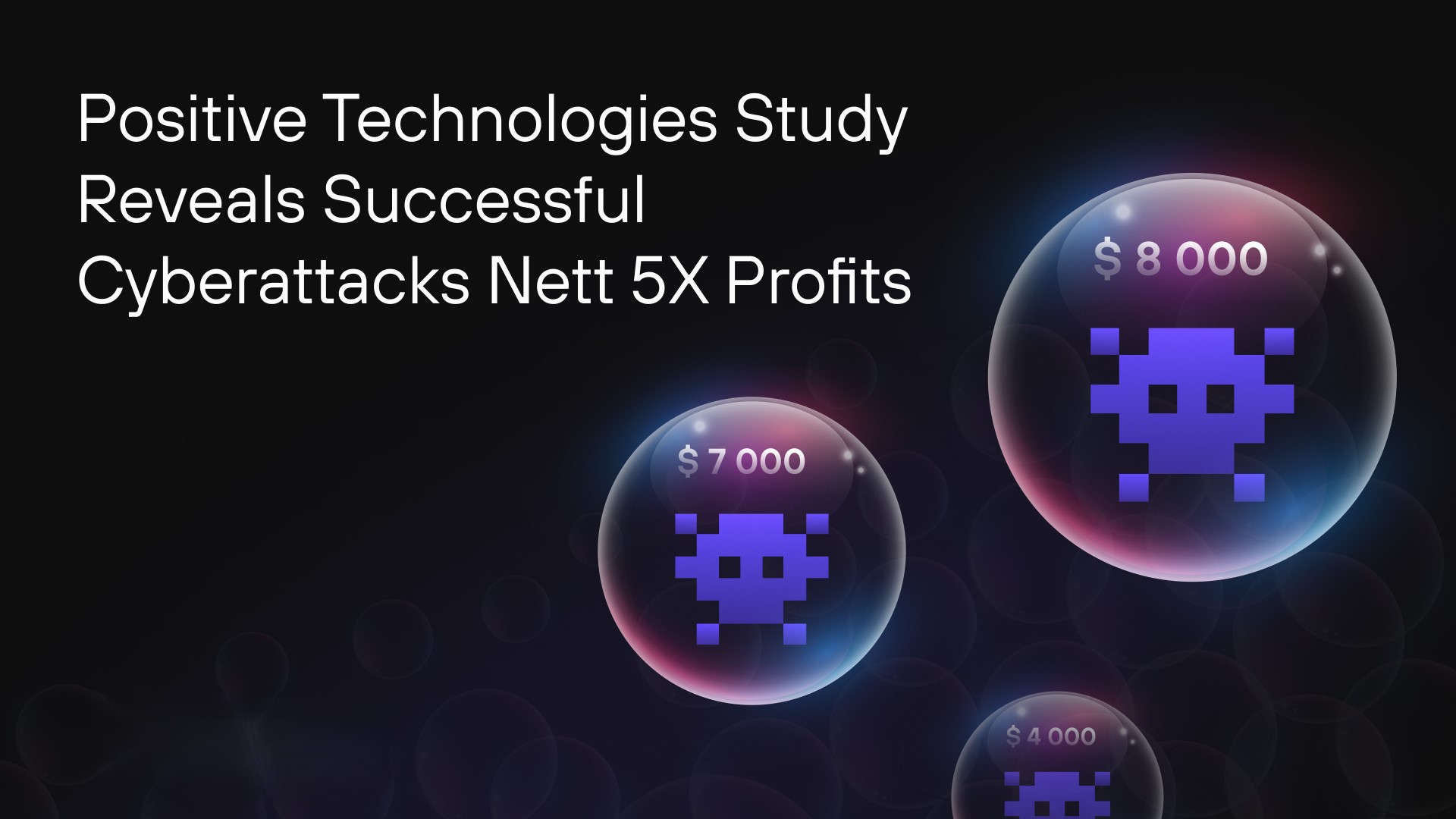
Positive Technologies has released a study on the dark web market, analysing prices for illegal cybersecurity services and products, as well as the costs incurred by cybercriminals to carry out attacks. The most expensive type of malware is ransomware, with a median cost of $7,500. Zero-day exploits are particularly valuable, often being sold for millions of dollars. However, the net profit from a successful cyberattack can be five times the cost of organizing it.
Experts estimate that performing a popular phishing attack involving ransomware costs novice cybercriminals at least $20,000. First, hackers rent dedicated servers, subscribe to VPN services, and acquire other tools to build a secure and anonymous IT infrastructure to manage the attack. Attackers also need to acquire the source code of malicious software or subscribe to ready-to-use malware, as well as tools for infiltrating the victim’s system and evading detection by security measures. Moreover, cybercriminals can consult with seasoned experts, purchase access to targeted infrastructures and company data, and escalate privileges within a compromised system. Products and tools are readily available for purchase on the dark web, catering to beginners. The darknet also offers leaked malware along with detailed instructions, making it easier for novice cybercriminals to carry out attacks.
Malware is one of the primary tools in a hacker’s arsenal, with 53% of malware-related ads focused on sales. In 19% of all posts, infostealers designed to steal data are offered. Crypters and code obfuscation tools, used to help attackers hide malware from security tools, are featured in 17% of cases. Additionally, loaders are mentioned in 16% of ads. The median cost of these types of malware stands at $400, $70, and $500, respectively. The most expensive malware is ransomware: its median cost is $7,500, with some offers reaching up to $320,000. Ransomware is primarily distributed through affiliate programs, known as Ransomware-as-a-Service (RaaS), where participants in an attack typically receive 70–90% of the ransom. To become a partner, a criminal must make a contribution of 0.05 Bitcoin (approximately $5,000) and have a solid reputation on the dark web.
Another popular attack tool is exploits: 69% of exploit-related ads focus on sales, with zero-day vulnerability posts accounting for 32% of them. In 31% of cases, the cost of exploits exceeds $20,000 and can reach several million dollars. Access to corporate networks is relatively inexpensive, with 72% of such ads focused on sales, and 62% of them priced at under a thousand dollars. Among cybercriminal services, hacks are the most popular option, accounting for 49% of reports. For example, the price for compromising a personal email account starts at $100, while the cost for a corporate account begins at $200.
Dmitry Streltsov, Threat Analyst at Positive Technologies, says, “On dark web marketplaces, prices are typically determined in one of two ways: either sellers set a fixed price, or auctions are held. Auctions are often used for exclusive items, such as zero-day exploits. The platforms facilitating these deals also generate revenue, often through their own escrow services, which hold the buyer’s funds temporarily until the product or service is confirmed as delivered. On many platforms, these escrow services are managed by either administrators or trusted users with strong reputations. In return, they earn at least 4% of the transaction amount, with the forums setting the rates.”
Considering the cost of tools and services on the dark web, along with the median ransom amount, cybercriminals can achieve a net profit of $100,000–$130,000 from a successful attack—five times the cost of their preparation. For a company, such an incident can result not only in ransom costs but also in massive financial losses due to disrupted business processes. For example, in 2024, due to a ransomware attack, servers of CDK Global were down for two weeks. The company paid cybercriminals $25 million, while the financial losses of dealers due to system downtime exceeded $600 million.

Written by Oded Vanunu, Chief Technologist & Head of Product Vulnerability Research at Check Point (more…)

Positive Technologies Reports 80% of Middle East Cyberattacks Compromise Confidential Data

Qualys Partners with Teksalah, the First Middle Eastern MSP in its mROC Alliance

CyberKnight Sets Up South Africa Entity

ManageEngine Enhances PAM with Native Intelligence

EcoOnline Expands into Middle East

OPSWAT Joins GISEC 2025 as Middle East Confronts AI-Driven Cyber Threats

GISEC Global 2025: SANS Institute to Showcase Elite Cybersecurity Training and Threat Expertise

Fortinet Expands FortiAI Across its Security Fabric Platform

How AI is Reinventing Cybersecurity for the Automotive Industry

GISEC 2025 Launches OT Security Conference Amid 49% Infrastructure Attack Surge

Positive Technologies @ GISEC Global 2025: Demonstrating Cutting-Edge Cyber Threats and AI Defense Strategies

Group-IB @ GISEC Global 2025: Tackling Evolving Cyber Threats with Localised Intelligence and AI

Video: Wallarm Unveils the Key to Cloud-Native API Security at GISEC Global 2025

Video: CyberKnight on Zero Trust, AI, and Saudi Arabia’s Digital Transformation at GISEC Global 2025

Video: SANS Institute Weighs in on Deepfakes, Model Poisoning and Risk Frameworks at GISEC Global 2025
-
 GISEC1 week ago
Positive Technologies @ GISEC Global 2025: Demonstrating Cutting-Edge Cyber Threats and AI Defense Strategies
-

 Cyber Security1 week ago
Axis Communications Sheds Light on Video Surveillance Industry Perspectives on AI
-
 GISEC1 week ago
Video: SANS Institute Weighs in on Deepfakes, Model Poisoning and Risk Frameworks at GISEC Global 2025
-
 GISEC1 week ago
ManageEngine @ GISEC Global 2025: AI, Quantum Computing, and Ransomware Form Part of Cybersecurity Outlook for 2025
-
 GISEC1 week ago
Video: SentinelOne Speaks Hyperautomation, Purple AI, and the Future of Threat Detection at GISEC Global 2025
-
 Africa Focus6 days ago
CyberKnight Sets Up South Africa Entity
-
 GISEC1 week ago
Group-IB @ GISEC Global 2025: Tackling Evolving Cyber Threats with Localised Intelligence and AI
-
 GISEC1 week ago
Video: CyberKnight on Zero Trust, AI, and Saudi Arabia’s Digital Transformation at GISEC Global 2025