
Expert Speak
How to Secure MSP Success Brick by Brick

Written by Roman Cuprik, content writer at ESET
Back in 2014, LEGO fans started noticing that some new reddish-brown bricks were brittle and more susceptible to breaking. The issue, known as “brittle brown,” was quite clear — even one faulty brick could spoil the whole impression of a finished build. Being known for maintaining top-quality standards globally, the LEGO Group announced that they fixed the issue a few years later.
In the Managed Service Providers (MSP) market, just like with a building set, every brick matters. It’s not only about IT, cybersecurity, human resources, supply chain, or marketing; all these things need to be put in place to create a successful MSP business.
Being a global leader in cybersecurity, ESET understands that MSPs are like a complicated building structure in which all bricks support one another. That is why the ESET MSP program is designed to be flexible while covering various MSP business needs to maintain a long, fruitful partnership.
A lesson on success from LEGO: Persistence
Some key aspects of LEGO’s success is their persistence in delivering high-quality products to a market that was heavily affected by the rise of computer games and increasingly sophisticated toys, along with LEGO’s partnerships with other recognizable brands.
With ongoing cloudification, outsourcing, compliance issues, and evolution of the cyber-threat landscape, it is no surprise that the Managed Services market is growing. For example, the Datto Global State of the MSP Report: Trends and Forecasts for 2024 found that 68% of MSPs in North America experienced a revenue increase in 2023.
According to Kaseya’s 2024 MSP Benchmark Report, 73% of MSP respondents stated that cybersecurity is a top revenue driver for their businesses, and at the same time, 78% of respondents consider cybersecurity a top IT challenge for their customers.
This MSP business success and the dynamic market growth require being on top of the latest threats, increased competition, or hiring complications. Further, MSPs deal with the question of how to make their growing and increasingly complicated businesses easier to operate.
Sticking together
Keeping all these aspects of the MSP business in mind, ESET created an MSP program and ecosystem that minimizes daily operations and enables users to provide trusted, top-rated security to their customers.
“What we see with ESET is a really low volume of tickets that require human involvement. The ESET solution is super lightweight. I like to think ESET was born and built by gamers who didn’t want pop-ups to interrupt their games many years ago. As the solutions evolved over the years, additional layers of security have all been built on top, but the actual product installed on the device is still incredibly lightweight,” said Andrew Owens, Head of Sales, Risc IT Solutions.
The main pillars of the ESET MSP program:
Leading cybersecurity technology –ESET Protect offers multilayered security technology combining machine learning, AI, a cloud reputation system, and human expertise. With ESET PROTECT, MSPs can offer flexible subscription solutions, providing security for all major platforms.
- Flexibility – With daily billing and monthly invoicing, customers pay for what they really use: no flat rates, with no long-term commitment. Flexible management allows users to upgrade subscriptions and adjust seat counts on their own.
- Unified ecosystem – With ESET’s cloud-first ESET PROTECT platform, users have a complete overview of all their clients from a single pane of glass, allowing them to see and manage clients in one place.
- Automation – ESET PROTECT Platform automation features, such as Dynamic Groups, were designed to save IT admins time and help them avoid portal fatigue.
- Integrations – ESET actively cooperates with the major Remote Monitoring and Management (RMM) and Professional Services Automation (PSA)players to create best-of-breed, in-depth integrations.
Grow with ESET
It is always a pleasure seeing a LEGO set grow in front of the builder’s eyes. The same is true for ESET seeing its partners progress and succeed. ESET sees MSPs as a whole, tailoring its solutions to meet market needs and making sure that every aspect of this business is covered. As a partner, ESET can make sure that all your bricks are supporting one another.









Written by Alain Penel, VP of Middle East, CIS & Turkey at Fortinet (more…)
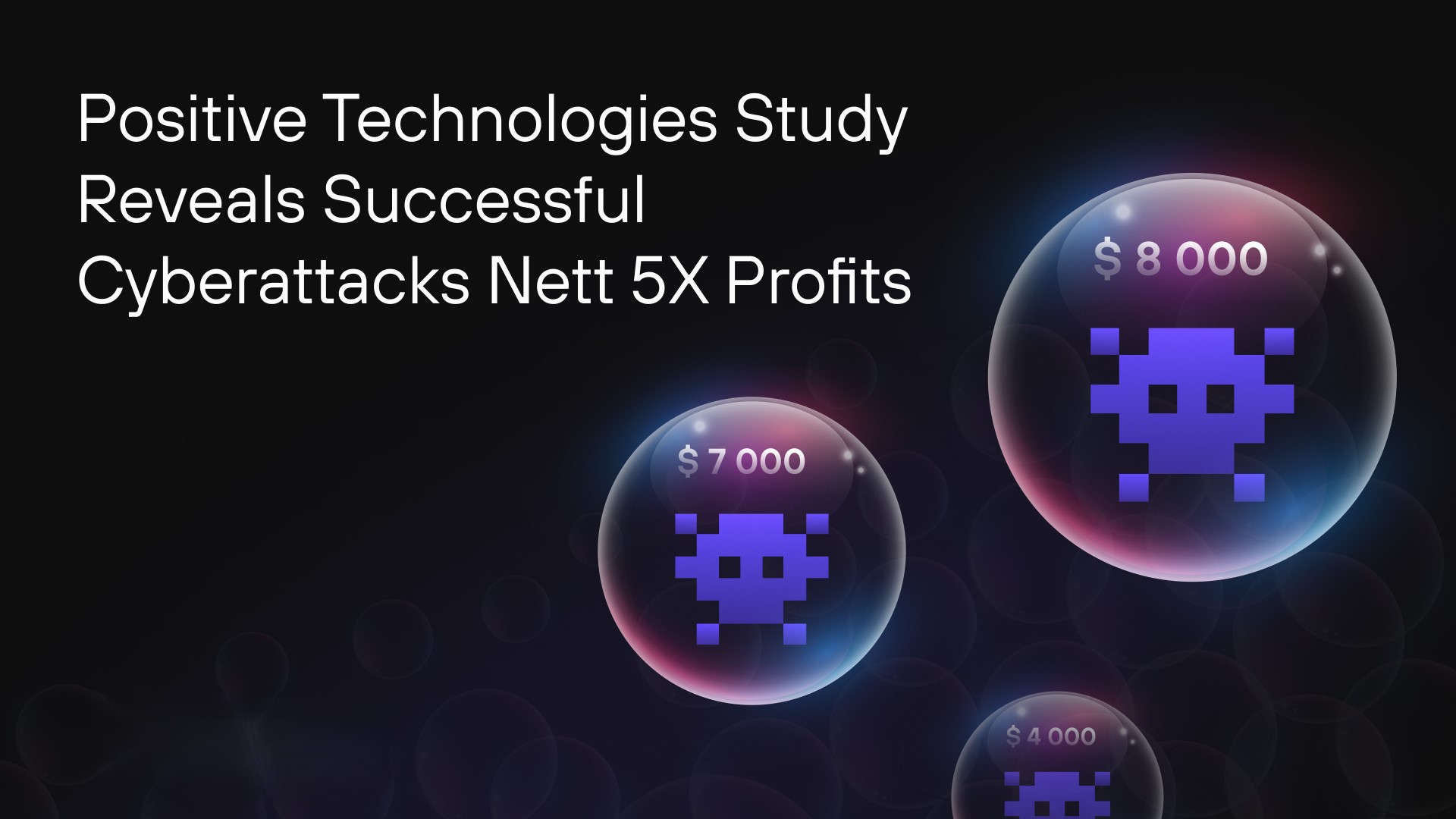
Positive Technologies has released a study on the dark web market, analysing prices for illegal cybersecurity services and products, as well as the costs incurred by cybercriminals to carry out attacks. The most expensive type of malware is ransomware, with a median cost of $7,500. Zero-day exploits are particularly valuable, often being sold for millions of dollars. However, the net profit from a successful cyberattack can be five times the cost of organizing it.
Experts estimate that performing a popular phishing attack involving ransomware costs novice cybercriminals at least $20,000. First, hackers rent dedicated servers, subscribe to VPN services, and acquire other tools to build a secure and anonymous IT infrastructure to manage the attack. Attackers also need to acquire the source code of malicious software or subscribe to ready-to-use malware, as well as tools for infiltrating the victim’s system and evading detection by security measures. Moreover, cybercriminals can consult with seasoned experts, purchase access to targeted infrastructures and company data, and escalate privileges within a compromised system. Products and tools are readily available for purchase on the dark web, catering to beginners. The darknet also offers leaked malware along with detailed instructions, making it easier for novice cybercriminals to carry out attacks.
Malware is one of the primary tools in a hacker’s arsenal, with 53% of malware-related ads focused on sales. In 19% of all posts, infostealers designed to steal data are offered. Crypters and code obfuscation tools, used to help attackers hide malware from security tools, are featured in 17% of cases. Additionally, loaders are mentioned in 16% of ads. The median cost of these types of malware stands at $400, $70, and $500, respectively. The most expensive malware is ransomware: its median cost is $7,500, with some offers reaching up to $320,000. Ransomware is primarily distributed through affiliate programs, known as Ransomware-as-a-Service (RaaS), where participants in an attack typically receive 70–90% of the ransom. To become a partner, a criminal must make a contribution of 0.05 Bitcoin (approximately $5,000) and have a solid reputation on the dark web.
Another popular attack tool is exploits: 69% of exploit-related ads focus on sales, with zero-day vulnerability posts accounting for 32% of them. In 31% of cases, the cost of exploits exceeds $20,000 and can reach several million dollars. Access to corporate networks is relatively inexpensive, with 72% of such ads focused on sales, and 62% of them priced at under a thousand dollars. Among cybercriminal services, hacks are the most popular option, accounting for 49% of reports. For example, the price for compromising a personal email account starts at $100, while the cost for a corporate account begins at $200.
Dmitry Streltsov, Threat Analyst at Positive Technologies, says, “On dark web marketplaces, prices are typically determined in one of two ways: either sellers set a fixed price, or auctions are held. Auctions are often used for exclusive items, such as zero-day exploits. The platforms facilitating these deals also generate revenue, often through their own escrow services, which hold the buyer’s funds temporarily until the product or service is confirmed as delivered. On many platforms, these escrow services are managed by either administrators or trusted users with strong reputations. In return, they earn at least 4% of the transaction amount, with the forums setting the rates.”
Considering the cost of tools and services on the dark web, along with the median ransom amount, cybercriminals can achieve a net profit of $100,000–$130,000 from a successful attack—five times the cost of their preparation. For a company, such an incident can result not only in ransom costs but also in massive financial losses due to disrupted business processes. For example, in 2024, due to a ransomware attack, servers of CDK Global were down for two weeks. The company paid cybercriminals $25 million, while the financial losses of dealers due to system downtime exceeded $600 million.

Written by Oded Vanunu, Chief Technologist & Head of Product Vulnerability Research at Check Point (more…)

Positive Technologies Reports 80% of Middle East Cyberattacks Compromise Confidential Data

Qualys Partners with Teksalah, the First Middle Eastern MSP in its mROC Alliance

CyberKnight Sets Up South Africa Entity

ManageEngine Enhances PAM with Native Intelligence

EcoOnline Expands into Middle East

OPSWAT Joins GISEC 2025 as Middle East Confronts AI-Driven Cyber Threats

GISEC Global 2025: SANS Institute to Showcase Elite Cybersecurity Training and Threat Expertise

Fortinet Expands FortiAI Across its Security Fabric Platform

GISEC 2025 Launches OT Security Conference Amid 49% Infrastructure Attack Surge

How AI is Reinventing Cybersecurity for the Automotive Industry

Positive Technologies @ GISEC Global 2025: Demonstrating Cutting-Edge Cyber Threats and AI Defense Strategies

Group-IB @ GISEC Global 2025: Tackling Evolving Cyber Threats with Localised Intelligence and AI

Video: Wallarm Unveils the Key to Cloud-Native API Security at GISEC Global 2025

Video: CyberKnight on Zero Trust, AI, and Saudi Arabia’s Digital Transformation at GISEC Global 2025

Video: SANS Institute Weighs in on Deepfakes, Model Poisoning and Risk Frameworks at GISEC Global 2025
-
 GISEC1 week ago
Positive Technologies @ GISEC Global 2025: Demonstrating Cutting-Edge Cyber Threats and AI Defense Strategies
-

 Cyber Security1 week ago
Axis Communications Sheds Light on Video Surveillance Industry Perspectives on AI
-
 GISEC1 week ago
Video: SANS Institute Weighs in on Deepfakes, Model Poisoning and Risk Frameworks at GISEC Global 2025
-
 GISEC1 week ago
ManageEngine @ GISEC Global 2025: AI, Quantum Computing, and Ransomware Form Part of Cybersecurity Outlook for 2025
-
 GISEC1 week ago
Video: SentinelOne Speaks Hyperautomation, Purple AI, and the Future of Threat Detection at GISEC Global 2025
-
 Africa Focus6 days ago
CyberKnight Sets Up South Africa Entity
-
 GISEC1 week ago
Group-IB @ GISEC Global 2025: Tackling Evolving Cyber Threats with Localised Intelligence and AI
-
 GISEC1 week ago
Video: CyberKnight on Zero Trust, AI, and Saudi Arabia’s Digital Transformation at GISEC Global 2025