
Expert Speak
“By the Time You’ve Been Compromised, It’s Already Too Late”

Written by Rawad Sarieddine, Vice President – Middle East, Turkey & Africa, CrowdStrike
Organisations attempting to protect their data currently face an unprecedented threat level. According to the World Economic Forum’s Global Risks Report 2021 respondents ranked Cybersecurity failure among the top five ‘clear and present dangers’ that the world will face in the next two years. Even the largest and best-equipped of international organisations have shown they’re susceptible to attack from persistent, skilled adversaries. Much like insuring your home against flooding, you need to protect your digital data.
The tough reality for many organisations is that by the time they have been compromised, it’s already too late. To detect these threats, cybersecurity teams have traditionally relied on Indicators of Compromise (IoCs) which work by detecting signatures, exploits, vulnerabilities and IP addresses to help determine whether a security incident has occurred. This has meant that rather than preventing a breach, security teams have remained focussed on investigating what has already happened. However, in recent years, next-generation security solutions have emerged, allowing security teams to go beyond this to really understand the intent of what an attacker is trying to accomplish – and hence, how better to thwart this.
What Are Indicators of Attack (IoAs)?
IoAs allow security teams to develop a more proactive approach to investigations by helping them quickly identify and understand common actions that an adversary must conduct to succeed. These include code execution, persistence, stealth activity, command control and lateral movement within a network. The key advantage of IoAs is that they allow security teams to stop adversaries in their tracks before they’re able to compromise an organisation’s defences, if they are spotted and acted on.
For example, a spearfishing campaign, which is designed to probe a system’s defences, could act as a precursor to a cyber attack. This typically kicks off with an email that seeks to persuade a target to open a file that will infect their machine. Once compromised, the attacker will silently execute another process, hide in memory or on disk, and maintain persistence across reboots of the system. Security teams proactively monitoring for IoAs will be able to detect the execution of any of these steps and identify an adversary through inferring what these actions are trying to achieve. This means that security teams are more likely to discover bad actors before they’re able to compromise a network.
A Real-World Analogy
Let’s put things into context. In many ways, a data breach could be compared to a bank robbery. The attacker needs to overcome the defender’s security systems and successfully exfiltrate their objective – whether that be sensitive data or bars of gold. When a bank is robbed, authorities typically arrive after the crime has taken place and can begin collecting evidence. They may find evidence on the security cameras; the thief drove a red convertible, wore a baseball cap and used liquid nitrogen to break into the vault.
These points of evidence are only discovered after the fact, much like IoCs – they show that there was an attack, but the money is already gone. This same evidence could be used to eventually find the thief but only if they don’t change their methods. If the next time the perpetrator uses a blue hatchback, wears a bucket hat, and uses a drill to break into the vault, he might be successful for a second time. This is because the security team won’t be prepared to look for these new points of evidence.
However, if the bank was set up to monitor for IoAs, they might be able to prevent a robbery entirely. Just as a data breach is frequently preceded by a phishing attack, a bank robber might ‘case’ the bank before the heist. Like a phishing campaign, this process involves steps that a proactive security team could detect. If the thief attempts to disable the system, move towards the vault or attempts to crack it, the security team can infer he is trying to rob them. Using this information, the security team can then stop the attempt before the perpetrator can steal anything at all.
IoAs in Practice
During a cyber attack, these points of evidence may be less obvious than in a bank, but the same principles apply. If a security team can spot IoCs such as an MD5 hash, a C2 domain or a hard-coded IP address, they might be able to use these indicators to prevent future attacks. However, given that IoCs aren’t a constant variable, security teams could be left on the back foot as they struggle to keep up with the evolving threat landscape.
On the other hand, IoAs allow security teams to monitor for suspicious behaviours, helping them to quickly adapt and take action to prevent a breach. By focusing on the tactics, techniques and procedures of attackers, security teams can determine who the adversary is, what they are trying to access and why, while providing a proactive approach to confronting advanced threats.













Written by Alain Penel, VP of Middle East, CIS & Turkey at Fortinet (more…)

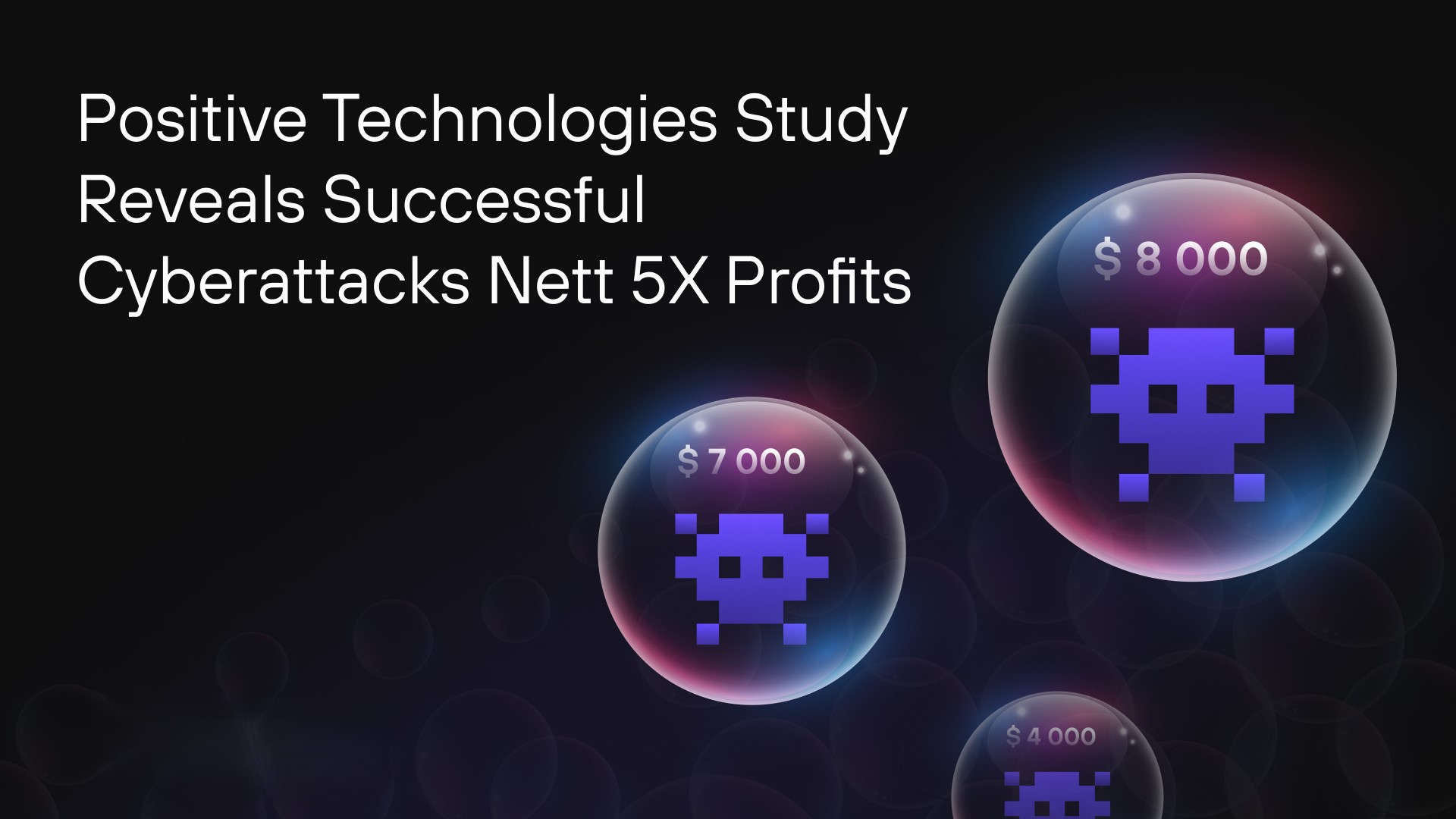
Positive Technologies has released a study on the dark web market, analysing prices for illegal cybersecurity services and products, as well as the costs incurred by cybercriminals to carry out attacks. The most expensive type of malware is ransomware, with a median cost of $7,500. Zero-day exploits are particularly valuable, often being sold for millions of dollars. However, the net profit from a successful cyberattack can be five times the cost of organizing it.
Experts estimate that performing a popular phishing attack involving ransomware costs novice cybercriminals at least $20,000. First, hackers rent dedicated servers, subscribe to VPN services, and acquire other tools to build a secure and anonymous IT infrastructure to manage the attack. Attackers also need to acquire the source code of malicious software or subscribe to ready-to-use malware, as well as tools for infiltrating the victim’s system and evading detection by security measures. Moreover, cybercriminals can consult with seasoned experts, purchase access to targeted infrastructures and company data, and escalate privileges within a compromised system. Products and tools are readily available for purchase on the dark web, catering to beginners. The darknet also offers leaked malware along with detailed instructions, making it easier for novice cybercriminals to carry out attacks.
Malware is one of the primary tools in a hacker’s arsenal, with 53% of malware-related ads focused on sales. In 19% of all posts, infostealers designed to steal data are offered. Crypters and code obfuscation tools, used to help attackers hide malware from security tools, are featured in 17% of cases. Additionally, loaders are mentioned in 16% of ads. The median cost of these types of malware stands at $400, $70, and $500, respectively. The most expensive malware is ransomware: its median cost is $7,500, with some offers reaching up to $320,000. Ransomware is primarily distributed through affiliate programs, known as Ransomware-as-a-Service (RaaS), where participants in an attack typically receive 70–90% of the ransom. To become a partner, a criminal must make a contribution of 0.05 Bitcoin (approximately $5,000) and have a solid reputation on the dark web.
Another popular attack tool is exploits: 69% of exploit-related ads focus on sales, with zero-day vulnerability posts accounting for 32% of them. In 31% of cases, the cost of exploits exceeds $20,000 and can reach several million dollars. Access to corporate networks is relatively inexpensive, with 72% of such ads focused on sales, and 62% of them priced at under a thousand dollars. Among cybercriminal services, hacks are the most popular option, accounting for 49% of reports. For example, the price for compromising a personal email account starts at $100, while the cost for a corporate account begins at $200.
Dmitry Streltsov, Threat Analyst at Positive Technologies, says, “On dark web marketplaces, prices are typically determined in one of two ways: either sellers set a fixed price, or auctions are held. Auctions are often used for exclusive items, such as zero-day exploits. The platforms facilitating these deals also generate revenue, often through their own escrow services, which hold the buyer’s funds temporarily until the product or service is confirmed as delivered. On many platforms, these escrow services are managed by either administrators or trusted users with strong reputations. In return, they earn at least 4% of the transaction amount, with the forums setting the rates.”
Considering the cost of tools and services on the dark web, along with the median ransom amount, cybercriminals can achieve a net profit of $100,000–$130,000 from a successful attack—five times the cost of their preparation. For a company, such an incident can result not only in ransom costs but also in massive financial losses due to disrupted business processes. For example, in 2024, due to a ransomware attack, servers of CDK Global were down for two weeks. The company paid cybercriminals $25 million, while the financial losses of dealers due to system downtime exceeded $600 million.


Written by Oded Vanunu, Chief Technologist & Head of Product Vulnerability Research at Check Point (more…)

Positive Technologies Reports 80% of Middle East Cyberattacks Compromise Confidential Data

Qualys Partners with Teksalah, the First Middle Eastern MSP in its mROC Alliance

CyberKnight Sets Up South Africa Entity

ManageEngine Enhances PAM with Native Intelligence

EcoOnline Expands into Middle East

OPSWAT Joins GISEC 2025 as Middle East Confronts AI-Driven Cyber Threats

GISEC Global 2025: SANS Institute to Showcase Elite Cybersecurity Training and Threat Expertise

Fortinet Expands FortiAI Across its Security Fabric Platform

How AI is Reinventing Cybersecurity for the Automotive Industry

GISEC 2025 Launches OT Security Conference Amid 49% Infrastructure Attack Surge

Positive Technologies @ GISEC Global 2025: Demonstrating Cutting-Edge Cyber Threats and AI Defense Strategies

Group-IB @ GISEC Global 2025: Tackling Evolving Cyber Threats with Localised Intelligence and AI

Video: Wallarm Unveils the Key to Cloud-Native API Security at GISEC Global 2025

Video: CyberKnight on Zero Trust, AI, and Saudi Arabia’s Digital Transformation at GISEC Global 2025

Video: SANS Institute Weighs in on Deepfakes, Model Poisoning and Risk Frameworks at GISEC Global 2025
-
 GISEC1 week ago
Positive Technologies @ GISEC Global 2025: Demonstrating Cutting-Edge Cyber Threats and AI Defense Strategies
-

 Cyber Security1 week ago
Axis Communications Sheds Light on Video Surveillance Industry Perspectives on AI
-
 GISEC1 week ago
Video: SANS Institute Weighs in on Deepfakes, Model Poisoning and Risk Frameworks at GISEC Global 2025
-
 GISEC1 week ago
ManageEngine @ GISEC Global 2025: AI, Quantum Computing, and Ransomware Form Part of Cybersecurity Outlook for 2025
-
 GISEC1 week ago
Video: SentinelOne Speaks Hyperautomation, Purple AI, and the Future of Threat Detection at GISEC Global 2025
-
 Africa Focus6 days ago
CyberKnight Sets Up South Africa Entity
-
 GISEC1 week ago
Group-IB @ GISEC Global 2025: Tackling Evolving Cyber Threats with Localised Intelligence and AI
-
 GISEC1 week ago
Video: CyberKnight on Zero Trust, AI, and Saudi Arabia’s Digital Transformation at GISEC Global 2025