
Expert Speak
How to Protect Against Insider Threats in Cybersecurity

Written by Harikrishna Kundariya, Co-Founder and Director, eSparkBiz Technologies

Harikrishna Kundariya, Co-Founder and Director, eSparkBiz Technologies
The status of cybersecurity has evolved towards preventing not only external attacks but also safeguarding private information from any potential risks. To put it bluntly, in my opinion, the most underappreciated yet the most dangerous cybersecurity threat comes from within the organization: insider threats. Cybersecurity threats can be broadly classified into two categories: Insider and Outsider.
The primary category is insider threats, wherein, employees, business partners, and contractors with authorized access to company sensitive data harm or neglect to act. Saboteurs become the most active offenders or unintentional threats arise from lack of training or user mistakes. The critical systems and sensitive information are often accessible to the insiders. Therefore their actions have huge ramifications such as loss of money, bad reputation, and legal issues to say the least.
According to research and studies, insider threats alone take up to 22% of the percentage of total breaches emphasizing the need for strategic actions against this worrisome trend.
Establish a Robust Access Control Policy
Insider threats can be fixed effectively by implementing a strict access control policy. This ensures that only specific individuals can access sensitive data and critical systems. Access to sensitive data and systems should always be provided based on the least privilege model. In simplest terms, an employee should only be provided with the necessary required access to perform their job. In most cases, this will involve limiting access to sensitive information such as customer data, financial records or Intellectual property to only those who need it for their role.
Implement User Activity Monitoring
An Organization should always be on the defence side and monitor user activity on its network and systems for any signs of a suspicious activity or abnormal behaviour. This could include looking for abnormal times to log in, as well as when files are transferred and sensitive data is accessed. Most of the time, insider threat subtly shows as changes in ordinary user behaviour, like employees accessing files they don’t typically need or massive amounts of data downloaded or requests to sensitive parts of the network. Many companies provide user activity monitoring tools which help track behaviour within an organization and give alerts of abnormal activity in real time.
Enforce Strong Authentication and Password Policies
Weak authentication can expose the systems to inside threats. There are policies that organizations should impose regarding systems such as multi-factor authentication (MFA) before gaining access to critical systems and sensitive data. MFA is a procedure whereby users logging in are asked for their fingerprint scan or a time-specific single-use passcode sent to their mobile devices. Besides MFA, it is also important to emphasize a consistent password policy throughout the organization. Passwords should be hard to guess, different from one another and timely rotated.
Employee Training and Awareness Programs
Not all insider threats are malevolent acts, in most cases, carelessness and lack of knowledge play a crucial role. Employees are a major vulnerability to the organization especially if they haven’t been trained on how to operate safely online, meaning, they could inadvertently expose the organization to risk by opening phishing emails, picking weak passwords, and mishandling sensitive information.
Organizations should tackle the aforementioned issues by rolling out consistent cybersecurity training every month or quarterly. Training should include; how to recognize phishing, how to secure sensitive information and how to properly deal with company property.
Data Encryption and Secure Communication
Regardless if it is sensitive data being stored or it’s in the process of transfer, utilizing encryption allows the data to remain unreadable without the requisite key. Even in case there is unauthorized access made by an employee the information will not be usable. Emails, files and databases that carry sensitive data need to be encrypted as well, such as intellectual property, and personal and financial records. All forms of communications, external and internal, should be encrypted for the dissolution of any chances of intellectual property theft.
Develop an Insider Threat Response Plan
The creation of an insider threat strategy is crucial to an organization as no security measure is enough to eliminate all insider threat risks. The organisation must have predefined protocols on how to handle a case when an insider breaches the company as replacement of technology and mitigation of losses can be a part of the process. An efficient response mechanism should have well-defined communication and reporting procedures for an incident as well as working protocols with law enforcement.
Regular Audits and Security Assessments
It is also prudent to emphasize the necessity of regular audits and security assessments as measures for enhancing the security of the organization’s assets. Audits of this kind should also look at user access control reviews and other insider threats triangulation such as systems logs and employee behavior patterns. Routine audits also assist these firms in determining opportunities for further improvement of their operational readiness investigative processes.
Foster a Culture of Trust and Transparency
While it’s important to put technical safeguards in place, creating a culture of trust and transparency within the organization can also help mitigate insider threats. This is because employees who feel valued and respected will have less incentive to engage in malicious acts that threaten the organization. Establishing trust comes down to being accessible to employees, supporting their aspirations, and dealing with problems as they arise.
Conclusion
Insider threats are perhaps the most dreaded and critical challenge for any organization, however, they can be countered using a mix of robust access mechanisms, training of employees, monitoring of users’ activities and an effective incident response plan. With the right risk mitigations in place, organizations will protect their greatest assets, including data, systems, and reputation from deliberate and unintentional insider threats. Taking into consideration the shifting nature of cybersecurity affairs, protecting systems and information against insider threats and penetration is still a top priority for organizations.













Written by Alain Penel, VP of Middle East, CIS & Turkey at Fortinet (more…)

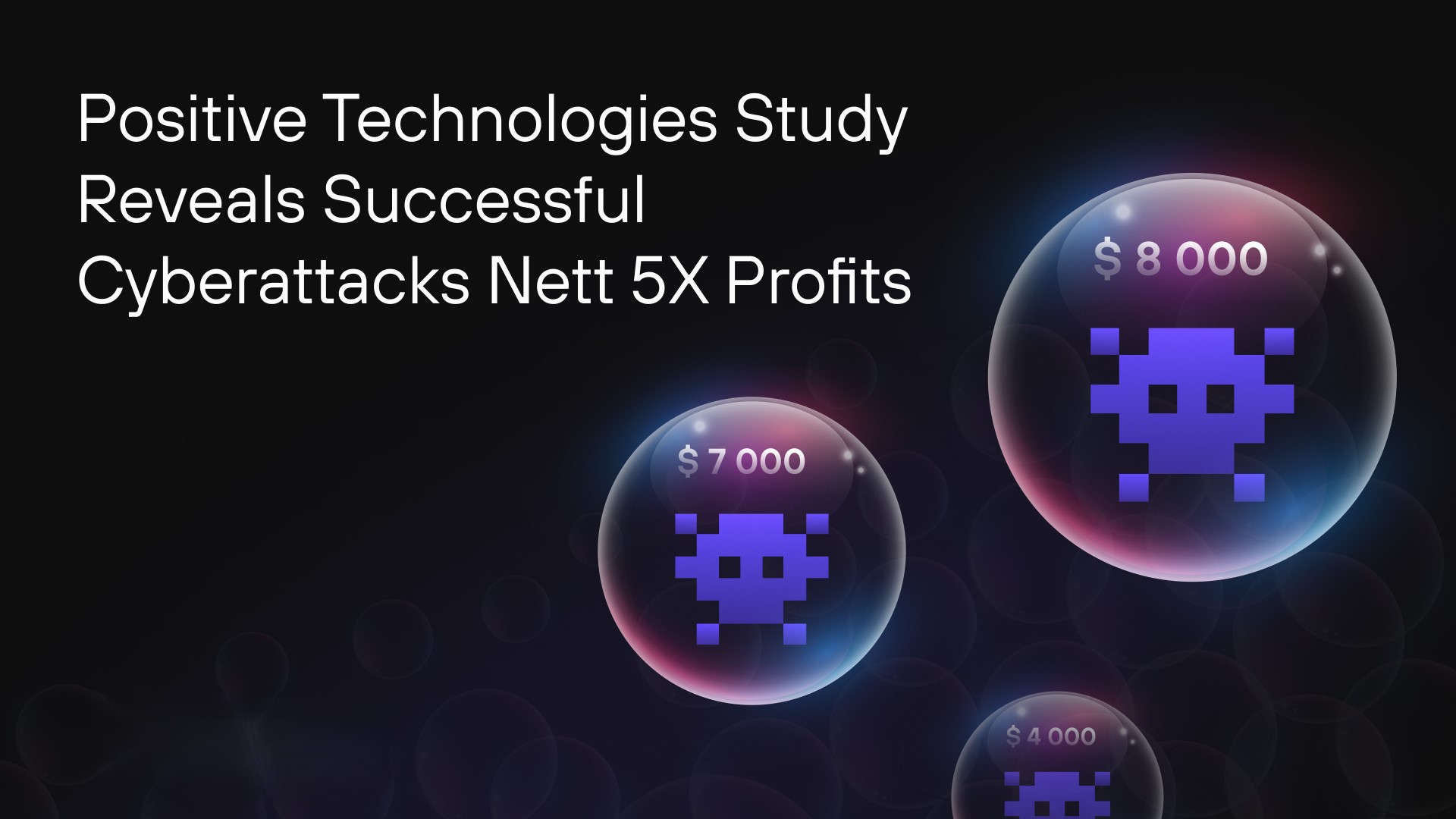
Positive Technologies has released a study on the dark web market, analysing prices for illegal cybersecurity services and products, as well as the costs incurred by cybercriminals to carry out attacks. The most expensive type of malware is ransomware, with a median cost of $7,500. Zero-day exploits are particularly valuable, often being sold for millions of dollars. However, the net profit from a successful cyberattack can be five times the cost of organizing it.
Experts estimate that performing a popular phishing attack involving ransomware costs novice cybercriminals at least $20,000. First, hackers rent dedicated servers, subscribe to VPN services, and acquire other tools to build a secure and anonymous IT infrastructure to manage the attack. Attackers also need to acquire the source code of malicious software or subscribe to ready-to-use malware, as well as tools for infiltrating the victim’s system and evading detection by security measures. Moreover, cybercriminals can consult with seasoned experts, purchase access to targeted infrastructures and company data, and escalate privileges within a compromised system. Products and tools are readily available for purchase on the dark web, catering to beginners. The darknet also offers leaked malware along with detailed instructions, making it easier for novice cybercriminals to carry out attacks.
Malware is one of the primary tools in a hacker’s arsenal, with 53% of malware-related ads focused on sales. In 19% of all posts, infostealers designed to steal data are offered. Crypters and code obfuscation tools, used to help attackers hide malware from security tools, are featured in 17% of cases. Additionally, loaders are mentioned in 16% of ads. The median cost of these types of malware stands at $400, $70, and $500, respectively. The most expensive malware is ransomware: its median cost is $7,500, with some offers reaching up to $320,000. Ransomware is primarily distributed through affiliate programs, known as Ransomware-as-a-Service (RaaS), where participants in an attack typically receive 70–90% of the ransom. To become a partner, a criminal must make a contribution of 0.05 Bitcoin (approximately $5,000) and have a solid reputation on the dark web.
Another popular attack tool is exploits: 69% of exploit-related ads focus on sales, with zero-day vulnerability posts accounting for 32% of them. In 31% of cases, the cost of exploits exceeds $20,000 and can reach several million dollars. Access to corporate networks is relatively inexpensive, with 72% of such ads focused on sales, and 62% of them priced at under a thousand dollars. Among cybercriminal services, hacks are the most popular option, accounting for 49% of reports. For example, the price for compromising a personal email account starts at $100, while the cost for a corporate account begins at $200.
Dmitry Streltsov, Threat Analyst at Positive Technologies, says, “On dark web marketplaces, prices are typically determined in one of two ways: either sellers set a fixed price, or auctions are held. Auctions are often used for exclusive items, such as zero-day exploits. The platforms facilitating these deals also generate revenue, often through their own escrow services, which hold the buyer’s funds temporarily until the product or service is confirmed as delivered. On many platforms, these escrow services are managed by either administrators or trusted users with strong reputations. In return, they earn at least 4% of the transaction amount, with the forums setting the rates.”
Considering the cost of tools and services on the dark web, along with the median ransom amount, cybercriminals can achieve a net profit of $100,000–$130,000 from a successful attack—five times the cost of their preparation. For a company, such an incident can result not only in ransom costs but also in massive financial losses due to disrupted business processes. For example, in 2024, due to a ransomware attack, servers of CDK Global were down for two weeks. The company paid cybercriminals $25 million, while the financial losses of dealers due to system downtime exceeded $600 million.

Written by Oded Vanunu, Chief Technologist & Head of Product Vulnerability Research at Check Point (more…)

Positive Technologies Reports 80% of Middle East Cyberattacks Compromise Confidential Data

Qualys Partners with Teksalah, the First Middle Eastern MSP in its mROC Alliance

CyberKnight Sets Up South Africa Entity

ManageEngine Enhances PAM with Native Intelligence

EcoOnline Expands into Middle East

OPSWAT Joins GISEC 2025 as Middle East Confronts AI-Driven Cyber Threats

GISEC Global 2025: SANS Institute to Showcase Elite Cybersecurity Training and Threat Expertise

Fortinet Expands FortiAI Across its Security Fabric Platform

How AI is Reinventing Cybersecurity for the Automotive Industry

GISEC 2025 Launches OT Security Conference Amid 49% Infrastructure Attack Surge

Positive Technologies @ GISEC Global 2025: Demonstrating Cutting-Edge Cyber Threats and AI Defense Strategies

Group-IB @ GISEC Global 2025: Tackling Evolving Cyber Threats with Localised Intelligence and AI

Video: Wallarm Unveils the Key to Cloud-Native API Security at GISEC Global 2025

Video: CyberKnight on Zero Trust, AI, and Saudi Arabia’s Digital Transformation at GISEC Global 2025

Video: SANS Institute Weighs in on Deepfakes, Model Poisoning and Risk Frameworks at GISEC Global 2025
-
 GISEC1 week ago
Positive Technologies @ GISEC Global 2025: Demonstrating Cutting-Edge Cyber Threats and AI Defense Strategies
-

 Cyber Security1 week ago
Axis Communications Sheds Light on Video Surveillance Industry Perspectives on AI
-
 GISEC1 week ago
Video: SANS Institute Weighs in on Deepfakes, Model Poisoning and Risk Frameworks at GISEC Global 2025
-
 GISEC1 week ago
ManageEngine @ GISEC Global 2025: AI, Quantum Computing, and Ransomware Form Part of Cybersecurity Outlook for 2025
-
 GISEC1 week ago
Video: SentinelOne Speaks Hyperautomation, Purple AI, and the Future of Threat Detection at GISEC Global 2025
-
 Africa Focus6 days ago
CyberKnight Sets Up South Africa Entity
-
 GISEC1 week ago
Group-IB @ GISEC Global 2025: Tackling Evolving Cyber Threats with Localised Intelligence and AI
-
 GISEC1 week ago
Video: CyberKnight on Zero Trust, AI, and Saudi Arabia’s Digital Transformation at GISEC Global 2025