
Market Research
Kingston Reiterates the Role of Encrypted Hardware in Mobile Healthcare Data Security


Kingston Technology Europe has emphasised the importance of hardware-based encryption in strengthening mobile healthcare data protection efforts across the globe. The company made the statement as data breaches remain one of the biggest digital threats within the healthcare industry, thereby raising the need for stronger data security protocols and stringent compliance with relevant policies.
The average total cost of a healthcare data breach worldwide rose by almost $1 million to reach $10.10 million in 2022, according to IBM Security analysis of research data compiled by Ponemon Institute. Healthcare breach costs have been the most expensive industry for 12 consecutive years, increasing by 41.6% since the 2020 report.
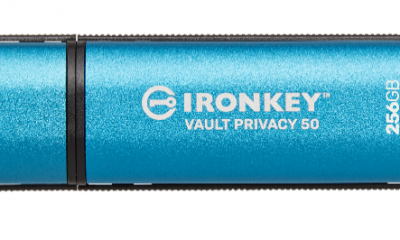
Kingston maintained that hardware encryption can help bridge gaps by providing a fortified layer of data protection through an encryption process designed to be unbreakable or hard to intercept. Whether stored or transported, the medical data saved in encrypted hardware devices such as USBs can be accessed only through authentication codes set by authorised individuals.
The encryption feature is also separate from any PC, mobile phone, or network systems to keep the data out of reach in the event cybercriminal breaks into the gadgets or online networks. Security is also assured even if the encrypted device ends up being misplaced, lost, or stolen. “Encrypted drives such as IronKey encrypted USBs are made to keep the data from falling into the wrong hands. Many are equipped with top-notch features that can also detect and respond to physical tampering and provide automatic data protection upon drive removal for added peace of mind,” said Antoine Harb, the Team Leader for Middle East and North Africa at Kingston Technology.
“Such capabilities are vital given that human error is considered one of the common causes of data breaches. One recent example took place in Japan where a worker reportedly lost a memory stick that contained the personal data of all residents of a Japanese city after a night out. The data had been encrypted and password-protected, preventing unauthorized access, Hardware-based encryption not only offers strong and reliable protection but is also a practical and easy-to-use approach to safeguarding private healthcare-related information,” added Harb.
According to Harb, it offers out-of-the-box cybersecurity measures minus the need for regular updates like those required in the software-based encryption processes. “Cybercrimes are on the rise worldwide, resulting in astronomical financial and reputational costs. In the Middle East, IBM Security reported that the region had the second highest average total data breach cost reaching $7.46 million in 2022 from $6.93 million last year,” the company said.
Among other factors, the Middle Eastern countries’ financial and economic status has been cited as one of the main reasons behind the online network attacks. In the Gulf region, the attacks on Dubai-based NHS Moorfield Hospital and GlobeMed Saudi were considered one of the top breaches in the UAE and Saudi Arabia, respectively.
Calls for improved data security levels are, therefore, mounting. Across the globe, laws, and regulations, including the General Data Protection Regulation, have already been enforced for a higher level of data privacy and security. In the UAE, the government has also imposed strict compliance of healthcare providers with its Health Data Law. “We can only expect that online network intrusions will grow and become even more sophisticated and bold as the world transitions to an ultra-connected society. Implementing or using encrypted devices is an important cybersecurity protocol that both individuals and corporations can adopt for stronger and easier-to-use data protection. Understanding one’s needs and, in the case of healthcare providers, knowing the importance of protecting the patients’ private mobile data, among others, play an important role in choosing the right encrypted hardware,” Harb added.










Axis Communications has published a new report that explores the state of AI in the global video surveillance industry. Titled The State of AI in Video Surveillance, the report examines the key opportunities, challenges and future trends, as well as the responsible practices that are becoming critical for organisations in their use of AI. The report draws insights from qualitative research as well as quantitative data sources, including in-depth interviews with carefully selected experts from the Axis global partner network.
A leading insight featured in the report is the unanimous view among interviewees that interest in the technology has surged over the past few years, with more and more business customers becoming curious and increasingly knowledgeable about its potential applications.

Mats Thulin, Director AI & Analytics Solutions at Axis Communications
“AI is a technology that has the potential to touch every corner and every function of the modern enterprise. That said, any implementations or integrations that aim to drive value come with serious financial and ethical considerations. These considerations should prompt organisations to scrutinise any initiative or investment. Axis’s new report not only shows how AI is transforming the video surveillance landscape, but also how that transformation should ideally be approached,” said Mats Thulin, Director AI & Analytics Solutions at Axis Communications.
According to the Axis report, the move by businesses from on-premise security server systems to hybrid cloud architectures continues at pace, driven by the need for faster processing, improved bandwidth usage and greater scalability. At the same time, cloud-based technology is being combined with edge AI solutions, which play a crucial role by enabling faster, local analytics with minimal latency, a prerequisite for real-time responsiveness in security-related situations.
By moving AI processing closer to the source using edge devices such as cameras, businesses can reduce bandwidth consumption and better support real-time applications like security monitoring. As a result, the hybrid approach is expected to continue to shape the role of AI in security and unlock new business intelligence and operational efficiencies.
A trend that is emerging among businesses is the integration of diverse data for a more comprehensive analysis, transforming safety and security. Experts predict that by integrating additional sensory data, such as audio and contextual environmental factors caught on camera, can lead to enhanced situational awareness and greater actionable insights, offering a more comprehensive understanding of events.
Combining multiple data streams can ultimately lead to improved detection and prediction of potential threats or incidents. For example, in emergency scenarios, pairing visual data with audio analysis can enable security teams to respond more quickly and precisely. This context-aware approach can potentially elevate safety, security and operational efficiency, and reflects how system operators can leverage and process multiple data inputs to make better-informed decisions.
According to the Axis report, interviewees emphasised that responsible AI and ethical considerations are critical priorities in the development and deployment of new systems, raising concerns about decisions potentially based on biased or unreliable AI. Other risks highlighted include those related to privacy violations and how facial and behavioural recognition could have ethical and legal repercussions.
As a result, a recurring theme among interviewees was the importance of embedding responsible AI practices early in the development process. Interviewees also pointed to regulatory frameworks, such as the EU AI Act, as pivotal in shaping responsible use of technology, particularly in high-risk areas. While regulation was broadly acknowledged as necessary to build trust and accountability, several interviewees also stressed the need for balance to safeguard innovation and address privacy and data security concerns.
“The findings of this report reflect how enterprises are viewing the trend of AI holistically, working to have a firm grasp of both how to use the technology effectively and understand the macro implications of its usage. Conversations surrounding privacy and responsibility will continue but so will the pace of innovation and the adoption of technologies that advance the video surveillance industry and lead to new and exciting possibilities,” Thulin added.
Cyber Security
Rising Cyber Insurance Pressures Push UAE Firms to Fix Identity Silos and AI Vulnerabilities


CyberArk has announced the release of the CyberArk 2025 Identity Security Landscape Report, a global survey revealing how organizations are inadvertently creating a new identity-centric attack surface through growing use of AI and cloud. The report shows that machine identities are mostly unknown and uncontrolled within organizations, while the primary roadblocks to Agentic AI adoption in the UAE involve security concerns around external manipulation and sensitive access, signposting the emergence of a new and potent identity security challenge.
“The race to embed AI into environments has inadvertently created a new set of identity security risks centered around the access of unmanaged and unsecured machine identities – and the privileged access of AI agents will represent an entirely new threat vector,” said Craig Harwood, Area VP for Africa and the Middle East at CyberArk. “For UAE organizations to stay resilient, CISOs and security leaders must modernize their identity security strategies to contend with a new and expanding attack surface characterized by the proliferation of identities with privileged access and made worse by damaging identity silos.”
‘Rise of the machines’ contributes to unsecured privilege sprawl: Machine identities, driven primarily by cloud and AI, now vastly outnumber human identities within organizations and nearly half have sensitive or privileged access. However, many enterprises leave both human and machine access to critical systems under-secured. There are 82 machine identities for every human in organizations worldwide.
In 92% of UAE organizations, the definition of a ‘privileged user’ applies solely to human identities – but 42% of machine identities have privileged or sensitive access. Fifty two percent do not have identity security controls in place to secure cloud infrastructure and workloads. Fifty four percent of UAE organizations experienced at least two successful identity-centric breaches in the past 12 months, ranging from supply chain attacks and compromised privileged access to identity and credential theft.
AI is everywhere and identity-centric agentic AI risk looms: Sanctioned and unsanctioned adoption of AI and large language models (LLMs) is simultaneously transforming organizations while amplifying cybersecurity risks. Concerns around the emergence of AI agents in the UAE and their privileged access underscores the urgency for targeted identity security investment. AI will drive the creation of the greatest number of new identities with privileged and sensitive access in 2025.
Only eighteen percent of UAE organizations have identity security controls for AI in place. Sixty percent cannot secure shadow AI usage in their organization. AI agent adoption roadblocks include manipulation and sensitive access concerns. Complexity and identity silos are overwhelming security leaders and undermining business resilience: Fragmented identity security programs and poor environmental visibility are diminishing resilience in the face of evolving cybersecurity threats. Most organizations face increased privilege-related compliance pressure.
Seventy percent of UAE respondents say identity silos are a root cause of organizational cybersecurity risk. Sixty eight percent of security professionals in the UAE agree that their organizations prioritize business efficiencies over robust cybersecurity. Human and machine identities – many of them with privileged access – are expected to double in 2025. Ninety percent of UAE organizations are under increased pressure from insurers mandating enhanced privilege controls.
CyberArk is also participating at GISEC Global 2025, taking place from 6–8 May at the Dubai World Trade Centre. The company will be present at the HELP AG stand, where it will host a dedicated pod showcasing its latest cybersecurity solutions and discuss the Identity Security Landscape report. Attendees will have the opportunity to engage directly with CyberArk’s leadership, including Craig Harwood, Vice President for Middle East and Africa, and Laurence Elbana, Director of Sales, who will be available throughout the event.
Market Research
SoftServe Study: 58% of Leaders Report Companies Using Inaccurate Data for Big Decisions

SoftServe has released survey results on the state of data management in 2025, unveiling significant benefits of strong data foundations while exposing the widespread deficits in data maturity affecting most businesses. The majority of the 750 business leaders surveyed barely grasp the value of their data as 65% of all respondents believe no one at their organization understands all the data collected and how to access it. Further, 58% say key business decisions are based on inaccurate or inconsistent data – most of the time, if not always – raising concerns for companies across industries and borders.
This study, commissioned by SoftServe and conducted by Wakefield Research, assesses data readiness in enterprises by the degree of data quality, strategy, organization, investment, and governance implemented. Responses indicate a lack of knowledge in data management is coupled with an internal disconnect and noticeable divide between the C-suite, VPs, and senior management, putting entire organizations at odds when it comes to how data is used, acquired, and funded.
Key survey findings include:
- Outdated or Misaligned Strategies: Many think it’s time to hit ‘refresh’ on their data strategy as 73% report major updates or a complete overhaul is needed, and nearly all (98%) believe an updated data strategy would be required for strategic initiatives like Gen AI.
- Leadership Divide: While less visibility among leaders can lead to skewed perceptions of data comprehension, the division grows with 78% of VPs and 61% of directors — but just 44% of those at C-level — claim their organization’s investment priorities are negatively impacted by leaders not fully understanding how data can generate value.
- Data on Demand: For 60%, decision-makers getting access to data when they need it is a challenge – and one that may not be an easy fix, as the majority (51%) of the 58% whose organization makes most or all decisions using inaccurate or inconsistent data now believe a significant increase in data management investment is needed to meet their goals.
- Misallocated Investments: Nearly three-fourths (73%) believe poor prioritization has diverted needed funds and talent away from valuable data projects to broad Gen AI initiatives with weaker ROI.
All deficits aside, the survey results include a silver lining: strong data management has allowed organizations to open new revenue streams (44%) or monetize their data (38%) with the right infrastructure and governance to transform information into a vital source of income. Organizations also attributed increases in productivity and efficiency (54%), as well as improved decision-making and forecasting abilities (49%), to having strong data foundations. Most respondents hope to follow suit this year as the bulk (85%) prepare to slightly or significantly increase their data budget and nearly half (42%) of those with a fully mature data strategy expect to significantly increase their overall data investments.
“An impactful data strategy is not about perfection, but prioritization,” said Rodion Myronov, AVP of Technology at SoftServe. “It’s about gaining maturity where it matters most for your business by prioritizing the missing piece of the whole data puzzle, not tossing it aside for the next shiny new toy. Establishing a mature data strategy helps reinforce organizational foundations, so you can pursue bigger and better puzzles and projects in the future.”
Survey respondents included 750 business or technology leaders responsible for data management or AI use at global companies spanning eight countries and eight industries with $1 billion or more in annual revenue.

Positive Technologies Reports 80% of Middle East Cyberattacks Compromise Confidential Data

Qualys Partners with Teksalah, the First Middle Eastern MSP in its mROC Alliance

CyberKnight Sets Up South Africa Entity

ManageEngine Enhances PAM with Native Intelligence

EcoOnline Expands into Middle East

OPSWAT Joins GISEC 2025 as Middle East Confronts AI-Driven Cyber Threats

GISEC Global 2025: SANS Institute to Showcase Elite Cybersecurity Training and Threat Expertise

Fortinet Expands FortiAI Across its Security Fabric Platform

How AI is Reinventing Cybersecurity for the Automotive Industry

GISEC 2025 Launches OT Security Conference Amid 49% Infrastructure Attack Surge

Positive Technologies @ GISEC Global 2025: Demonstrating Cutting-Edge Cyber Threats and AI Defense Strategies

Group-IB @ GISEC Global 2025: Tackling Evolving Cyber Threats with Localised Intelligence and AI

Video: Wallarm Unveils the Key to Cloud-Native API Security at GISEC Global 2025

Video: CyberKnight on Zero Trust, AI, and Saudi Arabia’s Digital Transformation at GISEC Global 2025

Video: SANS Institute Weighs in on Deepfakes, Model Poisoning and Risk Frameworks at GISEC Global 2025
-
 GISEC1 week ago
Positive Technologies @ GISEC Global 2025: Demonstrating Cutting-Edge Cyber Threats and AI Defense Strategies
-

 Cyber Security1 week ago
Axis Communications Sheds Light on Video Surveillance Industry Perspectives on AI
-
 GISEC1 week ago
Video: SANS Institute Weighs in on Deepfakes, Model Poisoning and Risk Frameworks at GISEC Global 2025
-
 GISEC1 week ago
ManageEngine @ GISEC Global 2025: AI, Quantum Computing, and Ransomware Form Part of Cybersecurity Outlook for 2025
-
 GISEC1 week ago
Video: SentinelOne Speaks Hyperautomation, Purple AI, and the Future of Threat Detection at GISEC Global 2025
-
 Africa Focus6 days ago
CyberKnight Sets Up South Africa Entity
-
 GISEC1 week ago
Group-IB @ GISEC Global 2025: Tackling Evolving Cyber Threats with Localised Intelligence and AI
-
 GISEC1 week ago
Video: CyberKnight on Zero Trust, AI, and Saudi Arabia’s Digital Transformation at GISEC Global 2025