
Expert Speak
Why a Dedicated Hybrid DNS Solution is Vital?


Written by Ali Mehaidly, Solutions Architect, Middle East & Africa at Infoblox
According to Gartner, over 45 percent of IT spending will have shifted to the cloud by 2024 (up from 33 percent in 2020). Broader use of cloud and SaaS applications is driving greater investment in technologies that improve productivity, data security, and continuous business operations. The demands of a modern, distributed workforce require IT to prioritize agility, velocity, and scale. As a consequence, networks are shifting from a traditional architecture focused on headquarters and the data center to a distributed, edge-to-cloud architecture. To support the hybrid workplace, organizations need to be able to easily secure networks and unify management across cloud, HQ, and branch locations.
The hybrid workplace – where employees are mobile across on-site, home, and work-from-anywhere locations – is here to stay. In addition, organizations are undertaking other business imperatives like SaaS, cloud adoption, and IoT at a fast pace. To meet the requirements of workplace transformation, organizations must also transform their network’s capabilities.
But these transitions are not without challenges. As companies transform, infrastructure becomes more fragmented. IT teams struggle with the loss of control over core network services such as DNS, DHCP, and IP Address Management (IPAM), as remote users and cloud workloads rely on disparate DHCP, DNS systems. Limited visibility, difficulty in effectively managing devices in remote offices, and lack of security “everywhere” cause further concerns.
Why Dedicated DNS Security
Numerous organizations trust DNS, and the traffic is usually free to pass through company network firewalls. However, cybercriminals know this and abuse and attack DNS, making the protection of this critical service a high priority for organizations.
There is no perfect security tool that will fix all problems, but it is important to have tools that fill in the gaps left open by other tools. DNS, for example, can be used as a security control point to stop malicious attacks and to catch threats that would otherwise be missed by other security tools such as DNS tunneling/ data exfiltration, domain generation algorithms (DGAs), and lookalike domain attacks.
Threat investigators also rely on DNS because it detects malicious activity earlier in the kill chain than other security tools, reducing the burden on their perimeter defenses. It gives much-needed visibility into which devices are making requests to connect to malicious destinations – visibility that allows organizations to sever those connections and protect their entire infrastructure.
In fact, DNS and malware analysis are both regarded as the top tools used in identifying what data and systems the attacker got access to. DNS is also helpful to investigators when determining how much information the attacker got access to.
DNS should therefore be a key part of any organization’s security strategy as it protects firms from threats that other security tools might have missed and allows investigators to know which devices have requested connections to malicious destinations. DNS also helps accelerate incident response times, which makes threat resolution faster.
The internet is encrypted now; network analytics and visibility vendors informally reported to Forrester that between 72% and 95% of the traffic they’re seeing in corporate networks is encrypted. For many organizations, only metadata like DNS requests remain as visible cues available for real-time analysis. Security and risk professions will continue to embrace the tried-and-tested DNS firewalling and filtering techniques as a first line of defense against malware, phishing, and ransomware. Attackers know this and have been developing algorithms to generate pseudo-random domain names for the C2 operations, leading to an arms race that only AI will be able to fight in real-time.
Signature-based products like NGFW are critical to blocking or containing phishing attacks. But organizations might be missing a crucial element at a different layer of their security defenses: DNS. NGFWs allows administrators to apply policies to traffic, based not just on port and protocol, but also on applications and users accessing the network. However, the DNS protocol is typically not “inspected” by NGFW for malware, leaving the service vulnerable to malware. An NGFW is not a DNS server, and therefore, cannot interpret DNS queries and responses to detect malware that uses the DNS protocol. While some NFGWs may claim to have DNS security-related features, they are typically “bolted on” and lack the sophisticated visibility that DNS servers have into all the DNS requests and devices.
While a DNS firewall can stop malicious Internet connections before they occur at the DNS control plane, an NGFW must scan each of these connections individually, which is resource intensive and can drain its performance. NGFWs also do not offer protection to off-network devices or users, such as those working remotely, without a VPN, which adds latency. A DNS firewall can, making it much faster, more responsive, and effective at protecting end-users working both inside and outside of the organizational perimeter.
Because it’s based on DNS, a DNS firewall can be an ideal enforcement point for detecting any device that tries to call up a malicious domain. Moreover, since a DNS server is a default service in the network that is already protected by an NGFW, a DNS firewall can secure DNS connections quickly, easily, and at scale, without burdening the already busy NGFW.
Using a layered approach to security is critical as network perimeters continue to erode and confidential information is increasingly accessed through cloud services on public Wi-Fi networks. The best way to maintain a strong security posture is by integrating a DNS firewall with an NGFW. DNS firewalls can be installed as part of the standard DNS service, either on-premises or offered as a service via the cloud to complement and fill the gaps missed by NFGWs and other security tools.













Written by Alain Penel, VP of Middle East, CIS & Turkey at Fortinet (more…)

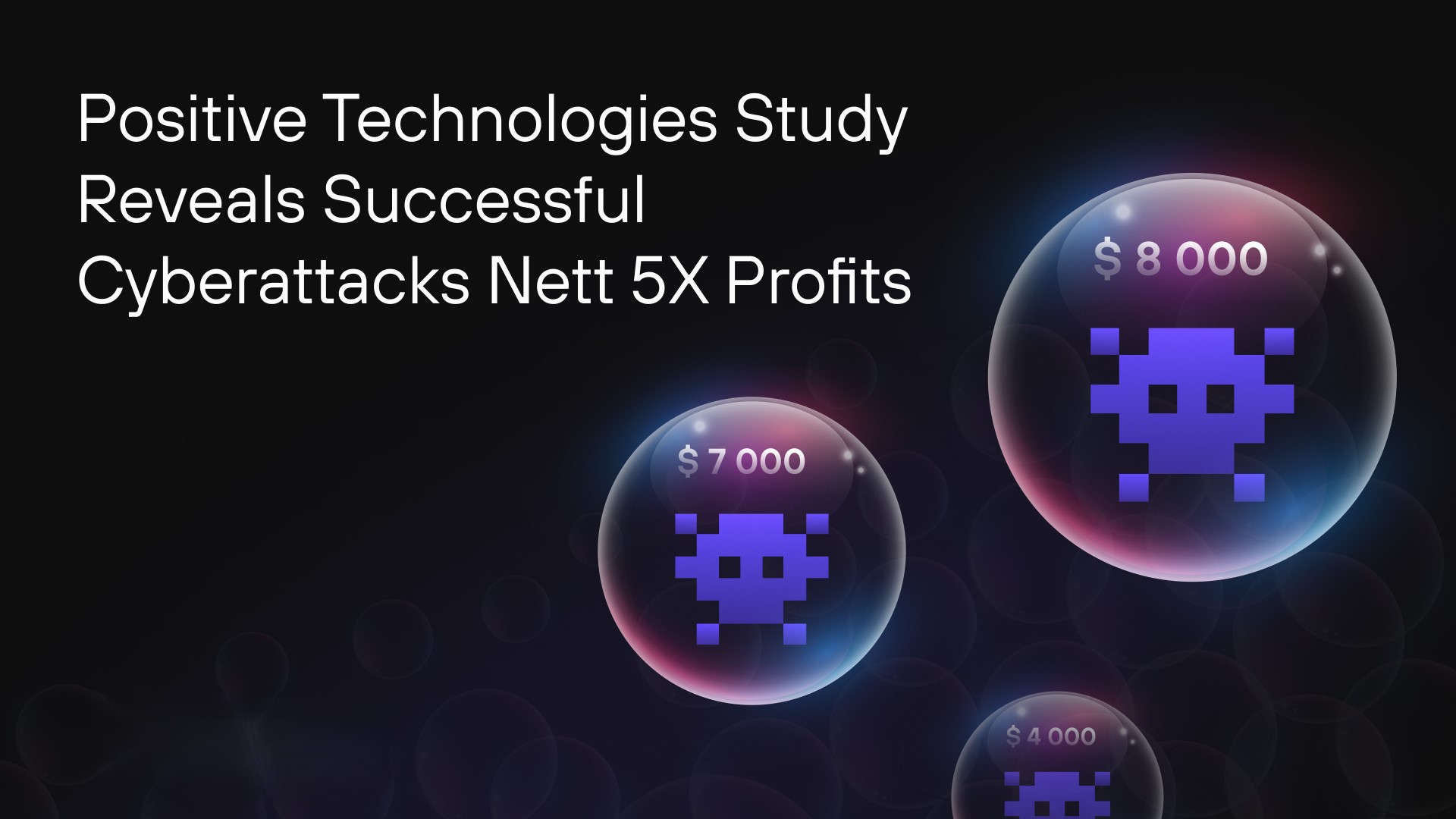
Positive Technologies has released a study on the dark web market, analysing prices for illegal cybersecurity services and products, as well as the costs incurred by cybercriminals to carry out attacks. The most expensive type of malware is ransomware, with a median cost of $7,500. Zero-day exploits are particularly valuable, often being sold for millions of dollars. However, the net profit from a successful cyberattack can be five times the cost of organizing it.
Experts estimate that performing a popular phishing attack involving ransomware costs novice cybercriminals at least $20,000. First, hackers rent dedicated servers, subscribe to VPN services, and acquire other tools to build a secure and anonymous IT infrastructure to manage the attack. Attackers also need to acquire the source code of malicious software or subscribe to ready-to-use malware, as well as tools for infiltrating the victim’s system and evading detection by security measures. Moreover, cybercriminals can consult with seasoned experts, purchase access to targeted infrastructures and company data, and escalate privileges within a compromised system. Products and tools are readily available for purchase on the dark web, catering to beginners. The darknet also offers leaked malware along with detailed instructions, making it easier for novice cybercriminals to carry out attacks.
Malware is one of the primary tools in a hacker’s arsenal, with 53% of malware-related ads focused on sales. In 19% of all posts, infostealers designed to steal data are offered. Crypters and code obfuscation tools, used to help attackers hide malware from security tools, are featured in 17% of cases. Additionally, loaders are mentioned in 16% of ads. The median cost of these types of malware stands at $400, $70, and $500, respectively. The most expensive malware is ransomware: its median cost is $7,500, with some offers reaching up to $320,000. Ransomware is primarily distributed through affiliate programs, known as Ransomware-as-a-Service (RaaS), where participants in an attack typically receive 70–90% of the ransom. To become a partner, a criminal must make a contribution of 0.05 Bitcoin (approximately $5,000) and have a solid reputation on the dark web.
Another popular attack tool is exploits: 69% of exploit-related ads focus on sales, with zero-day vulnerability posts accounting for 32% of them. In 31% of cases, the cost of exploits exceeds $20,000 and can reach several million dollars. Access to corporate networks is relatively inexpensive, with 72% of such ads focused on sales, and 62% of them priced at under a thousand dollars. Among cybercriminal services, hacks are the most popular option, accounting for 49% of reports. For example, the price for compromising a personal email account starts at $100, while the cost for a corporate account begins at $200.
Dmitry Streltsov, Threat Analyst at Positive Technologies, says, “On dark web marketplaces, prices are typically determined in one of two ways: either sellers set a fixed price, or auctions are held. Auctions are often used for exclusive items, such as zero-day exploits. The platforms facilitating these deals also generate revenue, often through their own escrow services, which hold the buyer’s funds temporarily until the product or service is confirmed as delivered. On many platforms, these escrow services are managed by either administrators or trusted users with strong reputations. In return, they earn at least 4% of the transaction amount, with the forums setting the rates.”
Considering the cost of tools and services on the dark web, along with the median ransom amount, cybercriminals can achieve a net profit of $100,000–$130,000 from a successful attack—five times the cost of their preparation. For a company, such an incident can result not only in ransom costs but also in massive financial losses due to disrupted business processes. For example, in 2024, due to a ransomware attack, servers of CDK Global were down for two weeks. The company paid cybercriminals $25 million, while the financial losses of dealers due to system downtime exceeded $600 million.

Written by Oded Vanunu, Chief Technologist & Head of Product Vulnerability Research at Check Point (more…)

Positive Technologies Reports 80% of Middle East Cyberattacks Compromise Confidential Data

Qualys Partners with Teksalah, the First Middle Eastern MSP in its mROC Alliance

CyberKnight Sets Up South Africa Entity

ManageEngine Enhances PAM with Native Intelligence

EcoOnline Expands into Middle East

OPSWAT Joins GISEC 2025 as Middle East Confronts AI-Driven Cyber Threats

GISEC Global 2025: SANS Institute to Showcase Elite Cybersecurity Training and Threat Expertise

Fortinet Expands FortiAI Across its Security Fabric Platform

How AI is Reinventing Cybersecurity for the Automotive Industry

GISEC 2025 Launches OT Security Conference Amid 49% Infrastructure Attack Surge

Positive Technologies @ GISEC Global 2025: Demonstrating Cutting-Edge Cyber Threats and AI Defense Strategies

Group-IB @ GISEC Global 2025: Tackling Evolving Cyber Threats with Localised Intelligence and AI

Video: Wallarm Unveils the Key to Cloud-Native API Security at GISEC Global 2025

Video: CyberKnight on Zero Trust, AI, and Saudi Arabia’s Digital Transformation at GISEC Global 2025

Video: SANS Institute Weighs in on Deepfakes, Model Poisoning and Risk Frameworks at GISEC Global 2025
-
 GISEC1 week ago
Positive Technologies @ GISEC Global 2025: Demonstrating Cutting-Edge Cyber Threats and AI Defense Strategies
-

 Cyber Security1 week ago
Axis Communications Sheds Light on Video Surveillance Industry Perspectives on AI
-
 GISEC1 week ago
Video: SANS Institute Weighs in on Deepfakes, Model Poisoning and Risk Frameworks at GISEC Global 2025
-

 GISEC1 week ago
ManageEngine @ GISEC Global 2025: AI, Quantum Computing, and Ransomware Form Part of Cybersecurity Outlook for 2025
-

 GISEC1 week ago
Video: SentinelOne Speaks Hyperautomation, Purple AI, and the Future of Threat Detection at GISEC Global 2025
-
 Africa Focus6 days ago
CyberKnight Sets Up South Africa Entity
-
 GISEC1 week ago
Group-IB @ GISEC Global 2025: Tackling Evolving Cyber Threats with Localised Intelligence and AI
-
 GISEC1 week ago
Video: CyberKnight on Zero Trust, AI, and Saudi Arabia’s Digital Transformation at GISEC Global 2025