
Expert Speak
Ransomware Attacks Surge Globally Amid Microsoft Exchange Server Vulnerabilities

Over the past year, hospitals and the healthcare industry have been under tremendous pressure during the COVID-19 pandemic, not only dealing with surges in patient numbers, but also with shameless ransomware attacks launched by cybercriminals who see the sector as a soft target. However, it now seems that criminals are shifting their attention to new targets, because they sense even easier opportunities for their extortion tactics. Following the recent disclosure of vulnerabilities affecting Microsoft Exchange Servers, Check Point Research (CPR) has observed a global surge in the number of ransomware attacks. In fact, since the beginning of 2021, there has been a 9% increase monthly in organizations affected ransomware.
This uptick includes a 57% increase in organizations affected by ransomware in the past 6 months. According to various reports and official alerts from the Cybersecurity and Infrastructure Security Agency (CISA) in the US, ransomware attacks are targeting Microsoft Exchange servers by leveraging previously exposed vulnerabilities. In the last week alone, the number of attacks involving Exchange Server vulnerabilities has tripled. With over 50,000 attack attempts seen globally, CPR has observed that the most targeted industries are government/military, manufacturing and banking/finance.
The most affected country is the United States (49% of all attack attempts), followed by United Kingdom (5%), while Germany and Netherlands each saw 2% of the attacks attempts. “Two trends are happening concurrently. One, cyber attacks targeting Microsoft Exchange servers are increasing sharply. Two, ransomware attacks are simultaneously rising steadily. Although we have not concluded that the two trends are directly related just yet, there is reason for concern. We do believe the Microsoft Exchange vulnerabilities opened up another door into organizations. And so, Check Point Research is also raising the alarm bells, just like CISA has. We’re urging organizations to act now, before ransomware gangs make Exchange exploits popular. In cyber crime, we rarely see businesses that demonstrate constant growth, or rapid adjustments to changing factors, as well as quick adoptions of new technologies. Ransomware is one of those rare businesses,” says Lotem Finkelsteen, Group Manager of Threat Intelligence at Check Point Software.
Ransomware spikes globally
CPR has also observed the following trends in ransomware attacks:
- In the past 6 months, there has been a general increase in the number of attacks involving human-operated ransomware, such as Maze and Ryuk, in which victims have to negotiate with the criminals that launched the attack.
- In the last 6 months, there has been a 57% increase in the number of organizations affected by ransomware globally.
- Since the beginning of 2021, the number of organizations affected by ransomware have been growing at 9% monthly.
- In total, 3,448 organizations have been affected with ransomware
Ransomware Attack Attempts by Industry:
The industry sector most targeted by WannaCry is government/military (18% of total attacks). This is followed by manufacturing (16%), banking and financial services (14%) and healthcare (8%), and Insurance and Legal sector (6%).
Ransomware Attack Attempts by Country:
The countries most affected by ransomware attack attempts are the United States (49% of all attack attempts), followed by United Kingdom (5%), while Germany and Netherlands each saw 2% of the attacks.
WannaCry surges … again!
Worryingly, WannaCry, the wormable ransomware that made its debut four years ago, is also trending again, though it is unclear why. Since the beginning of the year, the number of organizations affected with WannaCry globally has increased by 53%. In fact, CPR found that there are 40 times more affected organizations in March 2021 when compared to October 2020. The new samples still use the EternalBlue exploit to propagate – for which patches have been available for over 4 years. This highlights why it’s critical that organizations patch their systems as soon as updates are available.
Ransomware protection for your organization
Below are some fundamental tips to keep your organization protected from ransomware attacks:
- Back up all data – One of most important actions to prevent ransomware from disrupting your operations is backing up your company’s data regularly. If something goes wrong, you should be able to quickly and easily revert to a recent backup version. This won’t actively protect you from being the target of an attack, but if you’re ever attacked, the fallout won’t be nearly as devastating. Backing up data can help companies avoid having to pay ransom or suffer the ill effects of restoring systems back to a previous version.
- Keep software updated – Ransomware attackers sometimes find an entry point within apps and software, noting vulnerabilities and capitalizing on them. Fortunately, some developers actively search for new vulnerabilities and patch them. Adopt a patch management strategy and ensure all team members are constantly up-to-date with the latest versions. As mentioned earlier, WannaCry relies on unpatched systems to spread, yet the patches for the vulnerability it exploits have been available for 4 years – yet evidently many organizations have not applied these updates.
- Utilize better threat detection – Most ransomware attacks can be detected and resolved before it’s too late. To maximize your chances of protection, have an automated threat detection system in place in your organization.
- Adopt multifactor authentication – Multifactor authentication forces users to verify their identities in multiple ways before they’re granted access to a system. This way, if an employee mistakenly gives their password to a cybercriminal, the criminal won’t be able to gain easy access to your systems.
- Principle of least privilege (POLP) – Employees should never have more access to data than they truly need. Segmenting your organization and restricting access can provide a kind of quarantine effect, minimizing the impact of a potential attack and limiting the vectors of access.
- Scan and monitor emails and file activity – Emails are the default choice of cybercriminals executing phishing schemes, so take the time to scan and monitor emails on an ongoing basis, and consider deploying an automated email security solution to block malicious emails from ever reaching users. It’s also a good idea to scan and monitor file activity. Organizations should be notified whenever there’s a suspicious file in play before it becomes a threat.
- Improve employee training – Most ransomware attacks are the by product of bad employee habits, or pure ignorance. Someone may voluntarily give out their password, or may download an unfamiliar file to their work device. With better employee training, the chances of this happening are much lower.
- Don’t pay the ransom – Finally, if your organization happens to be the victim of a ransomware attack, don’t pay the ransom! It might seem tempting to get out of this bad situation as quickly as possible, but even after paying the ransom, there’s no guarantee that the attacker is going to be true to their word.
- Anti-Ransomware Solutions – While the previous ransomware prevention steps can help mitigate an organization’s exposure to ransomware threats, they do not provide perfect protection. Some ransomware operators use well-researched and highly targeted spear phishing emails as their attack vector. These emails may trick even the most diligent employee, resulting in ransomware gaining access to an organization’s internal systems. Protecting against this ransomware that “slips through the cracks” requires a specialized security solution. In order to achieve its objective, ransomware must perform certain anomalous actions, such as opening and encrypting large numbers of files. Anti-ransomware solutions monitor programs running on a computer for suspicious behaviors commonly exhibited by ransomware, and if these behaviors are detected, the program can take action to stop encryption before further damage is done.














Written by Alain Penel, VP of Middle East, CIS & Turkey at Fortinet (more…)

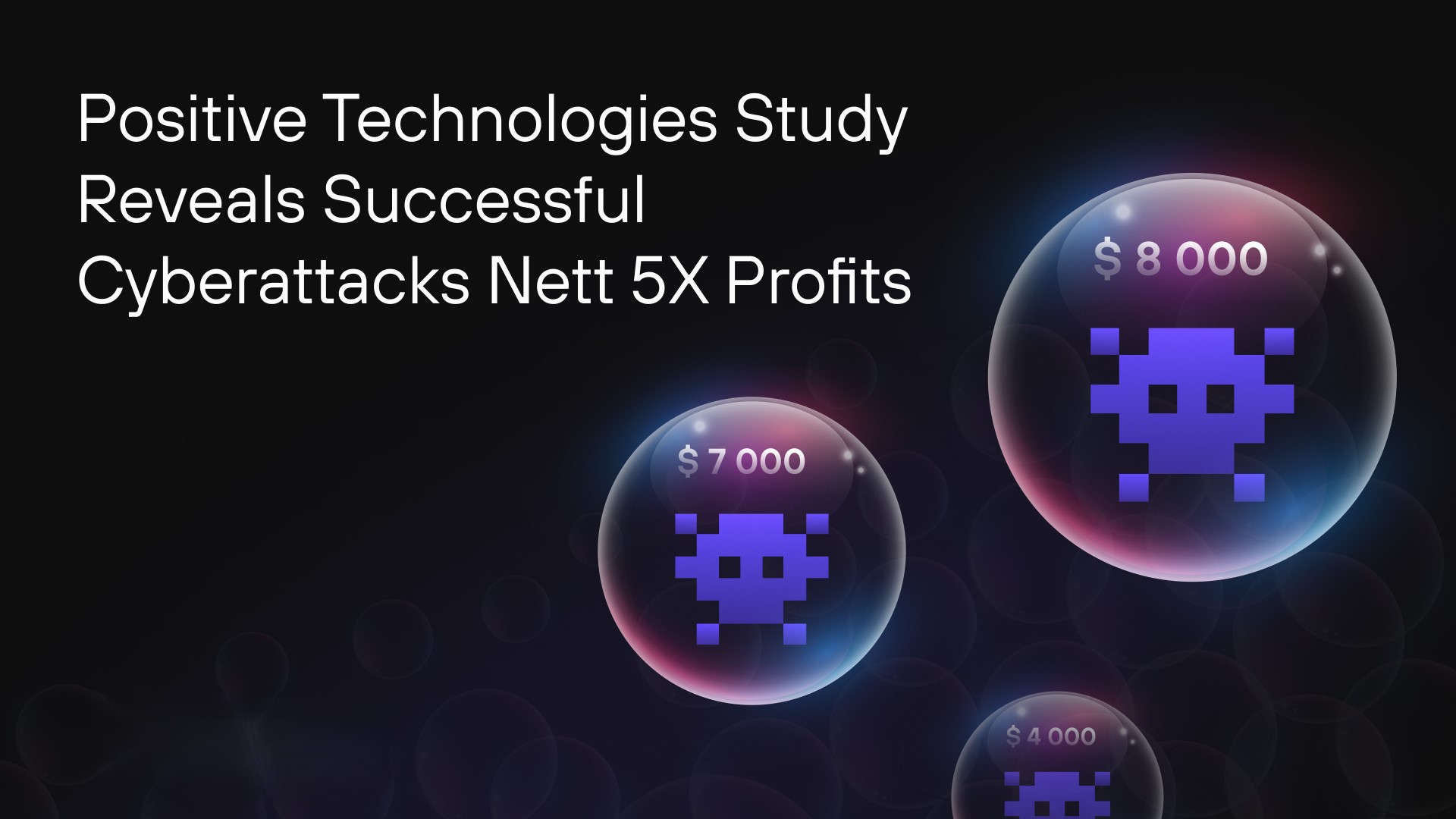
Positive Technologies has released a study on the dark web market, analysing prices for illegal cybersecurity services and products, as well as the costs incurred by cybercriminals to carry out attacks. The most expensive type of malware is ransomware, with a median cost of $7,500. Zero-day exploits are particularly valuable, often being sold for millions of dollars. However, the net profit from a successful cyberattack can be five times the cost of organizing it.
Experts estimate that performing a popular phishing attack involving ransomware costs novice cybercriminals at least $20,000. First, hackers rent dedicated servers, subscribe to VPN services, and acquire other tools to build a secure and anonymous IT infrastructure to manage the attack. Attackers also need to acquire the source code of malicious software or subscribe to ready-to-use malware, as well as tools for infiltrating the victim’s system and evading detection by security measures. Moreover, cybercriminals can consult with seasoned experts, purchase access to targeted infrastructures and company data, and escalate privileges within a compromised system. Products and tools are readily available for purchase on the dark web, catering to beginners. The darknet also offers leaked malware along with detailed instructions, making it easier for novice cybercriminals to carry out attacks.
Malware is one of the primary tools in a hacker’s arsenal, with 53% of malware-related ads focused on sales. In 19% of all posts, infostealers designed to steal data are offered. Crypters and code obfuscation tools, used to help attackers hide malware from security tools, are featured in 17% of cases. Additionally, loaders are mentioned in 16% of ads. The median cost of these types of malware stands at $400, $70, and $500, respectively. The most expensive malware is ransomware: its median cost is $7,500, with some offers reaching up to $320,000. Ransomware is primarily distributed through affiliate programs, known as Ransomware-as-a-Service (RaaS), where participants in an attack typically receive 70–90% of the ransom. To become a partner, a criminal must make a contribution of 0.05 Bitcoin (approximately $5,000) and have a solid reputation on the dark web.
Another popular attack tool is exploits: 69% of exploit-related ads focus on sales, with zero-day vulnerability posts accounting for 32% of them. In 31% of cases, the cost of exploits exceeds $20,000 and can reach several million dollars. Access to corporate networks is relatively inexpensive, with 72% of such ads focused on sales, and 62% of them priced at under a thousand dollars. Among cybercriminal services, hacks are the most popular option, accounting for 49% of reports. For example, the price for compromising a personal email account starts at $100, while the cost for a corporate account begins at $200.
Dmitry Streltsov, Threat Analyst at Positive Technologies, says, “On dark web marketplaces, prices are typically determined in one of two ways: either sellers set a fixed price, or auctions are held. Auctions are often used for exclusive items, such as zero-day exploits. The platforms facilitating these deals also generate revenue, often through their own escrow services, which hold the buyer’s funds temporarily until the product or service is confirmed as delivered. On many platforms, these escrow services are managed by either administrators or trusted users with strong reputations. In return, they earn at least 4% of the transaction amount, with the forums setting the rates.”
Considering the cost of tools and services on the dark web, along with the median ransom amount, cybercriminals can achieve a net profit of $100,000–$130,000 from a successful attack—five times the cost of their preparation. For a company, such an incident can result not only in ransom costs but also in massive financial losses due to disrupted business processes. For example, in 2024, due to a ransomware attack, servers of CDK Global were down for two weeks. The company paid cybercriminals $25 million, while the financial losses of dealers due to system downtime exceeded $600 million.


Written by Oded Vanunu, Chief Technologist & Head of Product Vulnerability Research at Check Point (more…)

Positive Technologies Reports 80% of Middle East Cyberattacks Compromise Confidential Data

Qualys Partners with Teksalah, the First Middle Eastern MSP in its mROC Alliance

CyberKnight Sets Up South Africa Entity

ManageEngine Enhances PAM with Native Intelligence

EcoOnline Expands into Middle East

OPSWAT Joins GISEC 2025 as Middle East Confronts AI-Driven Cyber Threats

GISEC Global 2025: SANS Institute to Showcase Elite Cybersecurity Training and Threat Expertise

Fortinet Expands FortiAI Across its Security Fabric Platform

How AI is Reinventing Cybersecurity for the Automotive Industry

GISEC 2025 Launches OT Security Conference Amid 49% Infrastructure Attack Surge

Positive Technologies @ GISEC Global 2025: Demonstrating Cutting-Edge Cyber Threats and AI Defense Strategies

Group-IB @ GISEC Global 2025: Tackling Evolving Cyber Threats with Localised Intelligence and AI

Video: Wallarm Unveils the Key to Cloud-Native API Security at GISEC Global 2025

Video: CyberKnight on Zero Trust, AI, and Saudi Arabia’s Digital Transformation at GISEC Global 2025

Video: SANS Institute Weighs in on Deepfakes, Model Poisoning and Risk Frameworks at GISEC Global 2025
-
 GISEC1 week ago
Positive Technologies @ GISEC Global 2025: Demonstrating Cutting-Edge Cyber Threats and AI Defense Strategies
-

 Cyber Security1 week ago
Axis Communications Sheds Light on Video Surveillance Industry Perspectives on AI
-
 GISEC1 week ago
Video: SANS Institute Weighs in on Deepfakes, Model Poisoning and Risk Frameworks at GISEC Global 2025
-
 GISEC1 week ago
ManageEngine @ GISEC Global 2025: AI, Quantum Computing, and Ransomware Form Part of Cybersecurity Outlook for 2025
-
 GISEC1 week ago
Video: SentinelOne Speaks Hyperautomation, Purple AI, and the Future of Threat Detection at GISEC Global 2025
-
 Africa Focus6 days ago
CyberKnight Sets Up South Africa Entity
-
 GISEC1 week ago
Group-IB @ GISEC Global 2025: Tackling Evolving Cyber Threats with Localised Intelligence and AI
-
 GISEC1 week ago
Video: CyberKnight on Zero Trust, AI, and Saudi Arabia’s Digital Transformation at GISEC Global 2025