
Expert Speak
The Convergence of the Threat Landscape is Here


As organizations continue to embrace digital transformation, the phenomenon of convergence is taking place in several different ways. For example, more and more use cases are being developed where previously distinct and separate technologies—such as IT and OT—are being integrated.
This presents a double-edged sword for organizations everywhere. Businesses are undoubtedly reaping the benefits of digital transformation—finding business efficiencies, saving costs, and successfully enabling their employees to Work From Anywhere (WFA). But these rapid changes are opening the floodgates for cybercriminals who now have more attack surfaces than ever at their disposal for carrying out malicious activities.
It’s not surprising that bad actors are catching on and upping the ante accordingly. We’re increasingly seeing cybercriminals targeting the expanding digital attack surface by executing more complex and destructive attacks, resulting in more widespread impact.
Meanwhile, the threat landscape is also converging. Recent attack trends are showing the evolution of cybercriminals’ “borrowing” and converging models traditionally seen only among Advanced Persistent Threat (APT) groups. Here’s a closer look at what our FortiGuard Labs team is observing, along with what it means when it comes to managing your organization’s ever-changing risk.
The Convergence of Advanced Persistent Threats and Cybercrime
While a traditional attacker might use straightforward methods of infiltrating a network, such as deploying a Trojan or relatively simple malware, APT attackers use more advanced techniques. For example, an APT attacker might use elaborate espionage tactics over a longer period and involve multiple actors at an organization to meet a specific goal, such as getting behind that company’s firewalls.
The reality is that a business of any size can be a target, but high-profile APT attacks have historically targeted prominent businesses, public figures, or governments. Yet APT-style attacks—meaning more converged attack types—are on the rise, and what’s concerning is that traditional cybercrime groups are now carrying them out.
Wiper malware is a prime example of the convergence between APT-style activity and general cybercrime. Wipers are a tactic we typically observe being used by nation-state actors, while non-APT cybercrime groups usually distribute malware such as ransomware.
Wiper malware isn’t new—the first instance surfaced in 2012—yet we’re seeing a growing trend of cybercriminals using these more destructive and sophisticated attack techniques and doing so in OT environments. In the first six months of 2022, we observed at least eight significant new wiper variants—WhisperGate, HermeticWiper, AcidRain, IsaacWiper, DesertBlade, CaddyWiper, DoubleZero, and Industroyer.V2—used by attackers in various targeted campaigns against government, military, and private organizations. This number is important because it’s nearly as many total wiper variants as having been publicly detected in the past 10 years. While we saw a substantial increase in the use of this attack vector in conjunction with the war in Ukraine, the use of disk-wiping malware was also detected in 24 additional countries.
Emerging Trends: Targeted Playbooks, More Destruction, Stealthier Tactics
In addition to the convergence of the types of threats attackers rely on to achieve their new, more destructive goals, we’re also seeing general cybercrime attack playbooks become more targeted. This is a shift among general cybercrime, as targeted playbooks are typically a hallmark of APT groups.
This trend is especially evident when we look at ransomware activity. In fact, according to a recent survey, 85% of organizations are more worried about a ransomware attack than any other cyber threat.
And attackers are becoming stealthier as they seek to fly under an organization’s radar. In the past six months, we’ve observed defense evasion as the top tactic employed by malware developers. Hiding malicious intentions is one of the essential skills for malware developers to master, so it makes sense that they’d try to achieve this by hiding commands to evade a business’s defenses.
What This Means for Security Professionals
As advanced persistent threats begin to converge with general cybercrime, cybercriminals are increasingly focused on trying to evade security, detection, intelligence, and controls. They’re spending more time on reconnaissance and are finding ways to weaponize new technologies.
Like all security challenges, there’s no single solution or a quick fix to protecting your organization against this type of activity. Yet one of the best protective measures you can take is proactively creating behavioral-based detections based on updated, real-time threat intelligence. Organizations will be better positioned to secure against the broad toolkits of adversaries armed with this actionable intelligence. Integrated, AI and ML-driven cybersecurity platforms with advanced detection and response capabilities powered by actionable threat intelligence are important to protect across all edges of hybrid networks.
To protect against more destructive ransomware, organizations, regardless of industry or size, need a proactive approach that can evolve as ransomware evolves. Real-time visibility, protection, and remediation coupled with advanced endpoint detection and response (EDR) are critical. An inline sandbox on a firewall can hold suspicious files for malware analysis until it is safe to be let onto the network.
In addition, services such as a digital risk protection service (DRPS) can be used to do external threat surface assessments, find and remediate security issues, and help gain contextual insights on current and imminent threats. Regardless of “in-the-office” or “work-from-anywhere” zero-trust network access (ZTNA) is critical for securing access to applications regardless of where work or learning is taking place.
Managing a constantly evolving array of threats, tactics, and techniques, often feels like treading water in the open ocean. You can’t touch the bottom, and you’re not sure when the next boat will pass by. But the more we become aware of our surroundings and take steps to protect our organization from them, the better prepared we’ll be when the next storm inevitably starts to brew.












Written by Alain Penel, VP of Middle East, CIS & Turkey at Fortinet (more…)
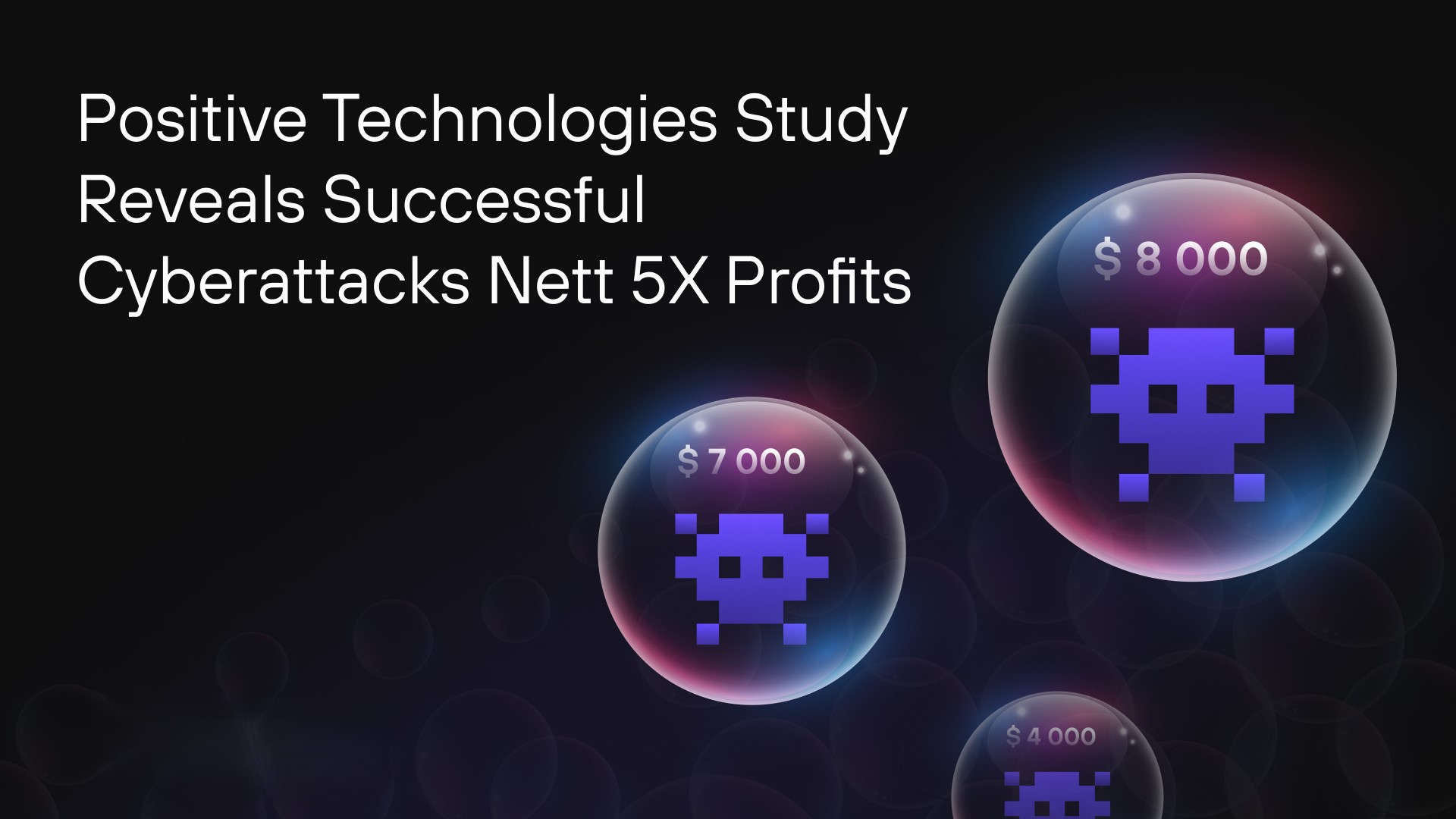
Positive Technologies has released a study on the dark web market, analysing prices for illegal cybersecurity services and products, as well as the costs incurred by cybercriminals to carry out attacks. The most expensive type of malware is ransomware, with a median cost of $7,500. Zero-day exploits are particularly valuable, often being sold for millions of dollars. However, the net profit from a successful cyberattack can be five times the cost of organizing it.
Experts estimate that performing a popular phishing attack involving ransomware costs novice cybercriminals at least $20,000. First, hackers rent dedicated servers, subscribe to VPN services, and acquire other tools to build a secure and anonymous IT infrastructure to manage the attack. Attackers also need to acquire the source code of malicious software or subscribe to ready-to-use malware, as well as tools for infiltrating the victim’s system and evading detection by security measures. Moreover, cybercriminals can consult with seasoned experts, purchase access to targeted infrastructures and company data, and escalate privileges within a compromised system. Products and tools are readily available for purchase on the dark web, catering to beginners. The darknet also offers leaked malware along with detailed instructions, making it easier for novice cybercriminals to carry out attacks.
Malware is one of the primary tools in a hacker’s arsenal, with 53% of malware-related ads focused on sales. In 19% of all posts, infostealers designed to steal data are offered. Crypters and code obfuscation tools, used to help attackers hide malware from security tools, are featured in 17% of cases. Additionally, loaders are mentioned in 16% of ads. The median cost of these types of malware stands at $400, $70, and $500, respectively. The most expensive malware is ransomware: its median cost is $7,500, with some offers reaching up to $320,000. Ransomware is primarily distributed through affiliate programs, known as Ransomware-as-a-Service (RaaS), where participants in an attack typically receive 70–90% of the ransom. To become a partner, a criminal must make a contribution of 0.05 Bitcoin (approximately $5,000) and have a solid reputation on the dark web.
Another popular attack tool is exploits: 69% of exploit-related ads focus on sales, with zero-day vulnerability posts accounting for 32% of them. In 31% of cases, the cost of exploits exceeds $20,000 and can reach several million dollars. Access to corporate networks is relatively inexpensive, with 72% of such ads focused on sales, and 62% of them priced at under a thousand dollars. Among cybercriminal services, hacks are the most popular option, accounting for 49% of reports. For example, the price for compromising a personal email account starts at $100, while the cost for a corporate account begins at $200.
Dmitry Streltsov, Threat Analyst at Positive Technologies, says, “On dark web marketplaces, prices are typically determined in one of two ways: either sellers set a fixed price, or auctions are held. Auctions are often used for exclusive items, such as zero-day exploits. The platforms facilitating these deals also generate revenue, often through their own escrow services, which hold the buyer’s funds temporarily until the product or service is confirmed as delivered. On many platforms, these escrow services are managed by either administrators or trusted users with strong reputations. In return, they earn at least 4% of the transaction amount, with the forums setting the rates.”
Considering the cost of tools and services on the dark web, along with the median ransom amount, cybercriminals can achieve a net profit of $100,000–$130,000 from a successful attack—five times the cost of their preparation. For a company, such an incident can result not only in ransom costs but also in massive financial losses due to disrupted business processes. For example, in 2024, due to a ransomware attack, servers of CDK Global were down for two weeks. The company paid cybercriminals $25 million, while the financial losses of dealers due to system downtime exceeded $600 million.


Written by Oded Vanunu, Chief Technologist & Head of Product Vulnerability Research at Check Point (more…)

Positive Technologies Reports 80% of Middle East Cyberattacks Compromise Confidential Data

Qualys Partners with Teksalah, the First Middle Eastern MSP in its mROC Alliance

CyberKnight Sets Up South Africa Entity

ManageEngine Enhances PAM with Native Intelligence

EcoOnline Expands into Middle East

OPSWAT Joins GISEC 2025 as Middle East Confronts AI-Driven Cyber Threats

GISEC Global 2025: SANS Institute to Showcase Elite Cybersecurity Training and Threat Expertise

Fortinet Expands FortiAI Across its Security Fabric Platform

GISEC 2025 Launches OT Security Conference Amid 49% Infrastructure Attack Surge

How AI is Reinventing Cybersecurity for the Automotive Industry

Positive Technologies @ GISEC Global 2025: Demonstrating Cutting-Edge Cyber Threats and AI Defense Strategies

Group-IB @ GISEC Global 2025: Tackling Evolving Cyber Threats with Localised Intelligence and AI

Video: Wallarm Unveils the Key to Cloud-Native API Security at GISEC Global 2025

Video: CyberKnight on Zero Trust, AI, and Saudi Arabia’s Digital Transformation at GISEC Global 2025

Video: SANS Institute Weighs in on Deepfakes, Model Poisoning and Risk Frameworks at GISEC Global 2025
-
 GISEC1 week ago
Positive Technologies @ GISEC Global 2025: Demonstrating Cutting-Edge Cyber Threats and AI Defense Strategies
-

 Cyber Security1 week ago
Axis Communications Sheds Light on Video Surveillance Industry Perspectives on AI
-
 GISEC1 week ago
Video: SANS Institute Weighs in on Deepfakes, Model Poisoning and Risk Frameworks at GISEC Global 2025
-
 GISEC1 week ago
ManageEngine @ GISEC Global 2025: AI, Quantum Computing, and Ransomware Form Part of Cybersecurity Outlook for 2025
-
 GISEC1 week ago
Video: SentinelOne Speaks Hyperautomation, Purple AI, and the Future of Threat Detection at GISEC Global 2025
-
 Africa Focus6 days ago
CyberKnight Sets Up South Africa Entity
-
 GISEC1 week ago
Group-IB @ GISEC Global 2025: Tackling Evolving Cyber Threats with Localised Intelligence and AI
-
 GISEC1 week ago
Video: CyberKnight on Zero Trust, AI, and Saudi Arabia’s Digital Transformation at GISEC Global 2025