
Expert Speak
Outlook 2022: “Digital First As a New Business Paradigm”


Written by Fadi Kanafani, Managing Director – Middle East at NetApp
“Digital-first” as a new business paradigm
While IT teams and IT leaders are historically called on to drive digitization and increase value, the roles will be reversed in the post-pandemic world. Strategic decision-making starts with digital experience and digital transformation since they are now deeply connected to the successful operation of any company.
We see this for example in business analytics, where the analysis of user experience journeys or customer experience journeys become a crucial information source for strategic decisions.
Another example is increasing convergence between the online and offline world, which results in digital twin concepts being adopted beyond production, and any process being tested virtually before being considered for rollout.
Cyber security and resiliency
The pandemic months have triggered a rapid increase in ransomware attacks as more and more people worked remotely. Coincidentally, this opened up a multitude of new infection vectors. Enterprises had to come to terms with the fact that many IT security processes and protocols are not well suited to the fight against ransomware, because it is virtually impossible to cut off all these infection routes, especially when criminals use social engineering.
Instead, enterprises will rely on AI-based prevention across their whole domain and stringent zero trust policies. Rather than preventing IT attacks from happening, this approach minimizes their impact. Once an infection happens, it is discovered almost instantaneously: Infected areas are cordoned off and infected files are replaced in almost real-time.
Sustained impact of the pandemic: cloud acceleration and the supply chain
The global supply chain has been brought close to its breaking point by the COVID-19 pandemic and its impact on air, sea, and land travel. We predict that cloud adoption will accelerate faster as the supply chain constraints drive buyers to find alternatives to purchasing traditional on-premise infrastructure to meet demands. At the same time, optimization of production lines and business processes can help the system to become more robust in the future. Marrying IT and Operational Technology (OT), for example through digital twin concepts and technology such as IIoT and analytics, has virtually limitless potential. Companies that have done their homework in the past, e.g. by building out flexible Industry 4.0 production facilities, will be able to stay healthy much more easily.
The workforce is going through a major change cycle, also triggered and sustained by the pandemic. Hybrid working environments are the expectation of employees moving forward. The ability to work anywhere will increase the digital capabilities businesses must provide to their staff. Controversially, the pandemic also shone the light on labor shortages surfacing quickly and unexpectedly. This will be both a challenge and opportunity for high-skill sectors like the IT industry. On the one hand, there is bound to be fierce competition for skilled personnel; on the other hand, IT itself can deliver technologies that remedy the labor gap, such as low code, no code, and AI software development.
The constant simplification of public services access and the services, in general, will drive broad buy-in for digitization. People are also going to be more comfortable with providing their data because they have experienced the positive impact of virtualized service delivery.
Productized AI
In 2022, artificial intelligence (AI) starts to permeate all industries. We will see it used in agriculture, food production, fast-food chains, and the entertainment and hospitality sector. Agriculture and the food industry, for example, will use it for packing and processing, while other sectors gain most from general automation and the simplification of their processes.
Let’s also talk about the “how.” Managed services become a primary delivery mode for AI as CSPs double down on “GPU as a service”’-type offerings. This is an important facilitator: As more industries use AI to stay competitive and innovate, there needs to be a solid technology foundation that can scale accordingly, and AI users need to move their AI projects from standalone (siloed) infrastructure onto shared, virtualized, production environments.
Another driver is “Tiny Machine Learning.” Experts are forecasting a massive increase in AI at the edge, down to very low cost, extremely resource-constrained edge devices. Think sensors rather than compute devices. This is another generation of devices that feed the ever-growing edge-core-cloud data pipeline, which industries need to access and leverage to differentiate themselves.
And, finally, the macro perspective on AI and machine learning becomes clearer. Countries and governments are guaranteed to invest in AI and ML capabilities to accelerate economic transformation and compete on a global basis.
Data trends
There are a number of technology sub-trends that drive change and innovation. One is Analytics & Optimization of digital services. E.g., Finops results are much easier to come by as more automation and smarter applications take hold. This results in increased ROI from cloud investments throughout the public and private sectors. Another trend concerns production environments. There is a clear move away from applications as companies deliver their services through containerized solutions and microservices.
Thirdly, data sharing regimes are an important prerequisite for building a workable data economy on the international stage. GAIA-X sparked an important discussion about digital sovereignty and the contributions needed to establish a secure data exchange infrastructure. In the near term, I don’t think this results in a sovereign “EU Cloud.” However, we will see more unity about European norms, and more adherence to them from outside Europe.
Lastly, specifically in data storage, NAS and SAN continue to be the technologies of choice to underpin digital innovation. Writeable storage media can still be made more efficient.
Quantum computing
Quantum computing is expected to re-accelerate the performance cycle postulated by Moore’s law, and all major IT players are invested. Early use cases are expected to be delivered as a service but will not come to fruition for some time. However, manufacturers in different branches of IT will be more vocal about their quantum computing strategy in 2022 – for example security providers, hyperscalers, storage companies, and GSIs/global advisors. These manufacturers will also theorize how they can deliver quantum computing innovation as a service for their customers and overcome branch-specific limitations, e.g. building a data pipeline into the quantum computing cloud.
Sustainability – ESG becomes a competitive advantage
Green topics are on the rise, as demonstrated by the 2021 Climate Change Conference, the US infrastructure deal, or the traffic light coalition coming to power in Germany. We predict that businesses will head in the same direction. This is partly due to regulatory pressure, for example, to lower carbon dioxide emissions. But enterprises will also become intrinsically motivated to deliver green innovation. One area to look at is employee experience hybrid models, which basically allow companies to recruit talent everywhere, reduce office footprint, and significantly cut work travel.
Another area concerns production processes, which can be made more environmentally friendly with the help of IT. More automation and optimization, flexible production, testing, and planning in software, are all things that reduce wastage. Net Zero targets will become a priority for businesses in 2022, and they are impacting corporate decision-making already now. This will result in companies examining not just their own actions but their supply chain, digital and non-digital, as they strive to deliver net-zero (carbon emissions) as quickly as possible.












Written by Alain Penel, VP of Middle East, CIS & Turkey at Fortinet (more…)

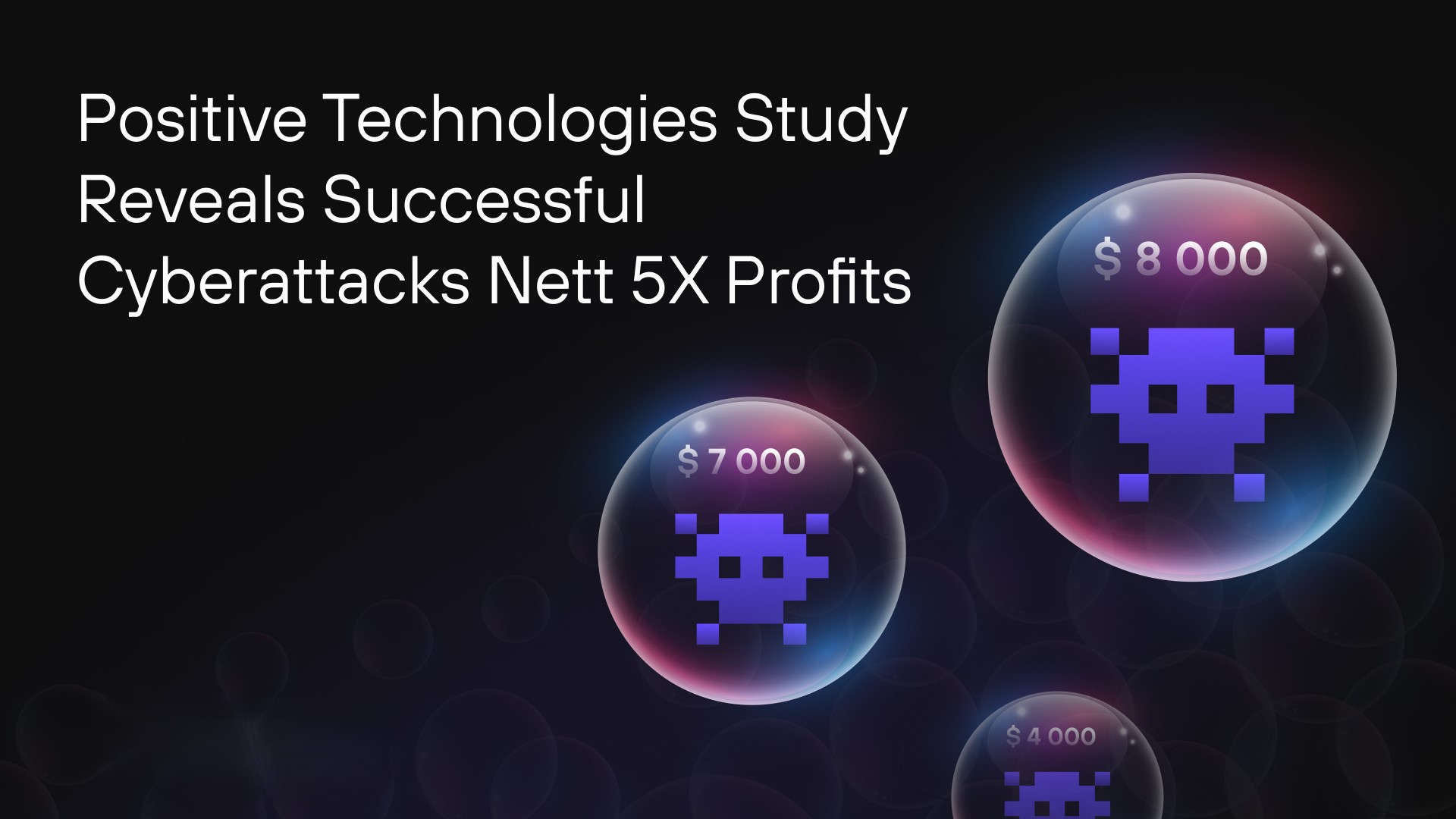
Positive Technologies has released a study on the dark web market, analysing prices for illegal cybersecurity services and products, as well as the costs incurred by cybercriminals to carry out attacks. The most expensive type of malware is ransomware, with a median cost of $7,500. Zero-day exploits are particularly valuable, often being sold for millions of dollars. However, the net profit from a successful cyberattack can be five times the cost of organizing it.
Experts estimate that performing a popular phishing attack involving ransomware costs novice cybercriminals at least $20,000. First, hackers rent dedicated servers, subscribe to VPN services, and acquire other tools to build a secure and anonymous IT infrastructure to manage the attack. Attackers also need to acquire the source code of malicious software or subscribe to ready-to-use malware, as well as tools for infiltrating the victim’s system and evading detection by security measures. Moreover, cybercriminals can consult with seasoned experts, purchase access to targeted infrastructures and company data, and escalate privileges within a compromised system. Products and tools are readily available for purchase on the dark web, catering to beginners. The darknet also offers leaked malware along with detailed instructions, making it easier for novice cybercriminals to carry out attacks.
Malware is one of the primary tools in a hacker’s arsenal, with 53% of malware-related ads focused on sales. In 19% of all posts, infostealers designed to steal data are offered. Crypters and code obfuscation tools, used to help attackers hide malware from security tools, are featured in 17% of cases. Additionally, loaders are mentioned in 16% of ads. The median cost of these types of malware stands at $400, $70, and $500, respectively. The most expensive malware is ransomware: its median cost is $7,500, with some offers reaching up to $320,000. Ransomware is primarily distributed through affiliate programs, known as Ransomware-as-a-Service (RaaS), where participants in an attack typically receive 70–90% of the ransom. To become a partner, a criminal must make a contribution of 0.05 Bitcoin (approximately $5,000) and have a solid reputation on the dark web.
Another popular attack tool is exploits: 69% of exploit-related ads focus on sales, with zero-day vulnerability posts accounting for 32% of them. In 31% of cases, the cost of exploits exceeds $20,000 and can reach several million dollars. Access to corporate networks is relatively inexpensive, with 72% of such ads focused on sales, and 62% of them priced at under a thousand dollars. Among cybercriminal services, hacks are the most popular option, accounting for 49% of reports. For example, the price for compromising a personal email account starts at $100, while the cost for a corporate account begins at $200.
Dmitry Streltsov, Threat Analyst at Positive Technologies, says, “On dark web marketplaces, prices are typically determined in one of two ways: either sellers set a fixed price, or auctions are held. Auctions are often used for exclusive items, such as zero-day exploits. The platforms facilitating these deals also generate revenue, often through their own escrow services, which hold the buyer’s funds temporarily until the product or service is confirmed as delivered. On many platforms, these escrow services are managed by either administrators or trusted users with strong reputations. In return, they earn at least 4% of the transaction amount, with the forums setting the rates.”
Considering the cost of tools and services on the dark web, along with the median ransom amount, cybercriminals can achieve a net profit of $100,000–$130,000 from a successful attack—five times the cost of their preparation. For a company, such an incident can result not only in ransom costs but also in massive financial losses due to disrupted business processes. For example, in 2024, due to a ransomware attack, servers of CDK Global were down for two weeks. The company paid cybercriminals $25 million, while the financial losses of dealers due to system downtime exceeded $600 million.


Written by Oded Vanunu, Chief Technologist & Head of Product Vulnerability Research at Check Point (more…)

Positive Technologies Reports 80% of Middle East Cyberattacks Compromise Confidential Data

Qualys Partners with Teksalah, the First Middle Eastern MSP in its mROC Alliance

CyberKnight Sets Up South Africa Entity

ManageEngine Enhances PAM with Native Intelligence

EcoOnline Expands into Middle East

OPSWAT Joins GISEC 2025 as Middle East Confronts AI-Driven Cyber Threats

GISEC Global 2025: SANS Institute to Showcase Elite Cybersecurity Training and Threat Expertise

Fortinet Expands FortiAI Across its Security Fabric Platform

How AI is Reinventing Cybersecurity for the Automotive Industry

GISEC 2025 Launches OT Security Conference Amid 49% Infrastructure Attack Surge

Positive Technologies @ GISEC Global 2025: Demonstrating Cutting-Edge Cyber Threats and AI Defense Strategies

Group-IB @ GISEC Global 2025: Tackling Evolving Cyber Threats with Localised Intelligence and AI

Video: Wallarm Unveils the Key to Cloud-Native API Security at GISEC Global 2025

Video: CyberKnight on Zero Trust, AI, and Saudi Arabia’s Digital Transformation at GISEC Global 2025

Video: SANS Institute Weighs in on Deepfakes, Model Poisoning and Risk Frameworks at GISEC Global 2025
-
 GISEC1 week ago
Positive Technologies @ GISEC Global 2025: Demonstrating Cutting-Edge Cyber Threats and AI Defense Strategies
-

 Cyber Security1 week ago
Axis Communications Sheds Light on Video Surveillance Industry Perspectives on AI
-
 GISEC1 week ago
Video: SANS Institute Weighs in on Deepfakes, Model Poisoning and Risk Frameworks at GISEC Global 2025
-
 GISEC1 week ago
ManageEngine @ GISEC Global 2025: AI, Quantum Computing, and Ransomware Form Part of Cybersecurity Outlook for 2025
-
 GISEC1 week ago
Video: SentinelOne Speaks Hyperautomation, Purple AI, and the Future of Threat Detection at GISEC Global 2025
-
 Africa Focus6 days ago
CyberKnight Sets Up South Africa Entity
-
 GISEC1 week ago
Group-IB @ GISEC Global 2025: Tackling Evolving Cyber Threats with Localised Intelligence and AI
-
 GISEC1 week ago
Video: CyberKnight on Zero Trust, AI, and Saudi Arabia’s Digital Transformation at GISEC Global 2025