
Events
CIOs Have Accelerated Their Digital Transformation Efforts by At Least One Year or More


Farid Faraidooni, the Chief of New Business and Innovation Officer at du, says that organisations need to consider the right governance model in their security operations, so they can better detect threats and respond
How has the security threat landscape evolved over the past few months?
Many people working from home have done so using unprotected network environments, personal devices and newly created tools and applications. They have also carried out their tasks with limited network security while adapting to the new normal, and these elements have collectively resulted in virtual settings becoming an easy target for hackers. This situation, together with a lack of security awareness and education in general, has left people vulnerable to phishing attacks, and social engineering campaigns.
What sort of security challenges are people facing when working from home and how is your company equipped to handle those challenges?
The pandemic meant that entire workforces immediately had to find new ways to work from home and this challenged businesses across the globe. Unprotected home network environments were previously mentioned and, from a cyber-security perspective, organisations have been required to scale up their security response to enable and protect personnel working virtually who were at risk from hackers without impacting productivity.
Organisations have had to rethink their security practices, implementing new levels of security controls outside their respective workplaces. One of the weakest security links in the IT chain are people themselves, as many have not participated in any type of security awareness or education and are subsequently victims of phishing attacks, and social engineering campaigns.
At du, we offer two solutions – Secure Remote Access and Digital Workplace. Both of these enable employees to securely access corporate resources including email, content and applications, using any device, without hindering productivity nor employee experience.
How has ransomware evolved during the pandemic period and what are you doing to tackle the problem? How can companies overcome digital security and privacy challenges?
It is clear the pandemic has left people more vulnerable to ransomware attacks. It’s not so much about new levels of sophistication, but rather around having greater access to people’s environments with less security protecting the endpoints in question. If we include ransomware and look more broadly across the entire security landscape, there are numerous security best practices that should be considered to build cyber resiliency.
The first is for an organisation to have the right security controls in place, particularly for endpoint devices. Companies need to ensure they have adequate security processes in place and that the right security controls are followed throughout company procedures, such as improved security set up when onboarding or offboarding new employees. Secondly, organisations need to consider the right governance model in their security operations, so they can better detect threats and respond. Ultimately, outsourcing organisational security management to a Security Operations Centre represents the best opportunity to detect threats early, protecting environments both internally and at the edge 24 hours per day, seven days per week.
Thirdly, organisations should adequately educate their employees, which will enable them to identify security threats and reduce exposure. At du, we support organisations with various security consulting services that help them understand their security posture, identify gaps, and provide solutions to strengthen their overall cyber resiliency. These revolve around strengthening security controls, better protecting endpoints, and offering a complete security operations management service in our Security Operations Centre. This is operational 24 hours per day, seven days per week, and enables fast detection and response to breaches and minimises impacts on organisations.
Do you believe companies today have accelerated their digital transformation initiatives?
In the latest IDC CIO Study, it is clear that 78 per cent of CIO’s have accelerated their digital transformation initiatives by at least one year or more, with digital resiliency, business continuity, and automation the key themes driving faster digital transformation. In the UAE, migration to the cloud is a critical leap for many organisations. This is the foundational platform for many digital transformation initiatives, with cloud security also becoming a major focus.
What are the cybersecurity trends for 2021?
In the digital era, the amount of data is exponentially increasing, so are the attacks surfaces and the number of sophisticated attacks. Thus, advanced security technologies such as Security orchestration and automation are key for the future, as is leveraging artificial intelligence and machine learning capabilities to reduce reliance on people and eliminate human error. These emerging trends enable organization to better analyze data to better predict attacks and ultimately prevent them.
What are the key factors to consider to make sure digital economies of today are secured?
One of the biggest recommendations for any organisation securing their digital environment is to rethink the way they approach security. Today, the traditional perimeter, restricted to the office or enterprise data center, is quickly disappearing. Workloads and data are being distributed across multicloud environments. Employees expect to be able to work from home using any device. Today, more than ever, Cybersecurity is no longer confined to IT.
In fact, cybersecurity has been elevated to a boardroom topic due to its direct correlation to Trust. According to a Global survey by IDC, 60% of CEOs globally listed Digital Trust among their top 5 priorities. To stay ahead and effectively managed risk, organizations need to initiate a digital trust framework within their organization that focuses on delivering key cybersecurity outcomes including Vulnerability, Identity Management, Trust Management and Threat Management.
Those outcomes can only be achieved if key capabilities covering prediction, protection, detection and response are put in place. Coupled with educating employees well so they are cyber aware, this will make a real difference as the source of most breaches comes from human error due to lack of understanding and awareness.



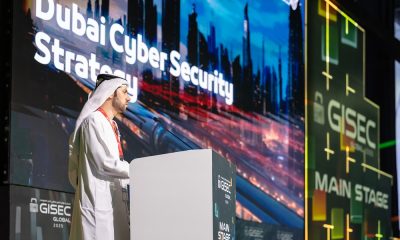





The Dubai Electronic Security Center (DESC) is set to participate as the official government cybersecurity partner for the eighth consecutive year in the 14th edition of the Gulf Information Security Expo and Conference (GISEC Global 2025), taking place from May 6-8 at the Dubai World Trade Centre. The Center’s participation in GISEC Global 2025, which gathers over 25,000 cybersecurity professionals representing more than 160 countries, aligns with its strategic objectives aimed at advancing the Dubai Cyber Security Strategy and reinforcing Dubai’s position as one of the world’s digitally safest cities.
This participation reflects the Center’s commitment to safeguarding digital infrastructure, fostering innovation, enhancing cyber resilience, and promoting robust cooperation at both the local and international levels. During the three-day event, DESC will spotlight a number of key initiatives, including the “Dubai Cyber Challenge”, an exclusive competitive simulation designed to enhance the cyber readiness of Dubai government entities, and the “School of Cyber Defense” CTF competition, which attracted registrations from over 300 university students, engaging them in technical challenges and hands-on training. These programs form a key part of DESC’s ongoing efforts to build a pipeline of skilled cybersecurity professionals equipped to navigate evolving digital threats.
H.E. Yousuf Hamad Al Shaibani, CEO of the Dubai Electronic Security Center, commented, “DESC’s participation in GISEC Global 2025 reflects our steadfast commitment to securing Dubai’s digital future through proactive cybersecurity measures, innovation-driven initiatives, and an integrated ecosystem that fosters collaboration by building partnerships across public and private sectors. GISEC continues to serve as a dynamic platform where industry leaders, experts, and innovators come together to shape the future of cybersecurity.”
“GISEC 2025 provides a critical platform for strategic engagement with global cybersecurity innovators, allowing us to gain insights into emerging technologies and anticipate future threats. These interactions directly support our efforts to create forward-looking policies, develop advanced cyber solutions, and empower national talent to lead in this field. Through such initiatives, we continue to strengthen Dubai’s position as a global hub for cybersecurity excellence and digital innovation,” Al Shaibani added.
DESC experts will also take part in high-level panel discussions addressing key challenges and emerging trends in the cybersecurity landscape. The Center will also formalize strategic partnerships and Memorandums of Understanding (MoUs), aimed at enhancing cross-sector collaboration and strengthening national efforts to secure the cyber space.
Visitors to GISEC Global 2025 are invited to explore DESC’s initiatives at Stand A80 in Hall 7, where DESC will showcase its latest projects, including future-ready cybersecurity guidelines and certification programs designed to keep pace with the evolving digital landscape and strengthen national capabilities. The stand will also serve as a unique opportunity for attendees to engage with DESC’s experts and explore opportunities for joint collaboration.

OPSWAT has announced its diamond-level sponsorship of GISEC Global 2025, the Middle East and Africa’s premier cybersecurity event. Scheduled for 6-8 May at Dubai World Trade Centre, the exhibition will be hosted by the UAE Cybersecurity Council in partnership with the Dubai Electronic Security Center.
This year’s participation underscores OPSWAT’s commitment to strengthening regional cybersecurity resilience as organizations face increasingly sophisticated threats. Attendees will have multiple opportunities to engage with OPSWAT’s cybersecurity experts through interactive demonstrations, thought leadership sessions, and specialized training programs.

Sertan Selcuk, Vice President for METAP and CIS, OPSWAT
“Our main focus at GISEC Global 2025 will be critical infrastructure, the lynchpin of economic progress and an increasingly popular target for threat actors,” said Sertan Selcuk, Vice President for METAP and CIS, OPSWAT. “Our partnerships will involve devising ways of protecting the interconnected systems and technologies that drive the Fourth Industrial Revolution. Through our demonstrations and discussions at GISEC 2025, OPSWAT experts will show how our solutions directly address the latest cybersecurity challenges, especially the ongoing merger of IT and OT.”
The company will showcase its innovative solutions through two unique exhibits. The CIP Mobile Lab, operated by OP/X Labs, will provide live demonstrations of industry-leading technologies designed to protect critical infrastructure. Visitors can gain practical insights into securing vital operational systems against modern cyber threats.
Complementing this will be OPSWAT’s Nuclear Plant Model Reactor display, illustrating the company’s specialized capabilities in securing highly sensitive environments. The exhibit will demonstrate real-world applications of OPSWAT’s technology through an interconnected display with the mobile lab.
OPSWAT’s experts will present across multiple stages during the three-day event:
- On the opening day, security professionals can attend a live hacking demonstration on the Dark Stage, revealing current vulnerabilities in today’s threat landscape.
- Day two features two significant presentations. Founder and CEO Benny Czarny will deliver a keynote address titled “Breaking the Firewall: Revolutionizing Cyber Defense for a Connected World” on the Government Stage. His session will challenge conventional security paradigms and propose innovative approaches to counter AI-driven threats and encrypted attacks.
- Simultaneously, Director of Products and Solutions Kris Voorspoels will participate in a Critical Infrastructure Stage panel discussion examining security challenges in the regional oil and gas sector’s Industrial IoT (IIoT) ecosystem. The session will explore security implications of connected devices in petrochemical operations and strategies for protecting this vital economic sector.
Supporting the UAE National Cybersecurity Strategy’s capacity-building objectives, OPSWAT Academy will offer complimentary certification courses throughout the event. Professionals can earn credentials in File Security (OFSA), Secure Storage (OSSA), Email Security (OESA), Web Traffic Protection (OWPA), and Data Transfer Security (ODSA).
At GISEC Global 2025, OPSWAT will exhibit from Stand C55, Hall 7.

In a time of accelerating digital transformation, the 3rd Cyber First Kuwait Edition took center stage at the Radisson Blu Hotel, Kuwait, bringing together over 300 technology leaders, cybersecurity professionals, and policymakers to address the country’s evolving digital threat landscape and cybersecurity vision. Organized by Events First Group, the conference supports the new Kuwait Vision 2035 and the nation’s ambitious National Cybersecurity Strategy.
The summit will feature keynote presentations, expert panel discussions, real-world case studies, and an exhibition showcasing cutting-edge solutions. Topics will span AI-powered threat detection, OT/ICS infrastructure security, cloud resilience, Zero Trust frameworks, and national-level collaboration between public and private sectors.
Abdullah Al Shaheen, Director of Public Relations and Media Department at National cybersecurity center said, “This edition of the Cyber First Conference, held under the patronage of the National Cybersecurity Center serves as a platform for business leaders, professionals to come together and exchange experiences, share best practices, and explore the latest developments for security and protection against the rapidly evolving cyber threats and attacks. These challenges require us to remain informed and constantly evolving.”
“The National Cybersecurity Center in the State of Kuwait is working to build an effective system to protect the cyberspace by collaborating with both local and international entities in the field of cybersecurity. This is to create a safe digital environment, while maintaining the trust of technology operators and users. We hope this conference will serve as a gateway to more important meetings and events that focus on cybersecurity,” he added.
“Cyber First Kuwait is a national dialogue and strategic catalyst,” said Shyam Reddy, Partnerships Director. “With Vision 2035 and the National Cybersecurity Strategy serving as our guiding frameworks, this summit brings together government and enterprise to create actionable pathways toward a digitally secure and resilient Kuwait.”
The conference featured keynotes, panels, one-on-one networking sessions, a cybersecurity hackathon, and the Kuwait Cybersecurity Awards, recognizing trailblazers across innovation, leadership, and operational excellence. The event hosted over 300 delegates, including CISOs, risk management leaders, OT and cloud architects, regulators, leading solution providers, more than 20 sponsors, 15 media partners, and 10 ministries.

Positive Technologies Reports 80% of Middle East Cyberattacks Compromise Confidential Data

Qualys Partners with Teksalah, the First Middle Eastern MSP in its mROC Alliance

CyberKnight Sets Up South Africa Entity

ManageEngine Enhances PAM with Native Intelligence

EcoOnline Expands into Middle East

OPSWAT Joins GISEC 2025 as Middle East Confronts AI-Driven Cyber Threats

GISEC Global 2025: SANS Institute to Showcase Elite Cybersecurity Training and Threat Expertise

Fortinet Expands FortiAI Across its Security Fabric Platform

How AI is Reinventing Cybersecurity for the Automotive Industry

GISEC 2025 Launches OT Security Conference Amid 49% Infrastructure Attack Surge

Positive Technologies @ GISEC Global 2025: Demonstrating Cutting-Edge Cyber Threats and AI Defense Strategies

Group-IB @ GISEC Global 2025: Tackling Evolving Cyber Threats with Localised Intelligence and AI

Video: Wallarm Unveils the Key to Cloud-Native API Security at GISEC Global 2025

Video: CyberKnight on Zero Trust, AI, and Saudi Arabia’s Digital Transformation at GISEC Global 2025

Video: SANS Institute Weighs in on Deepfakes, Model Poisoning and Risk Frameworks at GISEC Global 2025
-
 GISEC1 week ago
Positive Technologies @ GISEC Global 2025: Demonstrating Cutting-Edge Cyber Threats and AI Defense Strategies
-

 Cyber Security1 week ago
Axis Communications Sheds Light on Video Surveillance Industry Perspectives on AI
-
 GISEC1 week ago
Video: SANS Institute Weighs in on Deepfakes, Model Poisoning and Risk Frameworks at GISEC Global 2025
-
 GISEC1 week ago
ManageEngine @ GISEC Global 2025: AI, Quantum Computing, and Ransomware Form Part of Cybersecurity Outlook for 2025
-
 GISEC1 week ago
Video: SentinelOne Speaks Hyperautomation, Purple AI, and the Future of Threat Detection at GISEC Global 2025
-
 Africa Focus6 days ago
CyberKnight Sets Up South Africa Entity
-
 GISEC1 week ago
Group-IB @ GISEC Global 2025: Tackling Evolving Cyber Threats with Localised Intelligence and AI
-
 GISEC1 week ago
Video: CyberKnight on Zero Trust, AI, and Saudi Arabia’s Digital Transformation at GISEC Global 2025