
Expert Speak
The Six Tech Trends Affecting the Security Sector in 2022


By Ettiene van der Watt, Regional Director – Middle East & Africa at Axis Communications
The beginning month of any year is characterised by many articles listing the technology trends that will shape industry sectors in the next one. But over the years, one can see a pattern develop, a roadmap that reveals the sentiments, and technologies we should be prioritising.
In this case, the keyword is ‘trust’, which is an interesting one. The 2021 Edelman Trust Barometer shows that among online survey respondents in 28 countries, trust in the technology sector is declining globally, along with concerns of climate change, job losses, and cyberattacks. Worries that are all valid to the global security and surveillance sector.
In the pursuit of realising a smarter, safer, and more sustainable world built on the back of a trustworthy and reliable ecosystem of innovation, these are the technologies and insights that will continue to transform security in 2022 and beyond.
A post-pandemic world
The impact of the COVID-19 pandemic continues to be felt in multiple ways. We see its physical manifestation in the challenges to supply chains, with global manufacturing brought to a near standstill and companies having to re-evaluate where and how they source key components and equipment for their respective products and services. We also see it in deployed technology – how intelligent solutions in video and monitoring are used to enforce social distancing and implement public health strategies.
A global shortage of semiconductors has also seen companies explore in-house manufacturing and the potential of systems on a chip (SoC) for relevant sectors. While this may be a very specific trend, combined with the substantial shifts caused by the pandemic, more businesses will consider SoCs for their security solutions going forward.
Embracing a sustainable future
Sustainability is no longer just a trend, nor should it be deemed as such. With a global focus and push towards environmentally friendly principles and practices, exemplified by initiatives such as the UN Sustainable Development Goals towards industry, human settlements, and consumption and production, a business must exhibit sustainability in its offerings and examine new possibilities through a sustainable lens.
Companies must pay closer attention to their processes from end to end. They need to scrutinise their products and services in terms of sustainability factors, such as power efficiency, building materials, and ethical deployments. These discussions are already taking place at events like Expo 2020, where the conversations have taken on a more forward-thinking position, and real progress is being made for long-term impact. More conversations like this need to be had, and it’s up to companies to facilitate them.
Healthy scepticism equals effective cybersecurity
|We don’t always think of scepticism as a positive trait, but in relation to cybersecurity it can be a prudent one. In a highly connected world with an increasing number of interconnected systems, comprehensive security strategies must ensure that if one area is compromised, the rest of the system won’t collapse.
A trend that’s emerged from taking a sceptical eye towards technology is zero trust networks. Built on the fundamental assumption that no device or entity connected to a network can be trusted, the deployment of these architectural setups is likely to accelerate and become the default approach. In turn, this will dramatically impact video surveillance in the form of encryption, identification, and hardware and software maintenance. COVID-19 has also played a role in forming this approach, as remote working solutions call for more connected devices in a wider context.
This high-impact technology conference at Expo 2020 further unpacks cybersecurity as the cornerstone of trust.
5G is connecting the world
What is commonly used as a buzzword for the next era of internet connectivity is starting to see real-world applications. With 5G networks projected to cover one-third of the world’s population by 2025, this technology is starting to make its way into the security and network video surveillance sectors, hinting at it being more than just a trend.
A specific 5G-related trend that is likely to grow in leaps and bounds is the deployment of private 5G networks – wireless networks that use 5G-enabled technology and dedicated bandwidth to serve as a closed solution for a company. They are faster than public networks, more reliable, and offer an ideal situation for specific industries. These networks also present security benefits that, when applied to the sector, could potentially streamline and improve solutions of varying size. This specific manifestation of technology is one to watch out for.
Artificial intelligence, formalised
No trends piece for the next decade would be complete without mentioning artificial intelligence (AI). In the case of security and surveillance, this ranges from image quality and analytics to camera configuration and performance. By taking a simple process and applying AI to it, you optimise that process to its full potential.
With more widespread use comes the need for regulation, specifically for the applications of AI. The solution is legislation on multiple levels of governance, ensuring AI is being used ethically and without bias. With a common agreement on local, regional, and international levels, we will be able to lay the foundation for the next industrial revolution and the growth of other technological trends, most notably smart cities.
Increased authentication measures
With the question of trust and increased scrutiny in cybersecurity, authenticity is becoming the next big hurdle in the age of data manipulation. This is valid for both hardware networks and video surveillance itself. How can you trust surveillance when you assign no value to its authenticity?
Deepfake technology is a growing threat. With improved methods of manipulating and altering images and videos, the authenticity of captured real-world events and people is compromised. This is not a problem exclusive to the security sector, but it is one that requires comprehensive solutions to overcome, such as applying digital signatures and verifying the source of data to specific hardware. The application of AI also shows promise in being able to detect when manipulation has occurred. Regardless, this is a challenge that multiple sectors have to contend with and work harder to combat.
All these trends factor into the need for businesses and other entities to rethink their security solutions for 2022 and beyond. With a focused and driven approach and by embracing the technology of the future, today’s challenges can be met head-on.












Written by Alain Penel, VP of Middle East, CIS & Turkey at Fortinet (more…)

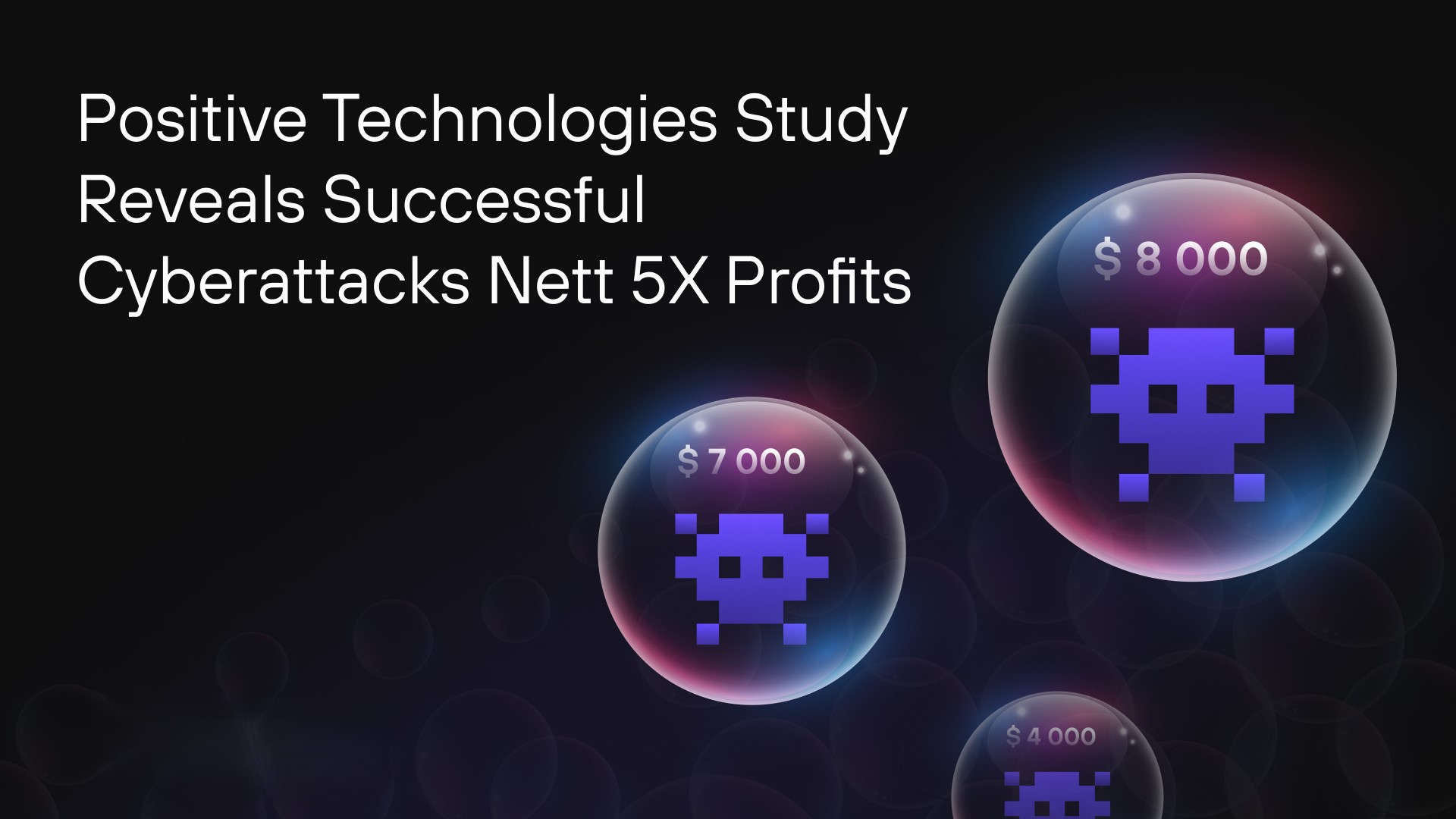
Positive Technologies has released a study on the dark web market, analysing prices for illegal cybersecurity services and products, as well as the costs incurred by cybercriminals to carry out attacks. The most expensive type of malware is ransomware, with a median cost of $7,500. Zero-day exploits are particularly valuable, often being sold for millions of dollars. However, the net profit from a successful cyberattack can be five times the cost of organizing it.
Experts estimate that performing a popular phishing attack involving ransomware costs novice cybercriminals at least $20,000. First, hackers rent dedicated servers, subscribe to VPN services, and acquire other tools to build a secure and anonymous IT infrastructure to manage the attack. Attackers also need to acquire the source code of malicious software or subscribe to ready-to-use malware, as well as tools for infiltrating the victim’s system and evading detection by security measures. Moreover, cybercriminals can consult with seasoned experts, purchase access to targeted infrastructures and company data, and escalate privileges within a compromised system. Products and tools are readily available for purchase on the dark web, catering to beginners. The darknet also offers leaked malware along with detailed instructions, making it easier for novice cybercriminals to carry out attacks.
Malware is one of the primary tools in a hacker’s arsenal, with 53% of malware-related ads focused on sales. In 19% of all posts, infostealers designed to steal data are offered. Crypters and code obfuscation tools, used to help attackers hide malware from security tools, are featured in 17% of cases. Additionally, loaders are mentioned in 16% of ads. The median cost of these types of malware stands at $400, $70, and $500, respectively. The most expensive malware is ransomware: its median cost is $7,500, with some offers reaching up to $320,000. Ransomware is primarily distributed through affiliate programs, known as Ransomware-as-a-Service (RaaS), where participants in an attack typically receive 70–90% of the ransom. To become a partner, a criminal must make a contribution of 0.05 Bitcoin (approximately $5,000) and have a solid reputation on the dark web.
Another popular attack tool is exploits: 69% of exploit-related ads focus on sales, with zero-day vulnerability posts accounting for 32% of them. In 31% of cases, the cost of exploits exceeds $20,000 and can reach several million dollars. Access to corporate networks is relatively inexpensive, with 72% of such ads focused on sales, and 62% of them priced at under a thousand dollars. Among cybercriminal services, hacks are the most popular option, accounting for 49% of reports. For example, the price for compromising a personal email account starts at $100, while the cost for a corporate account begins at $200.
Dmitry Streltsov, Threat Analyst at Positive Technologies, says, “On dark web marketplaces, prices are typically determined in one of two ways: either sellers set a fixed price, or auctions are held. Auctions are often used for exclusive items, such as zero-day exploits. The platforms facilitating these deals also generate revenue, often through their own escrow services, which hold the buyer’s funds temporarily until the product or service is confirmed as delivered. On many platforms, these escrow services are managed by either administrators or trusted users with strong reputations. In return, they earn at least 4% of the transaction amount, with the forums setting the rates.”
Considering the cost of tools and services on the dark web, along with the median ransom amount, cybercriminals can achieve a net profit of $100,000–$130,000 from a successful attack—five times the cost of their preparation. For a company, such an incident can result not only in ransom costs but also in massive financial losses due to disrupted business processes. For example, in 2024, due to a ransomware attack, servers of CDK Global were down for two weeks. The company paid cybercriminals $25 million, while the financial losses of dealers due to system downtime exceeded $600 million.

Written by Oded Vanunu, Chief Technologist & Head of Product Vulnerability Research at Check Point (more…)

Positive Technologies Reports 80% of Middle East Cyberattacks Compromise Confidential Data

Qualys Partners with Teksalah, the First Middle Eastern MSP in its mROC Alliance

CyberKnight Sets Up South Africa Entity

ManageEngine Enhances PAM with Native Intelligence

EcoOnline Expands into Middle East

OPSWAT Joins GISEC 2025 as Middle East Confronts AI-Driven Cyber Threats

GISEC Global 2025: SANS Institute to Showcase Elite Cybersecurity Training and Threat Expertise

Fortinet Expands FortiAI Across its Security Fabric Platform

GISEC 2025 Launches OT Security Conference Amid 49% Infrastructure Attack Surge

How AI is Reinventing Cybersecurity for the Automotive Industry

Positive Technologies @ GISEC Global 2025: Demonstrating Cutting-Edge Cyber Threats and AI Defense Strategies

Group-IB @ GISEC Global 2025: Tackling Evolving Cyber Threats with Localised Intelligence and AI

Video: Wallarm Unveils the Key to Cloud-Native API Security at GISEC Global 2025

Video: CyberKnight on Zero Trust, AI, and Saudi Arabia’s Digital Transformation at GISEC Global 2025

Video: SANS Institute Weighs in on Deepfakes, Model Poisoning and Risk Frameworks at GISEC Global 2025
-
 GISEC1 week ago
Positive Technologies @ GISEC Global 2025: Demonstrating Cutting-Edge Cyber Threats and AI Defense Strategies
-

 Cyber Security1 week ago
Axis Communications Sheds Light on Video Surveillance Industry Perspectives on AI
-
 GISEC1 week ago
Video: SANS Institute Weighs in on Deepfakes, Model Poisoning and Risk Frameworks at GISEC Global 2025
-
 GISEC1 week ago
ManageEngine @ GISEC Global 2025: AI, Quantum Computing, and Ransomware Form Part of Cybersecurity Outlook for 2025
-
 GISEC1 week ago
Video: SentinelOne Speaks Hyperautomation, Purple AI, and the Future of Threat Detection at GISEC Global 2025
-
 Africa Focus6 days ago
CyberKnight Sets Up South Africa Entity
-
 GISEC1 week ago
Group-IB @ GISEC Global 2025: Tackling Evolving Cyber Threats with Localised Intelligence and AI
-
 GISEC1 week ago
Video: CyberKnight on Zero Trust, AI, and Saudi Arabia’s Digital Transformation at GISEC Global 2025