
Artificial Intelligence
Generative AI: The Game-Changer Transforming Cybersecurity in a Rapidly Evolving Threat Landscape


Fernando Cea, VP of Technology for New Markets at Globant, champions the integration of generative AI into cybersecurity as a transformative approach in tackling today’s rapidly evolving threat landscape
How is generative AI being utilized to enhance cybersecurity measures today?
The cybersecurity industry is at an inflection point. With the total addressable market expected to soar to $1.5–$2.0 trillion—nearly 10x the size of the current vended market—there’s no room for complacency. Generative AI isn’t just a tool; it’s a force multiplier. At Globant, we’re integrating Gen AI into the heart of cybersecurity, enabling systems to not only identify anomalies faster but to predict them—before they strike.
Simulation and evolution of genAI models are hand-by-hand so it is exactly where are we going. We’re seeing AI models automatically generate threat intelligence reports, simulate attacks to test system resilience, and dynamically rewrite defensive code in real-time. According to a recent IBM study, organizations using AI and automation in security saw a 108-day shorter breach lifecycle and saved an average of $1.76 million per breach. But here’s the reality: Gen AI is also arming the attackers. The only way to keep up is to fight AI with AI.
How can organizations leverage generative AI for proactive threat detection and response?
Proactive cybersecurity isn’t just about building walls—it’s about anticipating the breach before it happens. Gen AI enables organizations to shift from reactive playbooks to predictive defense. GenAI is really good on creating scenarios and synthetic data and this pattern have introduced a new approach of the problem solving. We’re helping clients in highly sensitive industries—from government to finance to entertainment—deploy AI agents that constantly scan internal and external networks, flag anomalous behavior in milliseconds, and autonomously deploy countermeasures before human analysts are even alerted.
This isn’t theoretical—it’s happening now. Imagine a Gen AI model that learns from every attempted breach across an ecosystem, feeding insights into your security fabric in real time. It’s like having a red team and blue team working together 24/7, learning from each other, and never sleeping.
What challenges do cybersecurity teams face when integrating generative AI tools into their workflows?
Let’s not sugarcoat it—integrating Gen AI into cybersecurity isn’t plug-and-play. It demands new skillsets, new mindsets, and a willingness to break the old model. One of the biggest challenges is explainability. Gen AI models often operate as black boxes, which makes it hard for CISOs and security teams to justify actions to regulators or internal stakeholders.
There’s also the risk of AI-generated false positives that can overwhelm analysts or, worse, generate blind spots. Then there’s trust: many organizations are hesitant to hand over critical security operations to a machine. And rightfully so. The risk is real—but the risk of standing still is even greater.
Are there any notable examples of generative AI successfully preventing or mitigating cyberattacks?
Yes—and they’re multiplying. One case we’re particularly proud of involved a large-scale financial institution that faced a rising wave of phishing attacks using deepfake content. Traditional rule-based systems failed to detect the nuances, but a Gen AI-powered detection layer helped deploy flagged irregular tone and semantic drift in emails and voice transcriptions in real-time. The system prevented a multi-million-dollar breach.
Another example: a digital media platform we work with experienced a zero-day exploit attempt. Our AI models, trained on synthetic attack data, recognized the pattern within seconds and auto-isolated the affected microservice—without any human intervention. These aren’t just success stories. They’re proof that Gen AI can move faster than the adversary.
How do you see generative AI evolving in the cybersecurity domain over the next few years?
The future of cybersecurity will be defined by cyber resilience—not just fortification. And Gen AI will be at the core. In the next three to five years, we expect to see fully autonomous security orchestration platforms powered by Gen AI that adapt and evolve without manual configuration. Think of them as living, breathing digital immune systems—capable of learning, mutating, and healing themselves. But there’s also a dark side.
Nation-states and cybercrime syndicates will weaponize Gen AI to launch attacks at unprecedented scale and sophistication. Deepfakes, synthetic identities, and AI-generated malware will become the norm.







The automated penetration testing market was valued at roughly $3.1 billion in 2023 and is projected to grow rapidly, with forecasts estimating a compound annual growth rate (CAGR) between 21% and 25%. By 2030, the sector is expected to reach approximately $9 to $10 billion. The broader penetration testing industry is also expanding, with projections indicating it will surpass $5.3 billion by 2027, according to MarketandMarket.
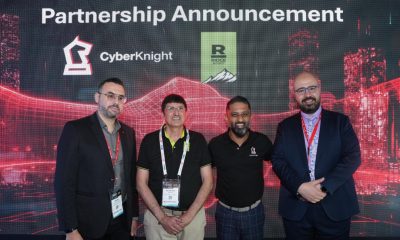
To support enterprises and government entities across the Middle East, Turkey and Africa (META) with identifying and validating vulnerabilities and reducing security gaps in real-time, CyberKnight has partnered with Ridge Security, the World’s First Al-powered Offensive Security Validation Platform. Ridge Security’s products incorporate advanced artificial intelligence to deliver security validation through automated penetration testing and breach and attack simulations.
RidgeBot uses advanced AI to autonomously perform multi-vector iterative attacks, conduct continuous penetration testing, and validate vulnerabilities with zero false positives. RidgeBot has been deployed by customers worldwide as a key element of their journey to evolve from traditional vulnerability management to Continuous Threat Exposure Management (CTEM).
“Ridge Security’s core strength lies in delivering holistic, AI-driven security validation that enables organizations to proactively manage risk and improve operational performance,” said Hom Bahmanyar, Chief Enablement Officer at Ridge Security. “We are delighted to partner with CyberKnight to leverage their network of strategic partners, deep-rooted customer relations, and security expertise to accelerate our expansion plans in the region.”
“Our partnership with Ridge Security is a timely and strategic step, as 69% of organizations are now adopting AI-driven security for threat detection and prevention,” added Wael Jaber, Chief Strategy Officer at CyberKnight. “By joining forces, we enhance our ability to deliver automated, intelligent security validation solutions, reaffirming our commitment to empowering customers with resilient, future-ready cybersecurity across the region.”
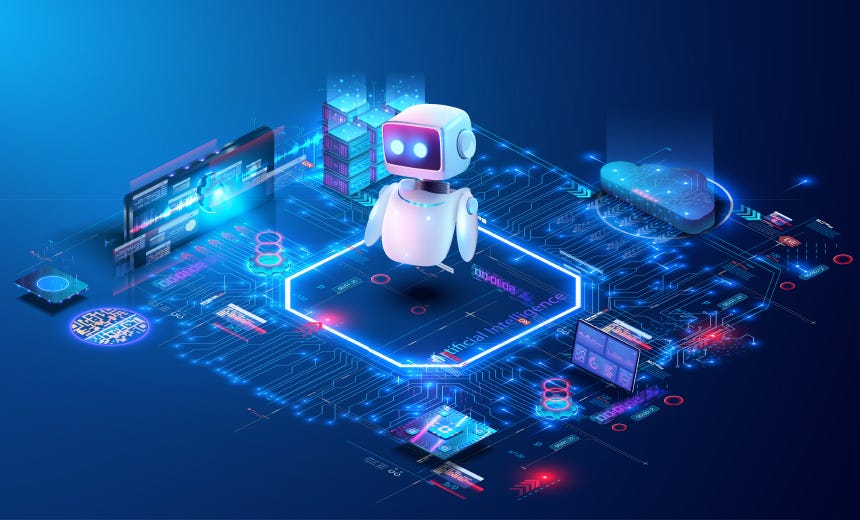
Cequence Security has announced significant enhancements to its Unified API Protection (UAP) platform to deliver a comprehensive security solution for agentic AI development, usage, and connectivity. This enhancement empowers organizations to secure every AI agent interaction, regardless of the development framework. By implementing robust guardrails, the solution protects both enterprise-hosted AI applications and external AI APIs, preventing sensitive data exfiltration through business logic abuse and ensuring regulatory compliance.
There is no AI without APIs, and the rapid growth of agentic AI applications has amplified concerns about securing sensitive data during their interactions. These AI-driven exchanges can inadvertently expose internal systems, create significant vulnerabilities, and jeopardize valuable data assets. Recognising this critical challenge, Cequence has expanded its UAP platform, introducing an enhanced security layer to govern interactions between AI agents and backend services specifically. This new layer of security enables customers to detect and prevent AI bots such as ChatGPT from OpenAI and Perplexity from harvesting organizational data.
Internal telemetry across Global 2000 deployments shows that the overwhelming majority of AI-related bot traffic, nearly 88%, originates from large language model infrastructure, with most requests obfuscated behind generic or unidentified user agents. Less than 4% of this traffic is transparently attributed to bots like GPTBot or Gemini. Over 97% of it comes from U.S.-based IP addresses, highlighting the concentration of risk in North American enterprises. Cequence’s ability to detect and govern this traffic in real time, despite the lack of clear identifiers, reinforces the platform’s unmatched readiness for securing agentic AI in the wild.
Key enhancements to Cequence’s UAP platform include:
- Block unauthorized AI data harvesting: Understanding that external AI often seeks to learn by broadly collecting data without obtaining permission, Cequence provides organizations with the critical capability to manage which AI, if any, can interact with their proprietary information.
- Detect and prevent sensitive data exposure: Empowers organizations to effectively detect and prevent sensitive data exposure across all forms of agentic AI. This includes safeguarding against external AI harvesting attempts and securing data within internal AI applications. The platform’s intelligent analysis automatically differentiates between legitimate data access during normal application usage and anomalous activities signaling sensitive data exfiltration, ensuring comprehensive protection against AI-related data loss.
- Discover and manage shadow AI: Automatically discovers and classifies APIs from agentic AI tools like Microsoft Copilot and Salesforce Agentforce, presenting a unified view alongside customers’ internal and third-party APIs. This comprehensive visibility empowers organizations to easily manage these interactions and effectively detect and block sensitive data leaks, whether from external AI harvesting or internal AI usage.
- Seamless integration: Integrates easily into DevOps frameworks for discovering internal AI applications and generates OpenAPI specifications that detail API schemas and security mechanisms, including strong authentication and security policies. Cequence delivers powerful protection without relying on third-party tools, while seamlessly integrating with the customer’s existing cybersecurity ecosystem. This simplifies management and security enforcement.
“Gartner predicts that by 2028, 33% of enterprise software applications will include agentic AI, up from less than 1% in 2024, enabling 15% of day-to-day work decisions to be made autonomously. We’ve taken immediate action to extend our market-leading API security and bot management capabilities,” said Ameya Talwalkar, CEO of Cequence. “Agentic AI introduces a new layer of complexity, where every agent behaves like a bidirectional API. That’s our wheelhouse. Our platform helps organizations embrace innovation at scale without sacrificing governance, compliance, or control.”
These extended capabilities will be generally available in June.

Fortinet has announced major upgrades to FortiAI, integrating advanced AI capabilities across its Security Fabric platform to combat evolving threats, automate security tasks, and protect AI systems from cyber risks. As cybercriminals increasingly weaponize AI to launch sophisticated attacks, organizations need smarter defenses. Fortinet—with 500+ AI patents and 15 years of AI innovation—now embeds FortiAI across its platform to:
- Stop AI-powered threats
- Automate security and network operations
- Secure AI tools used by businesses
“Fortinet’s AI advantage stems from the breadth and depth of our AI ecosystem—shaped by over a decade of AI innovation and reinforced by more patents than any other cybersecurity vendor,” said Michael Xie, Founder, President, and Chief Technology Officer at Fortinet. “By embedding FortiAI across the Fortinet Security Fabric platform, including new agentic AI capabilities, we’re empowering our customers to reduce the workload on their security and network analysts while improving the efficiency, speed, and accuracy of their security and networking operations. In parallel, we’ve added coverage across the Fabric ecosystem to enable customers to monitor and control the use of GenAI-enabled services within their organization.”
Key upgrades:
FortiAI-Assist – AI That Works for You
- Automatic Network Fixes: AI configures, validates, and troubleshoots network issues without human help.
- Smarter Security Alerts: Cuts through noise, prioritizing only critical threats.
- AI-Powered Threat Hunting: Scans for hidden risks and traces attack origins.
FortiAI-Protect – Defending Against AI Threats
- Tracks 6,500+ AI apps, blocking risky or unauthorized usage.
- Stops new malware with machine learning.
- Adapts to new attack methods in real time.
FortiAI-SecureAI – Safe AI Adoption
- Protects AI models, data, and cloud workloads.
- Prevents leaks from tools like ChatGPT.
- Enforces zero-trust access for AI systems.
FortiAI processes queries locally, ensuring sensitive data never leaves your network.

Positive Technologies Reports 80% of Middle East Cyberattacks Compromise Confidential Data

Qualys Partners with Teksalah, the First Middle Eastern MSP in its mROC Alliance

CyberKnight Sets Up South Africa Entity

ManageEngine Enhances PAM with Native Intelligence

EcoOnline Expands into Middle East

OPSWAT Joins GISEC 2025 as Middle East Confronts AI-Driven Cyber Threats

GISEC Global 2025: SANS Institute to Showcase Elite Cybersecurity Training and Threat Expertise

Fortinet Expands FortiAI Across its Security Fabric Platform

How AI is Reinventing Cybersecurity for the Automotive Industry

GISEC 2025 Launches OT Security Conference Amid 49% Infrastructure Attack Surge

Positive Technologies @ GISEC Global 2025: Demonstrating Cutting-Edge Cyber Threats and AI Defense Strategies

Group-IB @ GISEC Global 2025: Tackling Evolving Cyber Threats with Localised Intelligence and AI

Video: Wallarm Unveils the Key to Cloud-Native API Security at GISEC Global 2025

Video: CyberKnight on Zero Trust, AI, and Saudi Arabia’s Digital Transformation at GISEC Global 2025

Video: SANS Institute Weighs in on Deepfakes, Model Poisoning and Risk Frameworks at GISEC Global 2025
-
 GISEC1 week ago
Positive Technologies @ GISEC Global 2025: Demonstrating Cutting-Edge Cyber Threats and AI Defense Strategies
-

 Cyber Security1 week ago
Axis Communications Sheds Light on Video Surveillance Industry Perspectives on AI
-
 GISEC1 week ago
Video: SANS Institute Weighs in on Deepfakes, Model Poisoning and Risk Frameworks at GISEC Global 2025
-
 GISEC1 week ago
ManageEngine @ GISEC Global 2025: AI, Quantum Computing, and Ransomware Form Part of Cybersecurity Outlook for 2025
-
 GISEC1 week ago
Video: SentinelOne Speaks Hyperautomation, Purple AI, and the Future of Threat Detection at GISEC Global 2025
-
 Africa Focus6 days ago
CyberKnight Sets Up South Africa Entity
-
 GISEC1 week ago
Group-IB @ GISEC Global 2025: Tackling Evolving Cyber Threats with Localised Intelligence and AI
-
 GISEC1 week ago
Video: CyberKnight on Zero Trust, AI, and Saudi Arabia’s Digital Transformation at GISEC Global 2025