
Expert Speak
The Chief Zero Trust Officer: A New Role for a New Era of Cybersecurity


Written by John Engates, Field CTO at Cloudflare
Over the last few years, the topic of cyber security has moved from the IT department to the board room. The current climate of geopolitical and economic uncertainty has made the threat of cyber attacks all the more pressing, with businesses of all sizes and across all industries feeling the impact. From the potential for a crippling ransomware attack to a data breach that could compromise sensitive consumer information, the risks are real and potentially catastrophic. Organizations are recognizing the need for better resilience and preparation regarding cybersecurity. It is not enough to simply react to attacks as they happen; companies must proactively prepare for the inevitable in their approach to cybersecurity.
The security approach that has gained the most traction in recent years is the concept of Zero Trust. The basic principle behind Zero Trust is simple: don’t trust anything; verify everything. The impetus for a modern Zero Trust architecture is that traditional perimeter-based (castle-and-moat) security models are no longer sufficient in today’s digitally distributed landscape. Organizations must adopt a holistic approach to security based on verifying the identity and trustworthiness of all users, devices, and systems that access their networks and data.
Zero Trust has been on the radar of business leaders and board members for some time now. However, Zero Trust is no longer just a concept being discussed; it’s now a mandate. With remote or hybrid work now the norm and cyber-attacks continuing to escalate, businesses realize they must take a fundamentally different approach to security. But as with any significant shift in strategy, implementation can be challenging, and efforts can sometimes stall. Although many firms have begun implementing Zero Trust methods and technologies, only some have fully implemented them throughout the organization. For many large companies, this is the current status of their Zero Trust initiatives – stuck in the implementation phase.
But what if there was a missing piece in the cybersecurity puzzle that could change everything? Enter the role of “Chief Zero Trust Officer” (CZTO) – a new position that we believe will become increasingly common in large organizations over the next year. The idea of companies potentially creating the role of Chief Zero Trust Officer evolved from conversations last year between Cloudflare’s Field CTO team members and US federal government agencies. A similar job function was first noted in the White House memorandum directing federal agencies to “move toward Zero Trust cybersecurity principles” and requiring agencies “designate and identify a Zero Trust strategy implementation lead for their organization” within 30 days. In government, a role like this is often called a “czar,” but the title “chief” is more appropriate within a business.
Large organizations need strong leaders to efficiently get things done. Businesses assign the ultimate leadership responsibility to people with titles that begin with the word chief, such as Chief Executive Officer (CEO) or Chief Financial Officer (CFO). These positions exist to provide direction, set strategy, make critical decisions, and manage day-to-day operations and they are often accountable to the board for overall performance and success.
An old saying goes, “When everyone is responsible, no one is responsible.” As we consider the challenges in implementing Zero Trust within an enterprise, it appears that a lack of clear leadership and accountability is a significant issue. The question remains, who *exactly* is responsible for driving the adoption and execution of Zero Trust within the organization?
Large enterprises need a single person responsible for driving the Zero Trust journey. This leader should be empowered with a clear mandate and have a singular focus: getting the enterprise to Zero Trust. This is where the idea of the Chief Zero Trust Officer was born. “Chief Zero Trust Officer” may seem like just a title, but it holds a lot of weight. It commands attention and can overcome many obstacles to Zero Trust.
Implementing Zero Trust can be hindered by various technological challenges. Understanding and implementing the complex architecture of some vendors can take time, demand extensive training, or require a professional services engagement to acquire the necessary expertise. Identifying and verifying users and devices in a Zero Trust environment can also be a challenge. It requires an accurate inventory of the organization’s user base, groups they’re a part of, and their applications and devices.
On the organizational side, coordination between different teams is crucial for effectively implementing Zero Trust. Breaking down the silos between IT, cybersecurity, and networking groups, establishing clear communication channels, and regular meetings between team members can help achieve a cohesive security strategy. General resistance to change can also be a significant obstacle. Leaders should use techniques such as leading by example, transparent communication, and involving employees in the change process to mitigate it. Proactively addressing concerns, providing support, and creating employee training opportunities can also help ease the transition.
But why does an organization need a CZTO? Is another C-level role essential? Why not assign someone already managing security within the CISO organization? Of course, these are all valid questions. Think about it this way – companies should assign the title based on the level of strategic importance to the company. So, whether it’s Chief Zero Trust Officer, Head of Zero Trust, VP of Zero Trust, or something else, the title must command attention and come with the power to break down silos and cut through bureaucracy.
New C-level titles aren’t without precedent. In recent years, we’ve seen the emergence of titles such as Chief Digital Transformation Officer, Chief eXperience Officer, Chief Customer Officer, and Chief Data Scientist. The Chief Zero Trust Officer title is likely not even a permanent role. What’s crucial is that the person holding the role has the authority and vision to drive the Zero Trust initiative forward, with the support of company leadership and the board of directors.
Getting to Zero Trust security is now a mandate for many companies, as the traditional perimeter-based security model is no longer enough to protect against today’s sophisticated threats. To navigate the technical and organizational challenges that come with Zero Trust implementation, the leadership of a CZTO is crucial. The CZTO will lead the Zero Trust initiative, align teams and break down barriers to achieve a smooth rollout. The role of CZTO in the C-suite emphasizes the importance of Zero Trust in the company. It ensures that the Zero Trust initiative is given the necessary attention and resources to succeed. Organizations that appoint a CZTO now will be the ones that come out on top in the future.












Written by Alain Penel, VP of Middle East, CIS & Turkey at Fortinet (more…)

Positive Technologies has released a study on the dark web market, analysing prices for illegal cybersecurity services and products, as well as the costs incurred by cybercriminals to carry out attacks. The most expensive type of malware is ransomware, with a median cost of $7,500. Zero-day exploits are particularly valuable, often being sold for millions of dollars. However, the net profit from a successful cyberattack can be five times the cost of organizing it.
Experts estimate that performing a popular phishing attack involving ransomware costs novice cybercriminals at least $20,000. First, hackers rent dedicated servers, subscribe to VPN services, and acquire other tools to build a secure and anonymous IT infrastructure to manage the attack. Attackers also need to acquire the source code of malicious software or subscribe to ready-to-use malware, as well as tools for infiltrating the victim’s system and evading detection by security measures. Moreover, cybercriminals can consult with seasoned experts, purchase access to targeted infrastructures and company data, and escalate privileges within a compromised system. Products and tools are readily available for purchase on the dark web, catering to beginners. The darknet also offers leaked malware along with detailed instructions, making it easier for novice cybercriminals to carry out attacks.
Malware is one of the primary tools in a hacker’s arsenal, with 53% of malware-related ads focused on sales. In 19% of all posts, infostealers designed to steal data are offered. Crypters and code obfuscation tools, used to help attackers hide malware from security tools, are featured in 17% of cases. Additionally, loaders are mentioned in 16% of ads. The median cost of these types of malware stands at $400, $70, and $500, respectively. The most expensive malware is ransomware: its median cost is $7,500, with some offers reaching up to $320,000. Ransomware is primarily distributed through affiliate programs, known as Ransomware-as-a-Service (RaaS), where participants in an attack typically receive 70–90% of the ransom. To become a partner, a criminal must make a contribution of 0.05 Bitcoin (approximately $5,000) and have a solid reputation on the dark web.
Another popular attack tool is exploits: 69% of exploit-related ads focus on sales, with zero-day vulnerability posts accounting for 32% of them. In 31% of cases, the cost of exploits exceeds $20,000 and can reach several million dollars. Access to corporate networks is relatively inexpensive, with 72% of such ads focused on sales, and 62% of them priced at under a thousand dollars. Among cybercriminal services, hacks are the most popular option, accounting for 49% of reports. For example, the price for compromising a personal email account starts at $100, while the cost for a corporate account begins at $200.
Dmitry Streltsov, Threat Analyst at Positive Technologies, says, “On dark web marketplaces, prices are typically determined in one of two ways: either sellers set a fixed price, or auctions are held. Auctions are often used for exclusive items, such as zero-day exploits. The platforms facilitating these deals also generate revenue, often through their own escrow services, which hold the buyer’s funds temporarily until the product or service is confirmed as delivered. On many platforms, these escrow services are managed by either administrators or trusted users with strong reputations. In return, they earn at least 4% of the transaction amount, with the forums setting the rates.”
Considering the cost of tools and services on the dark web, along with the median ransom amount, cybercriminals can achieve a net profit of $100,000–$130,000 from a successful attack—five times the cost of their preparation. For a company, such an incident can result not only in ransom costs but also in massive financial losses due to disrupted business processes. For example, in 2024, due to a ransomware attack, servers of CDK Global were down for two weeks. The company paid cybercriminals $25 million, while the financial losses of dealers due to system downtime exceeded $600 million.


Written by Oded Vanunu, Chief Technologist & Head of Product Vulnerability Research at Check Point (more…)

Positive Technologies Reports 80% of Middle East Cyberattacks Compromise Confidential Data

Qualys Partners with Teksalah, the First Middle Eastern MSP in its mROC Alliance

CyberKnight Sets Up South Africa Entity

ManageEngine Enhances PAM with Native Intelligence

EcoOnline Expands into Middle East

OPSWAT Joins GISEC 2025 as Middle East Confronts AI-Driven Cyber Threats

GISEC Global 2025: SANS Institute to Showcase Elite Cybersecurity Training and Threat Expertise

Fortinet Expands FortiAI Across its Security Fabric Platform

GISEC 2025 Launches OT Security Conference Amid 49% Infrastructure Attack Surge

How AI is Reinventing Cybersecurity for the Automotive Industry

Positive Technologies @ GISEC Global 2025: Demonstrating Cutting-Edge Cyber Threats and AI Defense Strategies

Group-IB @ GISEC Global 2025: Tackling Evolving Cyber Threats with Localised Intelligence and AI

Video: Wallarm Unveils the Key to Cloud-Native API Security at GISEC Global 2025

Video: CyberKnight on Zero Trust, AI, and Saudi Arabia’s Digital Transformation at GISEC Global 2025

Video: SANS Institute Weighs in on Deepfakes, Model Poisoning and Risk Frameworks at GISEC Global 2025
-
 GISEC1 week ago
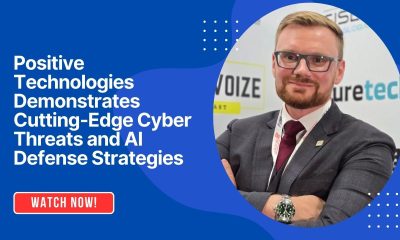
Positive Technologies @ GISEC Global 2025: Demonstrating Cutting-Edge Cyber Threats and AI Defense Strategies
-

 Cyber Security1 week ago
Axis Communications Sheds Light on Video Surveillance Industry Perspectives on AI
-
 GISEC1 week ago
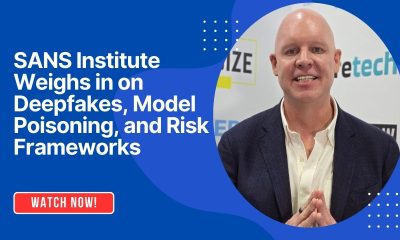
Video: SANS Institute Weighs in on Deepfakes, Model Poisoning and Risk Frameworks at GISEC Global 2025
-
 GISEC1 week ago
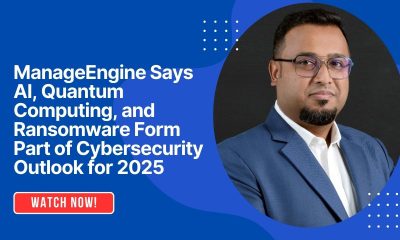
ManageEngine @ GISEC Global 2025: AI, Quantum Computing, and Ransomware Form Part of Cybersecurity Outlook for 2025
-
 GISEC1 week ago
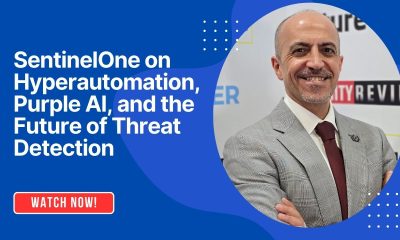
Video: SentinelOne Speaks Hyperautomation, Purple AI, and the Future of Threat Detection at GISEC Global 2025
-
 Africa Focus6 days ago
CyberKnight Sets Up South Africa Entity
-
 GISEC1 week ago
Group-IB @ GISEC Global 2025: Tackling Evolving Cyber Threats with Localised Intelligence and AI
-
 GISEC1 week ago
Video: CyberKnight on Zero Trust, AI, and Saudi Arabia’s Digital Transformation at GISEC Global 2025