
Homeland Security
With the Rise of Extreme Floods, SAR Satellites are Becoming Increasingly Important


Written by Jamil Kawar, VP for Missions in the Middle East and North Africa for ICEYE
Last month, the UAE experienced the heaviest rainfall in 75 years. The ensuing floods have been unlike anything in living memory, causing widespread disruption to the city and its citizens. However, as disruptive as this event has been, the UAE is far from alone in experiencing extreme rainfall and flash flooding. Around the world, governments are having to adjust to a world where such extreme weather events are far more frequent than in the past. In the UK, for instance, research suggests that extreme rainfall events could be four times as frequent by 2080 compared to the 1980s.
The UAE, like many nation-states across the globe, is therefore challenged to put in place new flood defences and mitigations capable of protecting citizens and infrastructure from the perils of extreme flooding. As it does so, it will need to draw on a broad range of technical solutions to provide the insights needed to respond to floods and plan for future incidents.
Leveraging SAR satellite-based intelligence
Here, a new generation of satellites can play an important role. Synthetic aperture radar (SAR) satellites use radar technology to create detailed images of the Earth’s surface, regardless of weather conditions or daylight. These satellites transmit radar signals towards the Earth and capture the reflected signals, which are then used to construct images. The “synthetic aperture” in the name refers to the technique of using the satellite’s motion to simulate a much larger antenna than is physically present, enabling higher-resolution imaging.
This capability makes SAR satellites particularly useful for applications such as monitoring environmental changes and assessing disaster impacts. These insights can form the heart of an effective flood response and prevention capability. However, they should not be the only insights in play. A comprehensive approach will enrich SAR satellite imaging with intelligence from a range of sources including local observations, river gauges, and third-party data sets. The goal is to achieve a near real-time, holistic model that delivers actionable flood intelligence that response teams can trust.
Use cases for SAR satellite imaging in flood response
This rich dataset can be applied to a range of use cases in flood response situations. First, it helps emergency responders and governments assess the true impact of flooding within a matter of hours and make better-informed decisions. This includes information on the depth and extent of flooding that can be compared with maps detailing where buildings are situated, helping response teams understand the impact of a flood on local areas and be sure of sending help to where it is needed most.
SAR satellite intelligence can further enhance the emergency response by providing a single source of truth for all response teams and agencies. The key here is to use a system that is ready for use in existing mapping systems. Drawing on this data in near real-time, emergency responders can base their recovery efforts on solid, reliable data from the very beginning, leveraging their mapping suite to view, analyse, and operationalise that single source of truth across multiple agencies on the ground.
Finally, SAR satellite data can be used after an event to help authorities improve their disaster response and prevention efforts, particularly when it comes to protecting the areas, infrastructure, and buildings most at risk. Combined with constant satellite tracking, authorities will be well-placed to respond rapidly and effectively to any future instances of flooding.
Preparing for uncertain times
With SAR satellites, flood maps are powered by data-driven observations, rather than simulations and guesswork. Already, governments in countries that have been affected by extreme flooding are using SAR satellite imaging to boost their monitoring and response capabilities. In Australia, for instance, the federal government is using SAR satellite data to supply flood and bushfire hazard data for all states and territories across the country. The intelligence is expected to help in rapid disaster assessment and response, better resource allocation and improved coordination between national and local authorities.
When it comes to extreme flooding, the UAE and many other countries around the world have come to realise that you must expect the unexpected. Climate change will continue to affect the weather in the years ahead and throw up new challenges for authorities. Timely intelligence will be critical to dealing with these challenges and protecting infrastructure and people. Given its ability to deliver rapid, actionable, and trustworthy intelligence, SAR satellites will be an important element of this data-driven approach.

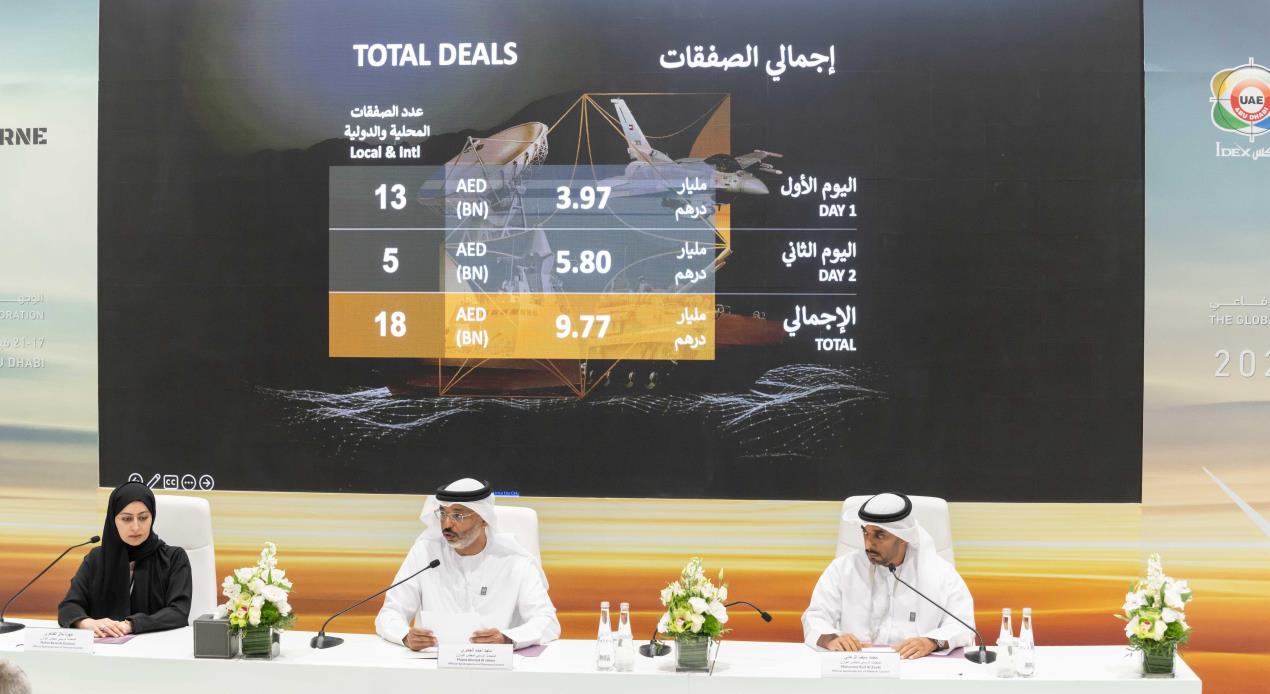
Tawazun Council – the government authority responsible for managing acquisitions, procurement, and contracts on behalf of the Ministry of Defense and security agencies – announced the signing of 5 deals worth a total of AED 5.8 billion with local and international companies on the second day of IDEX and NAVDEX 2025.
With these agreements, the total value of contracts signed during the first two days of the exhibitions has reached AED 9.77 billion across 18 deals. The announcement was made during a press conference attended by Majed Ahmed Al Jaberi, Mohammed Saif Al Zaabi, and Mahra Bilal Al Dhaheri, the official spokespersons for Tawazun Council.
The press briefing detailed the council’s contracts for the Ministry of Defense at IDEX and NAVDEX 2025, held under the patronage of His Highness Sheikh Mohammed bin Zayed Al Nahyan, President of the UAE, and organized by ADNEC Group in collaboration with the Ministry of Defense and Tawazun Council.
Mahra Bilal Al Dhaheri stated that the second day’s local deals amounted to three contracts worth AED 5.57 billion. These included a contract with “Calidus Aerospace” to Procure HEDA Missile System (Phase 1) worth AED 3.76 billion, a contract with “International Golden Group” for the procurement of ammunition worth AED 492 million, and an agreement with “DTEC Industries Limited” to purchase 50 meter marine traffic boats worth AED 1.38 billion.
Meanwhile, Mohammed Saif Al Zaabi announced that international contracts for the second day of IDEX and NAVDEX 2025 amounted to two deals worth AED 213 million. These included an agreement with the French company “MBDA” to provide spare parts, maintenance, repairs, and technical support for naval equipment, valued at AED 32 million. Additionally, a contract was signed with “Augusta Westland Aviation Services “of Italy to provide technical, engineering, and logistics support, along with aircraft spare parts, worth AED 181 million.
Majed Ahmed Al Jaberi highlighted Tawazun Council’s commitment to enhancing cooperation between leading local and international defense companies. He pointed out that IDEX and NAVDEX 2025 serve as pivotal platforms for showcasing the latest technologies and innovations. Al Jaberi further remarked that these contracts play a key role in supporting the nation’s strategy to bolster its defense capabilities and expand its local manufacturing base—efforts that contribute to sustainable development and stimulate investment in advanced technologies.
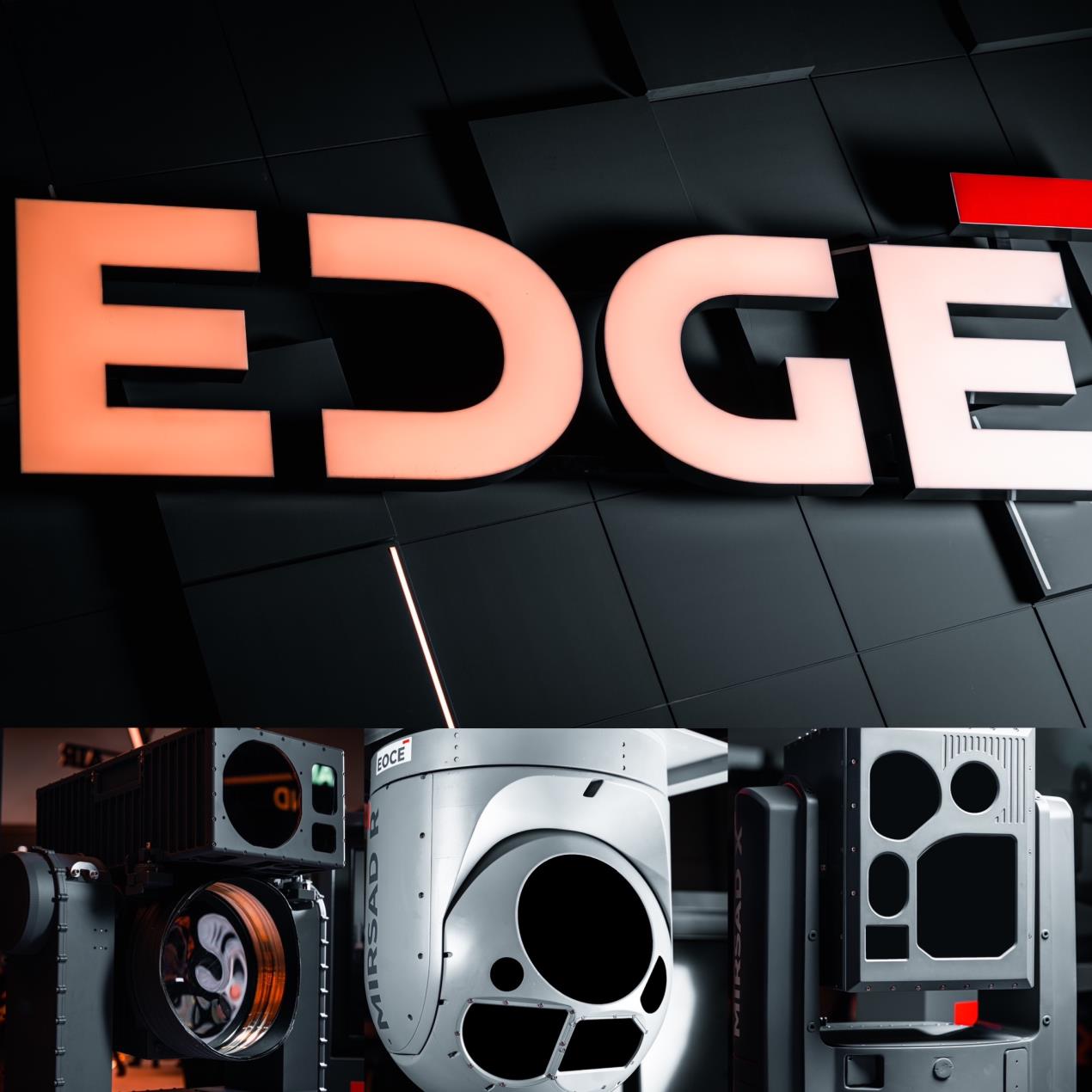
EDGE, one of the world’s leading advanced technology and defence groups, is unveiling a next-level range of new electronic warfare (EW), radar, and electro-optical/infrared (EO/IR) systems at the International Defence Exhibition & Conference 2025 (IDEX 2025). These cutting-edge systems mark a significant expansion of EDGE’s portfolio, reinforcing its position at the forefront of high-performance sensor and electromagnetic technologies that are critical for modern operational theatres.
EDGE is unveiling its most advanced suite of radars and electro-optical/infrared (EO/IR) systems, seamlessly expanding its all-domain portfolio. In the radar category, EDGE is introducing the NEMUS family, multi-threat active electronically scanned array (AESA) radars engineered for a broad range of intelligence, surveillance, target acquisition, and reconnaissance (ISTAR) operations. Additionally, EDGE is launching next-generation 3D radars – the next generation TAWAQ family of ground radars, with advanced artificial intelligence (AI) capabilities.
EDGE is also showcasing its MIRSAD family of advanced EO/IR systems, designed for high-precision surveillance and targeting across air, naval, and ground domains. Equipped with cutting-edge imaging, tracking, and laser designation technologies, the MIRSAD family enhances situational awareness and operational effectiveness, delivering superior performance in complex environments.
In the EW domain, EDGE is unveiling two new variants of the GPS PROTECT GNSS anti-jamming system, the GPS PROTECT-4 and GPS PROTECT-8. Utilising advanced digital signal processing and array antenna technology, the new systems effectively protect users’ GNSS receivers from radio-frequency (RF) interference signals. EDGE is also unveiling two new variants of the SKYSHIELD counter-unmanned aerial system (C-UAS), the SKYSHIELD-N (Naval) and SKYSHIELD-T (Trailer-mounted), designed to identify UAS and jam their command-and-control (C2) channels within the full range of the GNSS spectrum.
Making its debut at IDEX 2025, BORDERSHIELD is EDGE’s new end-to-end surveillance system, designed for superior border security operations. Featuring AI-driven automatic detection of UAS, personnel, and vehicles up to 15km, BORDERSHIELD integrates a high-power cellular system (operating across GMS, UTMS, LTE, and 5G NSA frequency bands), a thermal optical camera, a high-resolution radar, and a C2 system to provide real-time, persistent situational awareness.
EDGE’s expansion into critical electronic warfare, radar, and EO/IR technologies is underpinned by the strategic consolidation of expertise within its newly established Technology & Innovation (T&I) cluster. This cluster is designed to accelerate innovation, optimise production through dedicated Centres of Excellence, and transform advanced research into deployable solutions. As a strategic initiative, it enhances efficiency, sovereignty, and technological leadership, reinforcing EDGE’s position as a global leader in defence technology.


World Defense Show (WDS), founded by the General Authority for Military Industries (GAMI) in Saudi Arabia, today revealed several new features to be implemented at its upcoming third edition in 2026, under the theme, ‘The Future of Defense Integration.’ The details of the show, including the expansion of the venue space, were announced today at IDEX 2025 in Abu Dhabi.
To be held from 8-12 February 2026 in Riyadh, Saudi Arabia, WDS will showcase the latest advancements in defense technologies across all five defense domains — air, land, sea, space, and security. Building on the success of its two prior editions, WDS 2026 will bring together global defense stakeholders to further foster collaboration, innovation, and international partnerships to strengthen global defense capabilities. WDS contributes to Saudi Arabia’s growth in the defense sector and is aligned with the goals of Saudi Vision 2030 to localize 50 percent of defense spending in the Kingdom.
World Defense Show 2026 will span 273,000 sqm of exhibition space, including a new fourth hall. Since its inception in 2022, the area of exhibition stands has seen a considerable 58% growth. WDS 2026, in its third edition, is set to be even bigger and has received global participation with 65% of exhibition stands already sold. Attendees can experience several world-class features, take part in strategic networking opportunities, engage in discussions on crucial topics transforming the defense landscape, and view dynamic live and static displays at the expanded 2026 venue.
Andrew Pearcey, CEO, said, “We are excited to announce that WDS 2026 is surpassing the success of the previous edition. The 2026 show will be larger in size and expanded in scope, with increased international and local participation, expanded exhibition space, and a stronger focus on technological advancements, zooming in on unmanned systems and naval. WDS has introduced a range of important new features to promote further integration across the full spectrum of defense operations and deliver attendees another unmatched experience.”
WDS 2026 has announced new groundbreaking show features in addition to the successful programs from the previous edition. In 2024, these will contribute to an even more inclusive environment, bring the most cutting-edge technologies, and ensure wider industry coverage.
Among the highlights is Future Defense Lab, a revolutionary platform showcasing a new era of innovators, from startups to global primes, presenting never-before-seen cutting-edge technologies. In addition, the Unmanned Systems Zone brings the latest advancements in autonomous technology to the forefront, offering attendees the opportunity to experience the next phase of unmanned developments across all defense domains. Further, the new Naval Zone offers a comprehensive look at the future of maritime defense, underscoring the integral role of naval capabilities in maintaining global stability and securing economic interests.
A key new feature that reflects the Kingdom’s growing defense sector capabilities is the Saudi Supply Chain Zone, which enables small- and medium-sized Saudi enterprises the opportunity to connect with key players in the global defense supply chain, thereby strengthening local and international partnerships.
Pearcey added, “We’ve received resounding positive feedback from the previous two editions, with 2024 exceeding our expectations across the board. In response, we’ve set even more ambitious goals for 2026. By extending the show to offer more networking opportunities, greater deal-making potential, and enhanced collaboration between startups, local SMEs, and global industry leaders, we are committed to strengthening industry connections across the entire supply chain.”

Positive Technologies Reports 80% of Middle East Cyberattacks Compromise Confidential Data

Qualys Partners with Teksalah, the First Middle Eastern MSP in its mROC Alliance

CyberKnight Sets Up South Africa Entity

ManageEngine Enhances PAM with Native Intelligence

EcoOnline Expands into Middle East

OPSWAT Joins GISEC 2025 as Middle East Confronts AI-Driven Cyber Threats

GISEC Global 2025: SANS Institute to Showcase Elite Cybersecurity Training and Threat Expertise

Fortinet Expands FortiAI Across its Security Fabric Platform

How AI is Reinventing Cybersecurity for the Automotive Industry

GISEC 2025 Launches OT Security Conference Amid 49% Infrastructure Attack Surge

Positive Technologies @ GISEC Global 2025: Demonstrating Cutting-Edge Cyber Threats and AI Defense Strategies

Group-IB @ GISEC Global 2025: Tackling Evolving Cyber Threats with Localised Intelligence and AI

Video: Wallarm Unveils the Key to Cloud-Native API Security at GISEC Global 2025

Video: CyberKnight on Zero Trust, AI, and Saudi Arabia’s Digital Transformation at GISEC Global 2025

Video: SANS Institute Weighs in on Deepfakes, Model Poisoning and Risk Frameworks at GISEC Global 2025
-
 GISEC1 week ago
Positive Technologies @ GISEC Global 2025: Demonstrating Cutting-Edge Cyber Threats and AI Defense Strategies
-

 Cyber Security1 week ago
Axis Communications Sheds Light on Video Surveillance Industry Perspectives on AI
-
 GISEC1 week ago
Video: SANS Institute Weighs in on Deepfakes, Model Poisoning and Risk Frameworks at GISEC Global 2025
-

 GISEC1 week ago
ManageEngine @ GISEC Global 2025: AI, Quantum Computing, and Ransomware Form Part of Cybersecurity Outlook for 2025
-

 GISEC1 week ago
Video: SentinelOne Speaks Hyperautomation, Purple AI, and the Future of Threat Detection at GISEC Global 2025
-
 Africa Focus6 days ago
CyberKnight Sets Up South Africa Entity
-
 GISEC1 week ago
Group-IB @ GISEC Global 2025: Tackling Evolving Cyber Threats with Localised Intelligence and AI
-
 GISEC1 week ago
Video: CyberKnight on Zero Trust, AI, and Saudi Arabia’s Digital Transformation at GISEC Global 2025