
Expert Speak
How SMBs Can Prepare for Identity-Based Attacks in 2023


Written by Michael Sentonas, CTO at CrowdStrike
The cybersecurity threat to small- and medium-sized businesses (SMBs) continues to grow as cybercriminals recognize both how vulnerable they can be and the potential value of the data they have. It is critical for SMBs to be aware of the threats they’ll face and how to defend against them. SMB breaches don’t often make headlines, which has led many to believe they fly under attackers’ radars.
In reality, they are among the lowest-hanging fruit for threat actors to exploit — and the data shows cybercriminals are taking advantage: 76% of SMBs surveyed in a 2022 study were affected by at least one cyberattack in 2021, an increase from 55% who said the same in 2020. Sixty-three percent of SMBs surveyed in a separate report say they face increasingly advanced cyberthreats, including ransomware and identity-based attacks (2022 CrowdStrike SMB Survey).
These threats arrive in many forms. The 2022 Verizon DBIR found system intrusion, social engineering and privilege misuse represent 98% of breaches affecting small businesses; further, credentials made up 93% of data compromised in SMB attacks. Over time, more organizations fear they’ll be the next target: a CNBC survey of 2,000+ small business owners found 61% of small businesses with 50+ employees are concerned they’ll be hit with a cyberattack within a year.
Cyberattacks can create significant financial pressure on SMBs, which is a huge concern in a tough macroeconomic climate. A recent survey found that 60% of SMB victims closed their doors within 6 months of an attack. While many SMBs are familiar with malware and may have installed what they perceive as “good enough” security such as basic antivirus software to combat these kinds of attacks, the reality is the threat landscape is much more complex and sophisticated than it used to be. Cybercriminals continue to evolve their strategies at a breakneck pace to bypass traditional security tools, making traditional AV systems increasingly less effective in protecting SMBs.
Many adversaries employ human-engineered methods to break into businesses of all sizes. Throughout 2022, there has been an increase in identity-based attacks and the development of sophisticated file-less techniques bypassing traditional multi-factor authentication defences.
Adversaries are going beyond credential theft, instead using techniques like pass-the-cookie, golden SAML and social engineering with MFA fatigue to compromise identities. According to 2022 CrowdStrike threat data, 71% of breaches forgo malware entirely to evade legacy antivirus software searching for known file- and signature-based malware.
The evolution in adversary techniques shows no sign of slowing in 2023, but with limited budgets and staff, it is imperative SMBs make the most of their resources and time to stay toe-to-toe with even the most advanced adversaries.
A good offence is a great defence. SMBs should think beyond threat detection to focus on threat prevention as well. Many SMBs opt for a managed services approach to augment limited time, resources and expertise. In addition, the following best practices can have a tremendous impact on the strength of your defences:
- Educate your employees: Your entire workforce should be aware of the types of security threats and social engineering attacks they face at work, such as phishing, smishing, honey trapping and more.
- Enforce multi-factor authentication (MFA): As identity becomes a critical component to cyberattacks, MFA provides an extra layer of defence so you can be sure it’s an employee and not an attacker, gaining access to systems and resources.
- Perform regular backups of critical data: If a breach hits your small business, you’ll be glad you backed up your data in the cloud. The cloud provides better accessibility and visibility into data backups, along with faster execution that further minimizes downtime. It’s worth noting an attacker may encrypt backups if they gain access to your systems, so it’s critical to create a strong defence.
- Keep up with software patches: Data breaches often start when an attacker exploits an unpatched vulnerability. Keeping software up-to-date ensures this vector is blocked. The U.S. Cybersecurity and Infrastructure Security Agency (CISA) has an updated list of known exploited security flaws.
- Lock down your cloud environments: Protect your cloud drives (such as Box or Google Drive) by implementing MFA and adhering to the principle of least privilege, which ensures employees only have access to the resources they need for their jobs.
- Implement and test your threat detection and response: Make time to analyze your environment and user behaviours for malicious or abnormal activities. Stay current on threat actors, tradecraft and indicators of attack. Define, document and test what a successful incident response looks like. Plan for the “when,” not the “if.
Once you’ve covered the basics, consider intel-driven defence to support detection and response. Understanding threat actors does not need to be complex or time-consuming, as long as the right threat intelligence is available. Attribution enables security teams to understand their true risk posture by defining who could come after them and how and adjust their security strategy based on these facts.
Cybersecurity is a big challenge for SMBs, but it is possible to build a strong security posture and protect your environment from today’s threats — even with limited resources. Rethinking your security strategy and upgrading your defences now can make a tremendous difference in getting through a cyberattack if – or when – disaster strikes.









Written by Alain Penel, VP of Middle East, CIS & Turkey at Fortinet (more…)

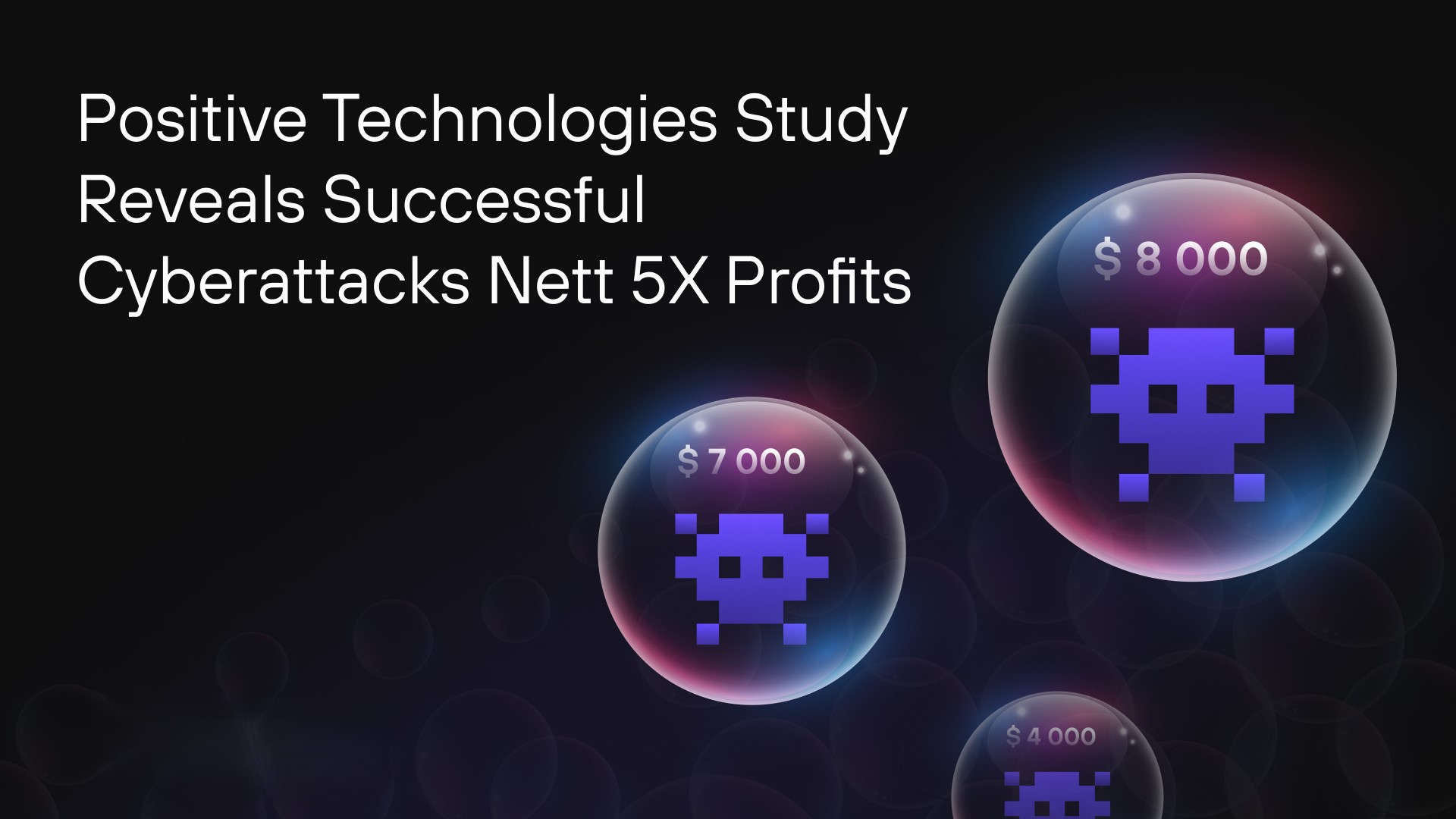
Positive Technologies has released a study on the dark web market, analysing prices for illegal cybersecurity services and products, as well as the costs incurred by cybercriminals to carry out attacks. The most expensive type of malware is ransomware, with a median cost of $7,500. Zero-day exploits are particularly valuable, often being sold for millions of dollars. However, the net profit from a successful cyberattack can be five times the cost of organizing it.
Experts estimate that performing a popular phishing attack involving ransomware costs novice cybercriminals at least $20,000. First, hackers rent dedicated servers, subscribe to VPN services, and acquire other tools to build a secure and anonymous IT infrastructure to manage the attack. Attackers also need to acquire the source code of malicious software or subscribe to ready-to-use malware, as well as tools for infiltrating the victim’s system and evading detection by security measures. Moreover, cybercriminals can consult with seasoned experts, purchase access to targeted infrastructures and company data, and escalate privileges within a compromised system. Products and tools are readily available for purchase on the dark web, catering to beginners. The darknet also offers leaked malware along with detailed instructions, making it easier for novice cybercriminals to carry out attacks.
Malware is one of the primary tools in a hacker’s arsenal, with 53% of malware-related ads focused on sales. In 19% of all posts, infostealers designed to steal data are offered. Crypters and code obfuscation tools, used to help attackers hide malware from security tools, are featured in 17% of cases. Additionally, loaders are mentioned in 16% of ads. The median cost of these types of malware stands at $400, $70, and $500, respectively. The most expensive malware is ransomware: its median cost is $7,500, with some offers reaching up to $320,000. Ransomware is primarily distributed through affiliate programs, known as Ransomware-as-a-Service (RaaS), where participants in an attack typically receive 70–90% of the ransom. To become a partner, a criminal must make a contribution of 0.05 Bitcoin (approximately $5,000) and have a solid reputation on the dark web.
Another popular attack tool is exploits: 69% of exploit-related ads focus on sales, with zero-day vulnerability posts accounting for 32% of them. In 31% of cases, the cost of exploits exceeds $20,000 and can reach several million dollars. Access to corporate networks is relatively inexpensive, with 72% of such ads focused on sales, and 62% of them priced at under a thousand dollars. Among cybercriminal services, hacks are the most popular option, accounting for 49% of reports. For example, the price for compromising a personal email account starts at $100, while the cost for a corporate account begins at $200.
Dmitry Streltsov, Threat Analyst at Positive Technologies, says, “On dark web marketplaces, prices are typically determined in one of two ways: either sellers set a fixed price, or auctions are held. Auctions are often used for exclusive items, such as zero-day exploits. The platforms facilitating these deals also generate revenue, often through their own escrow services, which hold the buyer’s funds temporarily until the product or service is confirmed as delivered. On many platforms, these escrow services are managed by either administrators or trusted users with strong reputations. In return, they earn at least 4% of the transaction amount, with the forums setting the rates.”
Considering the cost of tools and services on the dark web, along with the median ransom amount, cybercriminals can achieve a net profit of $100,000–$130,000 from a successful attack—five times the cost of their preparation. For a company, such an incident can result not only in ransom costs but also in massive financial losses due to disrupted business processes. For example, in 2024, due to a ransomware attack, servers of CDK Global were down for two weeks. The company paid cybercriminals $25 million, while the financial losses of dealers due to system downtime exceeded $600 million.


Written by Oded Vanunu, Chief Technologist & Head of Product Vulnerability Research at Check Point (more…)

Positive Technologies Reports 80% of Middle East Cyberattacks Compromise Confidential Data

Qualys Partners with Teksalah, the First Middle Eastern MSP in its mROC Alliance

CyberKnight Sets Up South Africa Entity

ManageEngine Enhances PAM with Native Intelligence

EcoOnline Expands into Middle East

OPSWAT Joins GISEC 2025 as Middle East Confronts AI-Driven Cyber Threats

GISEC Global 2025: SANS Institute to Showcase Elite Cybersecurity Training and Threat Expertise

Fortinet Expands FortiAI Across its Security Fabric Platform

GISEC 2025 Launches OT Security Conference Amid 49% Infrastructure Attack Surge

How AI is Reinventing Cybersecurity for the Automotive Industry

Positive Technologies @ GISEC Global 2025: Demonstrating Cutting-Edge Cyber Threats and AI Defense Strategies

Group-IB @ GISEC Global 2025: Tackling Evolving Cyber Threats with Localised Intelligence and AI

Video: Wallarm Unveils the Key to Cloud-Native API Security at GISEC Global 2025

Video: CyberKnight on Zero Trust, AI, and Saudi Arabia’s Digital Transformation at GISEC Global 2025

Video: SANS Institute Weighs in on Deepfakes, Model Poisoning and Risk Frameworks at GISEC Global 2025
-
 GISEC1 week ago
Positive Technologies @ GISEC Global 2025: Demonstrating Cutting-Edge Cyber Threats and AI Defense Strategies
-

 Cyber Security1 week ago
Axis Communications Sheds Light on Video Surveillance Industry Perspectives on AI
-
 GISEC1 week ago
Video: SANS Institute Weighs in on Deepfakes, Model Poisoning and Risk Frameworks at GISEC Global 2025
-
 GISEC1 week ago
ManageEngine @ GISEC Global 2025: AI, Quantum Computing, and Ransomware Form Part of Cybersecurity Outlook for 2025
-
 GISEC1 week ago
Video: SentinelOne Speaks Hyperautomation, Purple AI, and the Future of Threat Detection at GISEC Global 2025
-
 Africa Focus6 days ago
CyberKnight Sets Up South Africa Entity
-
 GISEC1 week ago
Group-IB @ GISEC Global 2025: Tackling Evolving Cyber Threats with Localised Intelligence and AI
-
 GISEC1 week ago
Video: CyberKnight on Zero Trust, AI, and Saudi Arabia’s Digital Transformation at GISEC Global 2025