
Artificial Intelligence
Fake ChatGPT Apps Scam Users Out of Thousands of Dollars, Says Sophos


Sophos has announced that it had uncovered multiple apps masquerading as legitimate, ChatGPT-based chatbots to overcharge users and bring in thousands of dollars a month. As detailed in Sophos X-Ops’ latest report, “’FleeceGPT’ Mobile Apps Target AI-Curious to Rake in Cash,” these apps have popped up in both the Google Play and Apple App Store, and, because the free versions have near-zero functionality and constant ads, they coerce unsuspecting users into signing up for a subscription that can cost hundreds of dollars a year.
“Scammers have and always will use the latest trends or technology to line their pockets. ChatGPT is no exception. With interest in AI and chatbots arguably at an all-time high, users are turning to the Apple App and Google Play Stores to download anything that resembles ChatGPT. These types of scam apps—what Sophos has dubbed ‘fleeceware’—often bombard users with ads until they sign up for a subscription. They’re banking on the fact that users won’t pay attention to the cost or simply forget that they have this subscription. They’re specifically designed so that they may not get much use after the free trial ends, so users delete the app without realizing they’re still on the hook for a monthly or weekly payment,” said Sean Gallagher, principal threat researcher, Sophos.
In total, Sophos X-Ops investigated five of these ChatGPT fleeceware apps, all of which claimed to be based on ChatGPT’s algorithm. In some cases, as with the app “Chat GBT,” the developers played off the ChatGPT name to improve their app’s ranking in the Google Play or App Store. While OpenAI offers the basic functionality of ChatGPT to users for free online, these apps were charging anything from $10 a month to $70.00 a year. The iOS version of “Chat GBT,” called Ask AI Assistant, charges $6 a week—or $312 a year—after the three-day free trial; it netted the developers $10,000 in March alone. Another fleeceware-like app, called Genie, which encourages users to sign up for a $7 weekly or $70 annual subscription, brought in $1 million over the past month.
The key characteristics of so-called fleeceware apps, first discovered by Sophos in 2019, are overcharging users for functionality that is already free elsewhere, as well as using social engineering and coercive tactics to convince users to sign up for a recurring subscription payment. Usually, the apps offer a free trial but with so many ads and restrictions, they’re barely useable until a subscription is paid. These apps are often poorly written and implemented, meaning app function is often less than ideal even after users switch to the paid version. They also inflate their ratings in the app stores through fake reviews and persistent requests of users to rate the app before it’s even been used or the free trial ends.
“Fleeceware apps are specifically designed to stay on the edge of what’s allowed by Google and Apple in terms of service, and they don’t flout the security or privacy rules, so they are hardly ever rejected by these stores during the review. While Google and Apple have implemented new guidelines to curb fleeceware since we reported on such apps in 2019, developers are finding ways around these policies, such as severely limiting app usage and functionality unless users pay up. While some of the ChatGPT fleeceware apps included in this report have already been taken down, more continue to pop up—and it’s likely more will appear. The best protection is education. Users need to be aware that these apps exist and always be sure to read the fine print whenever hitting ‘subscribe.’ Users can also report apps to Apple and Google if they think the developers are using unethical means to profit,” said Gallagher.













The automated penetration testing market was valued at roughly $3.1 billion in 2023 and is projected to grow rapidly, with forecasts estimating a compound annual growth rate (CAGR) between 21% and 25%. By 2030, the sector is expected to reach approximately $9 to $10 billion. The broader penetration testing industry is also expanding, with projections indicating it will surpass $5.3 billion by 2027, according to MarketandMarket.
To support enterprises and government entities across the Middle East, Turkey and Africa (META) with identifying and validating vulnerabilities and reducing security gaps in real-time, CyberKnight has partnered with Ridge Security, the World’s First Al-powered Offensive Security Validation Platform. Ridge Security’s products incorporate advanced artificial intelligence to deliver security validation through automated penetration testing and breach and attack simulations.
RidgeBot uses advanced AI to autonomously perform multi-vector iterative attacks, conduct continuous penetration testing, and validate vulnerabilities with zero false positives. RidgeBot has been deployed by customers worldwide as a key element of their journey to evolve from traditional vulnerability management to Continuous Threat Exposure Management (CTEM).
“Ridge Security’s core strength lies in delivering holistic, AI-driven security validation that enables organizations to proactively manage risk and improve operational performance,” said Hom Bahmanyar, Chief Enablement Officer at Ridge Security. “We are delighted to partner with CyberKnight to leverage their network of strategic partners, deep-rooted customer relations, and security expertise to accelerate our expansion plans in the region.”
“Our partnership with Ridge Security is a timely and strategic step, as 69% of organizations are now adopting AI-driven security for threat detection and prevention,” added Wael Jaber, Chief Strategy Officer at CyberKnight. “By joining forces, we enhance our ability to deliver automated, intelligent security validation solutions, reaffirming our commitment to empowering customers with resilient, future-ready cybersecurity across the region.”

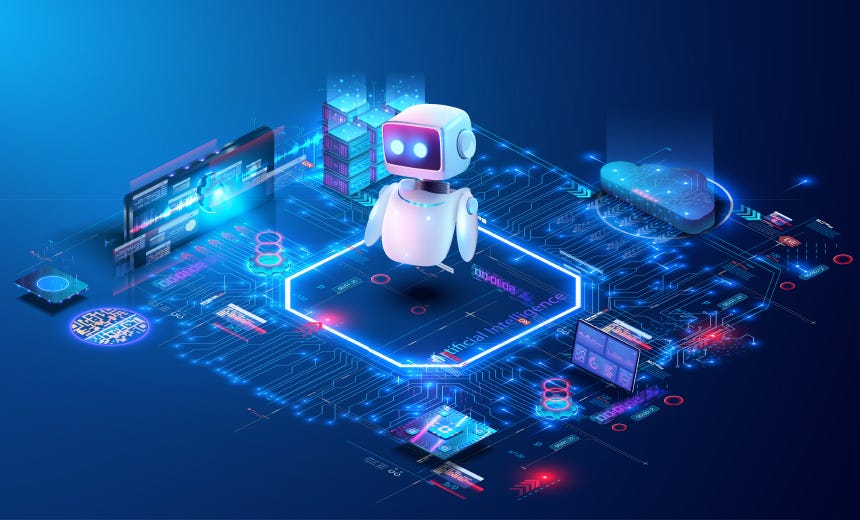
Cequence Security has announced significant enhancements to its Unified API Protection (UAP) platform to deliver a comprehensive security solution for agentic AI development, usage, and connectivity. This enhancement empowers organizations to secure every AI agent interaction, regardless of the development framework. By implementing robust guardrails, the solution protects both enterprise-hosted AI applications and external AI APIs, preventing sensitive data exfiltration through business logic abuse and ensuring regulatory compliance.
There is no AI without APIs, and the rapid growth of agentic AI applications has amplified concerns about securing sensitive data during their interactions. These AI-driven exchanges can inadvertently expose internal systems, create significant vulnerabilities, and jeopardize valuable data assets. Recognising this critical challenge, Cequence has expanded its UAP platform, introducing an enhanced security layer to govern interactions between AI agents and backend services specifically. This new layer of security enables customers to detect and prevent AI bots such as ChatGPT from OpenAI and Perplexity from harvesting organizational data.
Internal telemetry across Global 2000 deployments shows that the overwhelming majority of AI-related bot traffic, nearly 88%, originates from large language model infrastructure, with most requests obfuscated behind generic or unidentified user agents. Less than 4% of this traffic is transparently attributed to bots like GPTBot or Gemini. Over 97% of it comes from U.S.-based IP addresses, highlighting the concentration of risk in North American enterprises. Cequence’s ability to detect and govern this traffic in real time, despite the lack of clear identifiers, reinforces the platform’s unmatched readiness for securing agentic AI in the wild.
Key enhancements to Cequence’s UAP platform include:
- Block unauthorized AI data harvesting: Understanding that external AI often seeks to learn by broadly collecting data without obtaining permission, Cequence provides organizations with the critical capability to manage which AI, if any, can interact with their proprietary information.
- Detect and prevent sensitive data exposure: Empowers organizations to effectively detect and prevent sensitive data exposure across all forms of agentic AI. This includes safeguarding against external AI harvesting attempts and securing data within internal AI applications. The platform’s intelligent analysis automatically differentiates between legitimate data access during normal application usage and anomalous activities signaling sensitive data exfiltration, ensuring comprehensive protection against AI-related data loss.
- Discover and manage shadow AI: Automatically discovers and classifies APIs from agentic AI tools like Microsoft Copilot and Salesforce Agentforce, presenting a unified view alongside customers’ internal and third-party APIs. This comprehensive visibility empowers organizations to easily manage these interactions and effectively detect and block sensitive data leaks, whether from external AI harvesting or internal AI usage.
- Seamless integration: Integrates easily into DevOps frameworks for discovering internal AI applications and generates OpenAPI specifications that detail API schemas and security mechanisms, including strong authentication and security policies. Cequence delivers powerful protection without relying on third-party tools, while seamlessly integrating with the customer’s existing cybersecurity ecosystem. This simplifies management and security enforcement.
“Gartner predicts that by 2028, 33% of enterprise software applications will include agentic AI, up from less than 1% in 2024, enabling 15% of day-to-day work decisions to be made autonomously. We’ve taken immediate action to extend our market-leading API security and bot management capabilities,” said Ameya Talwalkar, CEO of Cequence. “Agentic AI introduces a new layer of complexity, where every agent behaves like a bidirectional API. That’s our wheelhouse. Our platform helps organizations embrace innovation at scale without sacrificing governance, compliance, or control.”
These extended capabilities will be generally available in June.


Fortinet has announced major upgrades to FortiAI, integrating advanced AI capabilities across its Security Fabric platform to combat evolving threats, automate security tasks, and protect AI systems from cyber risks. As cybercriminals increasingly weaponize AI to launch sophisticated attacks, organizations need smarter defenses. Fortinet—with 500+ AI patents and 15 years of AI innovation—now embeds FortiAI across its platform to:
- Stop AI-powered threats
- Automate security and network operations
- Secure AI tools used by businesses
“Fortinet’s AI advantage stems from the breadth and depth of our AI ecosystem—shaped by over a decade of AI innovation and reinforced by more patents than any other cybersecurity vendor,” said Michael Xie, Founder, President, and Chief Technology Officer at Fortinet. “By embedding FortiAI across the Fortinet Security Fabric platform, including new agentic AI capabilities, we’re empowering our customers to reduce the workload on their security and network analysts while improving the efficiency, speed, and accuracy of their security and networking operations. In parallel, we’ve added coverage across the Fabric ecosystem to enable customers to monitor and control the use of GenAI-enabled services within their organization.”
Key upgrades:
FortiAI-Assist – AI That Works for You
- Automatic Network Fixes: AI configures, validates, and troubleshoots network issues without human help.
- Smarter Security Alerts: Cuts through noise, prioritizing only critical threats.
- AI-Powered Threat Hunting: Scans for hidden risks and traces attack origins.
FortiAI-Protect – Defending Against AI Threats
- Tracks 6,500+ AI apps, blocking risky or unauthorized usage.
- Stops new malware with machine learning.
- Adapts to new attack methods in real time.
FortiAI-SecureAI – Safe AI Adoption
- Protects AI models, data, and cloud workloads.
- Prevents leaks from tools like ChatGPT.
- Enforces zero-trust access for AI systems.
FortiAI processes queries locally, ensuring sensitive data never leaves your network.

Positive Technologies Reports 80% of Middle East Cyberattacks Compromise Confidential Data

Qualys Partners with Teksalah, the First Middle Eastern MSP in its mROC Alliance

CyberKnight Sets Up South Africa Entity

ManageEngine Enhances PAM with Native Intelligence

EcoOnline Expands into Middle East

OPSWAT Joins GISEC 2025 as Middle East Confronts AI-Driven Cyber Threats

GISEC Global 2025: SANS Institute to Showcase Elite Cybersecurity Training and Threat Expertise

Fortinet Expands FortiAI Across its Security Fabric Platform

GISEC 2025 Launches OT Security Conference Amid 49% Infrastructure Attack Surge

How AI is Reinventing Cybersecurity for the Automotive Industry

Positive Technologies @ GISEC Global 2025: Demonstrating Cutting-Edge Cyber Threats and AI Defense Strategies

Group-IB @ GISEC Global 2025: Tackling Evolving Cyber Threats with Localised Intelligence and AI

Video: Wallarm Unveils the Key to Cloud-Native API Security at GISEC Global 2025

Video: CyberKnight on Zero Trust, AI, and Saudi Arabia’s Digital Transformation at GISEC Global 2025

Video: SANS Institute Weighs in on Deepfakes, Model Poisoning and Risk Frameworks at GISEC Global 2025
-
 GISEC1 week ago
Positive Technologies @ GISEC Global 2025: Demonstrating Cutting-Edge Cyber Threats and AI Defense Strategies
-

 Cyber Security1 week ago
Axis Communications Sheds Light on Video Surveillance Industry Perspectives on AI
-
 GISEC1 week ago
Video: SANS Institute Weighs in on Deepfakes, Model Poisoning and Risk Frameworks at GISEC Global 2025
-
 GISEC1 week ago
ManageEngine @ GISEC Global 2025: AI, Quantum Computing, and Ransomware Form Part of Cybersecurity Outlook for 2025
-
 GISEC1 week ago
Video: SentinelOne Speaks Hyperautomation, Purple AI, and the Future of Threat Detection at GISEC Global 2025
-
 Africa Focus6 days ago
CyberKnight Sets Up South Africa Entity
-
 GISEC1 week ago
Group-IB @ GISEC Global 2025: Tackling Evolving Cyber Threats with Localised Intelligence and AI
-
 GISEC1 week ago
Video: CyberKnight on Zero Trust, AI, and Saudi Arabia’s Digital Transformation at GISEC Global 2025