
Cyber Security
Acronis Intros Advanced File Sync and Share for MSPs

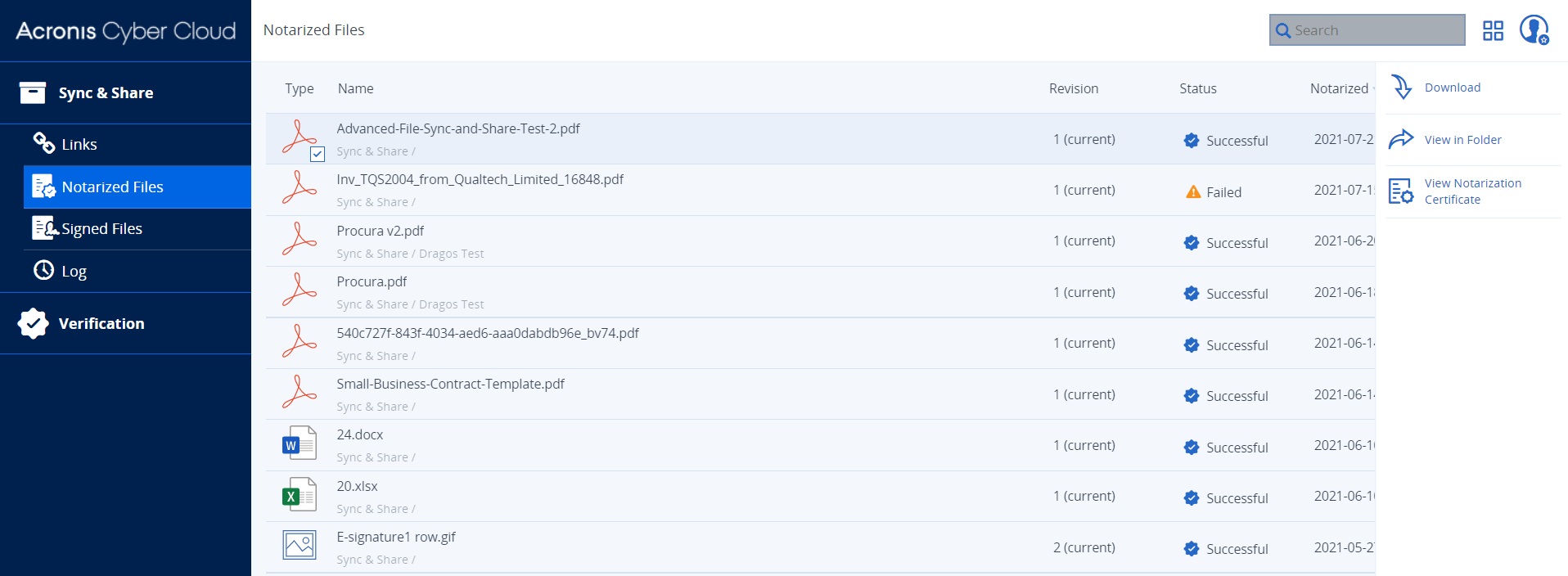
Acronis has today announced a new advanced protection pack for its service provider solution, Acronis Cyber Protect Cloud. The new Advanced File Sync and Share pack build on the essential file-sharing capabilities included in Acronis Cyber Protect Cloud, layering additional data security capabilities such as blockchain-based data notarization and electronic signatures so service providers can strengthen their workplace collaboration services.
Demand for secure file sync and share services has skyrocketed during the past 18 months as 88% of organizations worldwide required employees to work from home and the same percentage of employees expect to keep working remotely to some degree. As a result, 67% of businesses spent more on remote tools and web conferencing.
While those trends create opportunities for managed service providers (MSPs) that deliver IT to small- to medium-sized businesses, the challenge is that traditional file sharing solutions do not address the data protection concerns of modern organizations – including control over storage locations, access to data, and what people can do with that data.
“Every survey and trend indicates remote work is here to stay, so MSPs need a way to keep client employees productive and safe when accessing and sharing valuable company data,” said Jan-Jaap “JJ” Jager, Board Advisor and Chief Revenue Officer at Acronis. “Unlike traditional file sharing solutions that are not built for service providers, Acronis Cyber Protect Cloud with Advanced File Sync and Share delivers a secure work collaboration service that empowers MSPs with multi-tiering and multi-tenancy. And since it’s integrated with our full range of backup, cybersecurity, and endpoint protection management, partners can deliver it all through a single management console.”
Acronis Cyber Protect Cloud gives essential cyber protection capabilities to managed service providers (MSPs) that they can build their services on – including file sync and share on a pay-as-you-go basis. The new Advanced Files Sync and Share pack empower them with enhanced data security that traditional work collaboration solutions do not offer:
- File notarization, powered by the Ethereum blockchain, enables clients to notarize files of any format and type, providing irrefutable proof that a file is original and unaltered. In a world where criminal use of digital editing and deepfake technology for fraud and forgery is rapidly accelerating, such notarization eliminates the risk of logs, records, videos, or images being altered.
- Electronic signatures, which enable multiple people to sign a document remotely. The simple drag-and-drop feature helps clients along every step of their document flow – from creation to distribution to signature. The eSigning service also creates a blockchain-based certificate to ensure the authenticity of the signature and document.
In both cases, the blockchain-based certificate creates an immutable audit trail, ensuring data authenticity. Combine that with the ability to select where client data is stored, and MSPs have all they need to deliver the compliance, data sovereignty, and performance required by clients in even the most regulated industries.
“At Mindfire Technologies, we are very excited for the new advanced protection pack of Acronis Cyber Product Cloud,” said Rejeesh Kumar, VP – Technology & Strategies at Mindfire Technologies. As a business partner, it does not only help us but also helps provide our clients with the services they need. Cyber protection has become a priority and the advanced file sync and share pack will give them the peace of mind they need when it comes to securely share and accessing key data.”
The launch of Advanced File Sync and Share is part of the regular monthly enhancements made to Acronis Cyber Protect Cloud, which ensure service providers can offer the most complete and up-to-date cyber protection possible. Other improvements announced include:
- Full support and integration with VMware vCloud Director. Cloud providers hosting with vCloud Director can now offer Acronis Cyber Protect Cloud’s full range of cyber protection capabilities, with no client-side deployment and per-tenant reports for flexible billing.
- Proactive notifications after Microsoft 365 data recovery. Clients can react quickly with proactive notifications following the recovery or downloading of backed-up data on Microsoft 365.
- “Restore Operator” role for Microsoft 365/Google Workspace. MSPs can protect client data and prevent accessibility when assigning the “Restore Operator” role, which allows the assignee to recover data on behalf of the client/user without providing access to the content.
- Advanced audit trail in eSignature certificate. Service providers can know the exact status of a document by viewing a detailed audit trail and tracing the flow of actions within the signature certificate.
- Easily and selectively restore backed-up pictures and videos for Android 2.3.0. Saves time by restoring only the pictures or videos needed by quickly and easily selecting multiple files at once; by days, sequentially.
- Backup slice management for Android 2.3.0. MSPs can view, select, delete, or restore any mobile backup slices of their choice through this intuitive slice management capability.
Service providers need to build their offerings using the tools that work for them. That’s why, to ease their administrative efforts, Acronis Cyber Protect Cloud is integrated with the commonly used RMM and PSA tools IT service providers rely on. As part of the July 2021 enhancements announced, the company also revealed four new integrations, including ConnectWise Command, Jamf Pro, CloudBlue PSA, and Matrix42.
“FixIT Computer Technologies is a user of Acronis Cyber Protect Cloud and it really helps us help our clients with the cyber protection services that are required. This new advanced protection pack is a great addition,” said Jaison Mathew, MD at FixIT Computer Technologies LLC. “Cyber protection is a must for our clients, and the Advanced File Sync and Share pack ensures that they can securely share and access sensitive data at all times.”







Cyber Security
Positive Technologies Reports 80% of Middle East Cyberattacks Compromise Confidential Data

A new study by cybersecurity firm Positive Technologies has shed light on the evolving cyber threat landscape in the Middle East, revealing that a staggering 80% of successful cyberattacks in the region lead to the breach of confidential information. The research, examining the impact of digital transformation, organized cybercrime, and the underground market, highlights the increasing exposure of Middle Eastern nations to sophisticated cyber threats.
The study found that one in three successful cyberattacks were attributed to Advanced Persistent Threat (APT) groups, which predominantly target government institutions and critical infrastructure. While the rapid adoption of new IT solutions is driving efficiency, it simultaneously expands the attack surface for malicious actors.
Cybercriminals in the region heavily utilize social engineering tactics (61% of cases) and malware (51%), often employing a combination of both. Remote Access Trojans (RATs) emerged as a primary weapon in 27% of malware-based attacks, indicating a common objective of gaining long-term access to compromised systems.
The analysis revealed that credentials and trade secrets (29% each) were the most sought-after data, followed by personal information (20%). This stolen data is frequently leveraged for blackmail or sold on the dark web. Beyond data theft, 38% of attacks resulted in the disruption of core business operations, posing significant risks to critical sectors like healthcare, transportation, and government services.
APT groups are identified as the most formidable threat actors due to their substantial resources and advanced technical capabilities. In 2024, they accounted for 32% of recorded attacks, with a clear focus on government and critical infrastructure. Their activities often extend beyond traditional cybercrime, encompassing cyberespionage and even cyberwarfare aimed at undermining trust and demonstrating digital dominance.
Dark web analysis further revealed that government organizations were the most frequently mentioned targets (34%), followed by the industrial sector (20%). Hacktivist activity was also prominent, with ideologically motivated actors often sharing stolen databases freely, exacerbating the cybercrime landscape.
The United Arab Emirates, Saudi Arabia, Israel, and Qatar, all leaders in digital transformation, were the most frequently cited countries on the dark web in connection with stolen data. Experts suggest that the prevalence of advertisements for selling data from these nations underscores the challenges of securing rapidly expanding digital environments, which cybercriminals are quick to exploit.
Positive Technologies analyst Alexey Lukash said, “In the near future, we expect cyberthreats in the Middle East to grow both in scale and sophistication. As digital transformation efforts expand, so does the attack surface, creating more opportunities for hackers of all skill levels. Governments in the region need to focus on protecting critical infrastructure, financial institutions, and government systems. The consequences of successful attacks in these areas could have far-reaching implications for national security and sovereignty.”
To help organizations build stronger defenses against cyberthreats, Positive Technologies recommends implementing modern security measures. These include vulnerability management systems to automate asset management, as well as identify, prioritize, and remediate vulnerabilities. Positive Technologies also suggests using network traffic analysis tools to monitor network activity and detect cyberattacks. Another critical layer of protection involves securing applications. Such solutions are designed to identify vulnerabilities in applications, detect suspicious activity, and take immediate action to prevent attacks.
Positive Technologies emphasizes the need for a comprehensive, result-driven approach to cybersecurity. This strategy is designed to prevent attackers from disrupting critical business processes. Scalable and flexible, it can be tailored to individual organizations, entire industries, or even large-scale digital ecosystems like nations or international alliances. The goal is to deliver clear, measurable results in cybersecurity—not just to meet compliance standards or rely on isolated technical fixes.


Axis Communications has published a new report that explores the state of AI in the global video surveillance industry. Titled The State of AI in Video Surveillance, the report examines the key opportunities, challenges and future trends, as well as the responsible practices that are becoming critical for organisations in their use of AI. The report draws insights from qualitative research as well as quantitative data sources, including in-depth interviews with carefully selected experts from the Axis global partner network.
A leading insight featured in the report is the unanimous view among interviewees that interest in the technology has surged over the past few years, with more and more business customers becoming curious and increasingly knowledgeable about its potential applications.

Mats Thulin, Director AI & Analytics Solutions at Axis Communications
“AI is a technology that has the potential to touch every corner and every function of the modern enterprise. That said, any implementations or integrations that aim to drive value come with serious financial and ethical considerations. These considerations should prompt organisations to scrutinise any initiative or investment. Axis’s new report not only shows how AI is transforming the video surveillance landscape, but also how that transformation should ideally be approached,” said Mats Thulin, Director AI & Analytics Solutions at Axis Communications.
According to the Axis report, the move by businesses from on-premise security server systems to hybrid cloud architectures continues at pace, driven by the need for faster processing, improved bandwidth usage and greater scalability. At the same time, cloud-based technology is being combined with edge AI solutions, which play a crucial role by enabling faster, local analytics with minimal latency, a prerequisite for real-time responsiveness in security-related situations.
By moving AI processing closer to the source using edge devices such as cameras, businesses can reduce bandwidth consumption and better support real-time applications like security monitoring. As a result, the hybrid approach is expected to continue to shape the role of AI in security and unlock new business intelligence and operational efficiencies.
A trend that is emerging among businesses is the integration of diverse data for a more comprehensive analysis, transforming safety and security. Experts predict that by integrating additional sensory data, such as audio and contextual environmental factors caught on camera, can lead to enhanced situational awareness and greater actionable insights, offering a more comprehensive understanding of events.
Combining multiple data streams can ultimately lead to improved detection and prediction of potential threats or incidents. For example, in emergency scenarios, pairing visual data with audio analysis can enable security teams to respond more quickly and precisely. This context-aware approach can potentially elevate safety, security and operational efficiency, and reflects how system operators can leverage and process multiple data inputs to make better-informed decisions.
According to the Axis report, interviewees emphasised that responsible AI and ethical considerations are critical priorities in the development and deployment of new systems, raising concerns about decisions potentially based on biased or unreliable AI. Other risks highlighted include those related to privacy violations and how facial and behavioural recognition could have ethical and legal repercussions.
As a result, a recurring theme among interviewees was the importance of embedding responsible AI practices early in the development process. Interviewees also pointed to regulatory frameworks, such as the EU AI Act, as pivotal in shaping responsible use of technology, particularly in high-risk areas. While regulation was broadly acknowledged as necessary to build trust and accountability, several interviewees also stressed the need for balance to safeguard innovation and address privacy and data security concerns.
“The findings of this report reflect how enterprises are viewing the trend of AI holistically, working to have a firm grasp of both how to use the technology effectively and understand the macro implications of its usage. Conversations surrounding privacy and responsibility will continue but so will the pace of innovation and the adoption of technologies that advance the video surveillance industry and lead to new and exciting possibilities,” Thulin added.


The automated penetration testing market was valued at roughly $3.1 billion in 2023 and is projected to grow rapidly, with forecasts estimating a compound annual growth rate (CAGR) between 21% and 25%. By 2030, the sector is expected to reach approximately $9 to $10 billion. The broader penetration testing industry is also expanding, with projections indicating it will surpass $5.3 billion by 2027, according to MarketandMarket.
To support enterprises and government entities across the Middle East, Turkey and Africa (META) with identifying and validating vulnerabilities and reducing security gaps in real-time, CyberKnight has partnered with Ridge Security, the World’s First Al-powered Offensive Security Validation Platform. Ridge Security’s products incorporate advanced artificial intelligence to deliver security validation through automated penetration testing and breach and attack simulations.
RidgeBot uses advanced AI to autonomously perform multi-vector iterative attacks, conduct continuous penetration testing, and validate vulnerabilities with zero false positives. RidgeBot has been deployed by customers worldwide as a key element of their journey to evolve from traditional vulnerability management to Continuous Threat Exposure Management (CTEM).
“Ridge Security’s core strength lies in delivering holistic, AI-driven security validation that enables organizations to proactively manage risk and improve operational performance,” said Hom Bahmanyar, Chief Enablement Officer at Ridge Security. “We are delighted to partner with CyberKnight to leverage their network of strategic partners, deep-rooted customer relations, and security expertise to accelerate our expansion plans in the region.”
“Our partnership with Ridge Security is a timely and strategic step, as 69% of organizations are now adopting AI-driven security for threat detection and prevention,” added Wael Jaber, Chief Strategy Officer at CyberKnight. “By joining forces, we enhance our ability to deliver automated, intelligent security validation solutions, reaffirming our commitment to empowering customers with resilient, future-ready cybersecurity across the region.”

Positive Technologies Reports 80% of Middle East Cyberattacks Compromise Confidential Data

Qualys Partners with Teksalah, the First Middle Eastern MSP in its mROC Alliance

CyberKnight Sets Up South Africa Entity

ManageEngine Enhances PAM with Native Intelligence

EcoOnline Expands into Middle East

OPSWAT Joins GISEC 2025 as Middle East Confronts AI-Driven Cyber Threats

GISEC Global 2025: SANS Institute to Showcase Elite Cybersecurity Training and Threat Expertise

Fortinet Expands FortiAI Across its Security Fabric Platform

GISEC 2025 Launches OT Security Conference Amid 49% Infrastructure Attack Surge

How AI is Reinventing Cybersecurity for the Automotive Industry

Positive Technologies @ GISEC Global 2025: Demonstrating Cutting-Edge Cyber Threats and AI Defense Strategies

Group-IB @ GISEC Global 2025: Tackling Evolving Cyber Threats with Localised Intelligence and AI

Video: Wallarm Unveils the Key to Cloud-Native API Security at GISEC Global 2025

Video: CyberKnight on Zero Trust, AI, and Saudi Arabia’s Digital Transformation at GISEC Global 2025

Video: SANS Institute Weighs in on Deepfakes, Model Poisoning and Risk Frameworks at GISEC Global 2025
-
 GISEC1 week ago
Positive Technologies @ GISEC Global 2025: Demonstrating Cutting-Edge Cyber Threats and AI Defense Strategies
-

 Cyber Security1 week ago
Axis Communications Sheds Light on Video Surveillance Industry Perspectives on AI
-
 GISEC1 week ago
Video: SANS Institute Weighs in on Deepfakes, Model Poisoning and Risk Frameworks at GISEC Global 2025
-
 GISEC1 week ago
ManageEngine @ GISEC Global 2025: AI, Quantum Computing, and Ransomware Form Part of Cybersecurity Outlook for 2025
-
 GISEC1 week ago
Video: SentinelOne Speaks Hyperautomation, Purple AI, and the Future of Threat Detection at GISEC Global 2025
-
 Africa Focus6 days ago
CyberKnight Sets Up South Africa Entity
-
 GISEC1 week ago
Group-IB @ GISEC Global 2025: Tackling Evolving Cyber Threats with Localised Intelligence and AI
-
 GISEC1 week ago
Video: CyberKnight on Zero Trust, AI, and Saudi Arabia’s Digital Transformation at GISEC Global 2025