
GISEC
BotGuard OÜ to Launch ALB for Hosting Providers at GISEC 2024


Bertil Brendeke, the Chief Revenue Officer at BotGuard OÜ, speaks about his company’s participation at GISEC 2024
Tell us about the cybersecurity trends for 2024.
When it comes to cybersecurity, data breaches, DDoS attacks, scraping or ransomware are still at the forefront of what is being discussed, while web traffic security often gets forgotten; when it is an increasing threat, amplified by the use of artificial intelligence. With half of all internet traffic coming from bots, generative Artificial Intelligence (AI) is furthering the sophistication of these threats, leaving website owners and webmasters increasingly exposed to malicious traffic.
The consequences of these threats can range from data theft to spam, scams, and increased DDoS attacks. BotGuard OÜ partners with hosting providers to help website owners filter their web traffic, lower website management costs, defend their infrastructure and protect their assets. Using AI and other innovative technologies to automate the implementation process and reduce costs, the product provides effective, manageable, platform-agnostic web security for organizations of all sizes.
What is the theme of your participation at GISEC 2024?
Filter your web traffic and protect your assets.
Which products and solutions will you be showcasing at GISEC 2024?
We are launching a new product, the Application Load Balancer (ALB) for Hosting Providers. With this load-balancing solution, hosting providers can improve availability, security, and performance with the flexibility and affordability BotGuard OÜ is known for. In addition, we offer an easy-to-use and cost-effective solution that gives customers the highest level of control over web traffic to fend off bot-related issues and other modern web threats. Application Load Balancer (ALB) is equipped with a comprehensive API, enabling seamless integration into current systems.
How are you equipped to help companies overcome digital security and privacy challenges?
It has been proved that ad fraud decreases efficiency and drives up costs for businesses of all types and sizes. The problem has become too big and too expensive for people to ignore: digital ad fraud now accounts for $1 of every $4 spent on digital ads; businesses are throwing money away.
Application Load Balancer (ALB) is designed to solve this problem for both hosting providers and their customers, ensuring ad spend then transforms into real clicks and real leads – rather than being hijacked by bad bots. By reducing or eliminating click fraud, hosting companies can significantly grow their revenue per customer and their marketing offerings.
Is there a skills gap in the cybersecurity industry? What needs to be done to bridge that gap?
There is a clear need for skilled workers in cybersecurity able to keep up with the constant technological evolution. Companies need to provide the right training to their employees. At BotGuard OÜ, our mission is to give webmasters and site owners a simple and reliable tool to decide who they want to let in. Everyone has the right to defend their home from intruders.
Long ago, this right was known as the ‘Castle Doctrine’. These days, although we don’t have castles anymore, we do have our homes and businesses, and we still have the right to keep them safe. The ‘Castle Doctrine’ is about ensuring everyone is safe from harm without sacrificing anyone’s freedom. This is what we do on the web.











Cyber Security
Positive Technologies Reports 80% of Middle East Cyberattacks Compromise Confidential Data


A new study by cybersecurity firm Positive Technologies has shed light on the evolving cyber threat landscape in the Middle East, revealing that a staggering 80% of successful cyberattacks in the region lead to the breach of confidential information. The research, examining the impact of digital transformation, organized cybercrime, and the underground market, highlights the increasing exposure of Middle Eastern nations to sophisticated cyber threats.
The study found that one in three successful cyberattacks were attributed to Advanced Persistent Threat (APT) groups, which predominantly target government institutions and critical infrastructure. While the rapid adoption of new IT solutions is driving efficiency, it simultaneously expands the attack surface for malicious actors.
Cybercriminals in the region heavily utilize social engineering tactics (61% of cases) and malware (51%), often employing a combination of both. Remote Access Trojans (RATs) emerged as a primary weapon in 27% of malware-based attacks, indicating a common objective of gaining long-term access to compromised systems.
The analysis revealed that credentials and trade secrets (29% each) were the most sought-after data, followed by personal information (20%). This stolen data is frequently leveraged for blackmail or sold on the dark web. Beyond data theft, 38% of attacks resulted in the disruption of core business operations, posing significant risks to critical sectors like healthcare, transportation, and government services.
APT groups are identified as the most formidable threat actors due to their substantial resources and advanced technical capabilities. In 2024, they accounted for 32% of recorded attacks, with a clear focus on government and critical infrastructure. Their activities often extend beyond traditional cybercrime, encompassing cyberespionage and even cyberwarfare aimed at undermining trust and demonstrating digital dominance.
Dark web analysis further revealed that government organizations were the most frequently mentioned targets (34%), followed by the industrial sector (20%). Hacktivist activity was also prominent, with ideologically motivated actors often sharing stolen databases freely, exacerbating the cybercrime landscape.
The United Arab Emirates, Saudi Arabia, Israel, and Qatar, all leaders in digital transformation, were the most frequently cited countries on the dark web in connection with stolen data. Experts suggest that the prevalence of advertisements for selling data from these nations underscores the challenges of securing rapidly expanding digital environments, which cybercriminals are quick to exploit.
Positive Technologies analyst Alexey Lukash said, “In the near future, we expect cyberthreats in the Middle East to grow both in scale and sophistication. As digital transformation efforts expand, so does the attack surface, creating more opportunities for hackers of all skill levels. Governments in the region need to focus on protecting critical infrastructure, financial institutions, and government systems. The consequences of successful attacks in these areas could have far-reaching implications for national security and sovereignty.”
To help organizations build stronger defenses against cyberthreats, Positive Technologies recommends implementing modern security measures. These include vulnerability management systems to automate asset management, as well as identify, prioritize, and remediate vulnerabilities. Positive Technologies also suggests using network traffic analysis tools to monitor network activity and detect cyberattacks. Another critical layer of protection involves securing applications. Such solutions are designed to identify vulnerabilities in applications, detect suspicious activity, and take immediate action to prevent attacks.
Positive Technologies emphasizes the need for a comprehensive, result-driven approach to cybersecurity. This strategy is designed to prevent attackers from disrupting critical business processes. Scalable and flexible, it can be tailored to individual organizations, entire industries, or even large-scale digital ecosystems like nations or international alliances. The goal is to deliver clear, measurable results in cybersecurity—not just to meet compliance standards or rely on isolated technical fixes.
GISEC
ManageEngine @ GISEC Global 2025: AI, Quantum Computing, and Ransomware Form Part of Cybersecurity Outlook for 2025
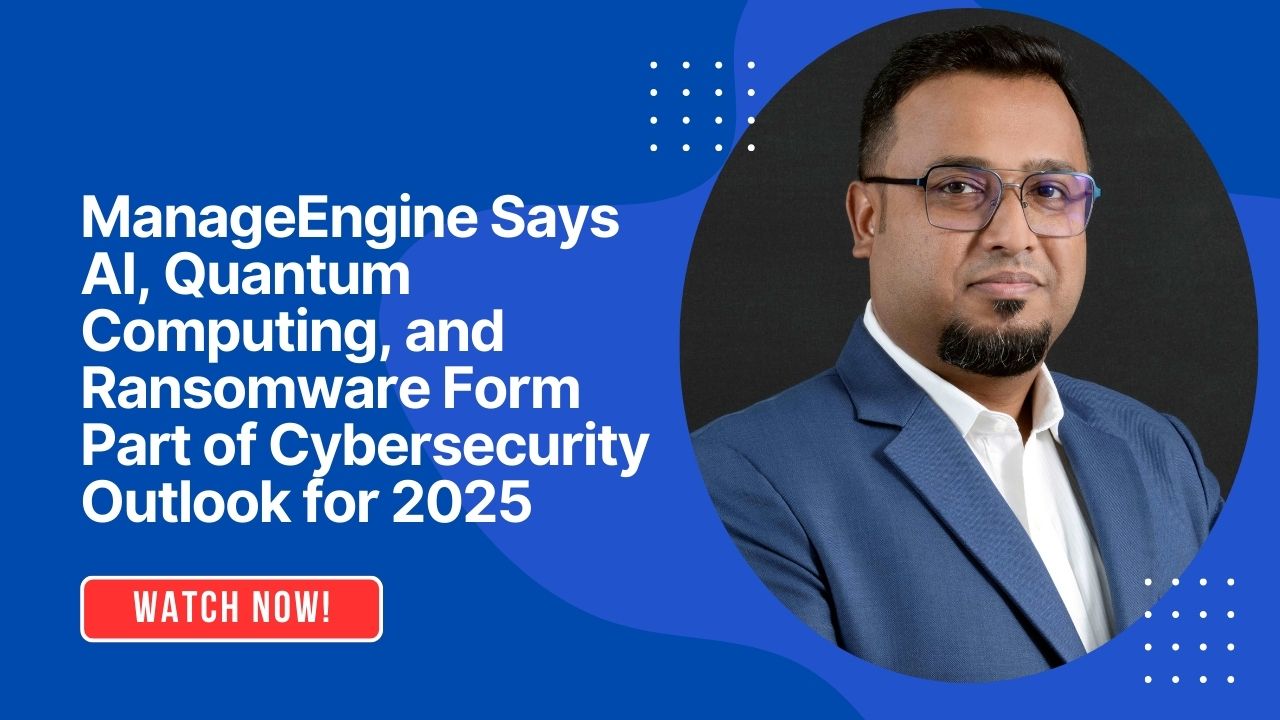
As AI-powered attacks and quantum computing reshape the cyber threat landscape, organizations must rethink traditional defense strategies. In an exclusive interview, Sujoy Banerjee, Associate Director at ManageEngine, reveals how businesses can prepare for 2025’s most critical threats—from AI-generated phishing scams to quantum-decrypted ransomware (more…)
GISEC
Positive Technologies @ GISEC Global 2025: Demonstrating Cutting-Edge Cyber Threats and AI Defense Strategies

At GISEC Global 2025, Positive Technologies showcased live demonstrations of sophisticated hacking techniques while emphasising the growing role of AI in both cyber attacks and defense. In an exclusive interview with Security Review, Ilya Leonov, the Regional Director at Positive Technologies revealed insights about the Middle East’s evolving threat landscape, their work with regional governments, and why investing in human expertise remains critical despite advancing technologies (more…)

Positive Technologies Reports 80% of Middle East Cyberattacks Compromise Confidential Data

Qualys Partners with Teksalah, the First Middle Eastern MSP in its mROC Alliance

CyberKnight Sets Up South Africa Entity

ManageEngine Enhances PAM with Native Intelligence

EcoOnline Expands into Middle East

OPSWAT Joins GISEC 2025 as Middle East Confronts AI-Driven Cyber Threats

GISEC Global 2025: SANS Institute to Showcase Elite Cybersecurity Training and Threat Expertise

Fortinet Expands FortiAI Across its Security Fabric Platform

How AI is Reinventing Cybersecurity for the Automotive Industry

GISEC 2025 Launches OT Security Conference Amid 49% Infrastructure Attack Surge

Positive Technologies @ GISEC Global 2025: Demonstrating Cutting-Edge Cyber Threats and AI Defense Strategies

Group-IB @ GISEC Global 2025: Tackling Evolving Cyber Threats with Localised Intelligence and AI

Video: Wallarm Unveils the Key to Cloud-Native API Security at GISEC Global 2025

Video: CyberKnight on Zero Trust, AI, and Saudi Arabia’s Digital Transformation at GISEC Global 2025

Video: SANS Institute Weighs in on Deepfakes, Model Poisoning and Risk Frameworks at GISEC Global 2025
-
 GISEC1 week ago
Positive Technologies @ GISEC Global 2025: Demonstrating Cutting-Edge Cyber Threats and AI Defense Strategies
-

 Cyber Security1 week ago
Axis Communications Sheds Light on Video Surveillance Industry Perspectives on AI
-
 GISEC1 week ago
Video: SANS Institute Weighs in on Deepfakes, Model Poisoning and Risk Frameworks at GISEC Global 2025
-
 GISEC1 week ago
ManageEngine @ GISEC Global 2025: AI, Quantum Computing, and Ransomware Form Part of Cybersecurity Outlook for 2025
-
 GISEC1 week ago
Video: SentinelOne Speaks Hyperautomation, Purple AI, and the Future of Threat Detection at GISEC Global 2025
-
 Africa Focus6 days ago
CyberKnight Sets Up South Africa Entity
-
 GISEC1 week ago
Group-IB @ GISEC Global 2025: Tackling Evolving Cyber Threats with Localised Intelligence and AI
-
 GISEC1 week ago
Video: CyberKnight on Zero Trust, AI, and Saudi Arabia’s Digital Transformation at GISEC Global 2025