
Events
Public Private Partnerships Are Key to Mitigating Rising Data Breaches, Say Experts


As the international cybersecurity community gears up for GISEC – the Middle East and Africa’s largest and most impactful cybersecurity super-connector that will take place from 23 to 25 April at Dubai World Trade Centre – experts are weighing in on the dramatic evolution of data breaches, and how companies and governments can join forces to strengthen global cyber-resilience.
In the Middle East specifically, oil and gas operations, government entities, and financial institutions have been most affected and continue to emerge as key targets for data breaches. Globally, over 30 billion known records have been breached so far in 2024 – accounting for more than 5,000 publicly disclosed incidents – according to the UK-based market consultancy, IT Governance.
With each breach, comes a cost, and these continue to rise year-on-year as new attack methods, new vulnerabilities, and new risks appear. IBM’s ‘Cost of a Data Breach Report 2023’ reflects an upward trend in data breach costs, with the average breach in 2023 accounting for US$4.45 million – a 2.3 per cent increase from 2022.
The increase in record breaches around the world, and the associated costs, reflect a gap between rapidly evolving malicious malware and companies’ readiness to avert emerging incidents. GISEC Global experts will address the impact of this gap at GISEC’s main stage, bringing their unique insights and expertise to the table.

Saiful Islam, Chief Information Security Officer at Dhaka Bank in Bangladesh
With a storied career spanning over 15 years in IT and Information Security in financial sectors, Saiful Islam, Chief Information Security Officer at Dhaka Bank in Bangladesh, identifies a glaring inadequacy on the private sector’s part. “Despite heightened awareness and investment in cybersecurity measures, this surge [in breaches] indicates systemic and persistent vulnerabilities,” said Islam, who will be speaking on GISEC Global’s main stage on the 25th of April as one of the 350-plus international speakers joining the 13th edition of the show.
“It underscores the urgent need for organisations to reassess their cybersecurity strategies, fortify defences, and prioritise proactive measures such as robust assessments, employee training, continuous improvement, and clear incident response plans. Failure to address these deficiencies could result in severe consequences, including financial loss, reputational damage, and regulatory repercussions,” he warned.
Charles Brooks, President of Brooks Consulting International and Adjunct Professor at Georgetown University in Washington, D.C., will be speaking on the main stage of GISEC Global on the 23rd of April, echoed a similar concern, “Every year, cyberattacks cost businesses more money and occur in greater numbers. Despite the increasing frequency, sophistication, lethality, and liabilities linked to intrusions, industrial management has mostly lacked the necessary preparation and has moved slowly to strengthen cybersecurity. The underlying line is that corporate cybersecurity and the C-Suite need to shift from a passive to a prepared posture.”
According to both experts, government and enterprise efforts in cybersecurity have largely focused on responding to the most recent breach or threat, meaning that defenders were usually always one step behind attackers. “We’ve seen organisations increasingly choose to pay off ransomware attacks as they struggle to keep up with new threats and advances in AI-assisted intrusions,” said Oren Maguid, Regional VP for MEA, APAC, and ANZ at Votiro, a Zero Trust Content Security Company and one of the 750 exhibiting brands from around 130 countries who are participating at GISEC Global 2024 taking place at Dubai World Trade Centre.

Oren Maguid, Regional VP for MEA, APAC, and ANZ at Votiro
“Without proper threat prevention in place, these attacks will only become more common and demand more time and money from already-strained enterprises. Organisations waiting for their endpoint to be breached and mitigating the damage after are using a reactive approach that leaves IT teams scrambling to keep up as attacks become faster and more sophisticated,” Maguid concluded.
The recent news around the existence of a ‘Mother of All Breaches’ (MOAB) file – which allegedly contains 1.2 terabytes and over 3,800 files of data, including personal information and credentials from over 26 billion records – was especially alarming to the international cybersecurity community. While industry experts have long said that a centralised data leak was inevitable, it doesn’t have to be unavoidable. Governments play a crucial role in establishing and enforcing regulations and standards to safeguard citizens’ data privacy and have a responsibility to address the escalating landscape of data breaches.
“The fact is, just as businesses are the custodians of consumer data, governments must act as responsible stewards by enforcing regulations that ensure the proper steps to privacy security are not overlooked. This commitment to data security is not just a legal obligation but also a crucial aspect of maintaining consumer trust and business integrity,” Maguid said. Brooks agreed, “The private sector, which manages much of the vital infrastructure, needs to receive more threat intelligence and cybersecurity tools from the government. Most businesses just lack the security knowledge and resources necessary to counter the kinds of threats coming from state actors.”
To combat evolving threats and malicious malware, public and private partnerships will require intense coordination. A careful allocation of resources and thorough design of resiliency strategies, paired with investment into developing technologies and information exchange, can bring businesses access to national security-tested procedures and tried-and-true methods of risk management.
Of particular interest to governments and enterprises seeking to strengthen their cybersecurity posture is the rise of Artificial Intelligence (AI) and Machine Learning (ML), both of which are poised to revolutionise defence strategies for organisations and individuals alike. “AI-powered tools can analyse vast amounts of data in real-time, enabling swift detection and response to cyber threats,” said Islam. “These systems can identify anomalous patterns indicative of potential attacks, enhancing proactive threat prevention measures. AI can also augment human capabilities by automating routine tasks such as patch management and malware detection, freeing up cybersecurity professionals to focus more on strategic initiatives.”
Because of its adaptive nature, which enables it to learn and evolve, AI is increasingly able to stay ahead of sophisticated cyber threats – setting it apart as an especially promising solution to bolstering cybersecurity defences. Quantum computing is equally as impressive, powering problem-solving with previously unheard-of processing speeds and predictive analytics. According to Brooks, the adoption of both AI and quantum computing should be handled with caution, as both carry the potential to cause harm when used improperly.
“The downside of AI is that it can be used for evil. Malicious AI can be used by criminal business actors to conceal malware in commonly downloaded programmes and can launch covert attacks that adapt to an organisation’s security environment through complex system maintenance,” he said. “Quantum computing, like AI, carries serious hazards. There are significant concerns associated with both the rapid development of the technology and the primary risks that these systems will enable.”
Despite the challenges facing the future of cybersecurity, like-minded professionals are eager to come together and strengthen the global industry’s approach to data protection and threat repulsion. Votiro, the company that Maguid helps spearhead, provides companies with Zero Trust services, which assume that all incoming files or content contain malware. By preventing both known and unknown threats from entering the organisation, the solution proactively stops malware in its tracks before it reaches an endpoint – entirely removing the need for breach mitigation and, by better-preparing response teams, greatly reducing the time it takes to get back on track following an organisational breach.
At GISEC Global, the international cybersecurity community will converge to share knowledge, showcase emerging solutions, and address relevant trends impacting the industry’s daily operations. With increasingly complex cyber threats, the widespread accessibility of AI, and an under-prepared corporate landscape, there is room to improve traditional approaches to data security and breach prevention.
“Security breaches can and will occur,” said Brooks. “And continuity depends on remediation. Effective cyber threat repercussion strategies primarily focus on risk reduction and incident handling – businesses and governments must stay informed about how the danger landscape is changing if they are to prepare for any eventuality.”




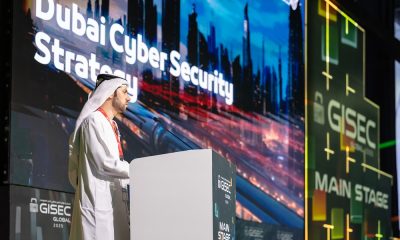





The Dubai Electronic Security Center (DESC) is set to participate as the official government cybersecurity partner for the eighth consecutive year in the 14th edition of the Gulf Information Security Expo and Conference (GISEC Global 2025), taking place from May 6-8 at the Dubai World Trade Centre. The Center’s participation in GISEC Global 2025, which gathers over 25,000 cybersecurity professionals representing more than 160 countries, aligns with its strategic objectives aimed at advancing the Dubai Cyber Security Strategy and reinforcing Dubai’s position as one of the world’s digitally safest cities.
This participation reflects the Center’s commitment to safeguarding digital infrastructure, fostering innovation, enhancing cyber resilience, and promoting robust cooperation at both the local and international levels. During the three-day event, DESC will spotlight a number of key initiatives, including the “Dubai Cyber Challenge”, an exclusive competitive simulation designed to enhance the cyber readiness of Dubai government entities, and the “School of Cyber Defense” CTF competition, which attracted registrations from over 300 university students, engaging them in technical challenges and hands-on training. These programs form a key part of DESC’s ongoing efforts to build a pipeline of skilled cybersecurity professionals equipped to navigate evolving digital threats.
H.E. Yousuf Hamad Al Shaibani, CEO of the Dubai Electronic Security Center, commented, “DESC’s participation in GISEC Global 2025 reflects our steadfast commitment to securing Dubai’s digital future through proactive cybersecurity measures, innovation-driven initiatives, and an integrated ecosystem that fosters collaboration by building partnerships across public and private sectors. GISEC continues to serve as a dynamic platform where industry leaders, experts, and innovators come together to shape the future of cybersecurity.”
“GISEC 2025 provides a critical platform for strategic engagement with global cybersecurity innovators, allowing us to gain insights into emerging technologies and anticipate future threats. These interactions directly support our efforts to create forward-looking policies, develop advanced cyber solutions, and empower national talent to lead in this field. Through such initiatives, we continue to strengthen Dubai’s position as a global hub for cybersecurity excellence and digital innovation,” Al Shaibani added.
DESC experts will also take part in high-level panel discussions addressing key challenges and emerging trends in the cybersecurity landscape. The Center will also formalize strategic partnerships and Memorandums of Understanding (MoUs), aimed at enhancing cross-sector collaboration and strengthening national efforts to secure the cyber space.
Visitors to GISEC Global 2025 are invited to explore DESC’s initiatives at Stand A80 in Hall 7, where DESC will showcase its latest projects, including future-ready cybersecurity guidelines and certification programs designed to keep pace with the evolving digital landscape and strengthen national capabilities. The stand will also serve as a unique opportunity for attendees to engage with DESC’s experts and explore opportunities for joint collaboration.

OPSWAT has announced its diamond-level sponsorship of GISEC Global 2025, the Middle East and Africa’s premier cybersecurity event. Scheduled for 6-8 May at Dubai World Trade Centre, the exhibition will be hosted by the UAE Cybersecurity Council in partnership with the Dubai Electronic Security Center.
This year’s participation underscores OPSWAT’s commitment to strengthening regional cybersecurity resilience as organizations face increasingly sophisticated threats. Attendees will have multiple opportunities to engage with OPSWAT’s cybersecurity experts through interactive demonstrations, thought leadership sessions, and specialized training programs.

Sertan Selcuk, Vice President for METAP and CIS, OPSWAT
“Our main focus at GISEC Global 2025 will be critical infrastructure, the lynchpin of economic progress and an increasingly popular target for threat actors,” said Sertan Selcuk, Vice President for METAP and CIS, OPSWAT. “Our partnerships will involve devising ways of protecting the interconnected systems and technologies that drive the Fourth Industrial Revolution. Through our demonstrations and discussions at GISEC 2025, OPSWAT experts will show how our solutions directly address the latest cybersecurity challenges, especially the ongoing merger of IT and OT.”
The company will showcase its innovative solutions through two unique exhibits. The CIP Mobile Lab, operated by OP/X Labs, will provide live demonstrations of industry-leading technologies designed to protect critical infrastructure. Visitors can gain practical insights into securing vital operational systems against modern cyber threats.
Complementing this will be OPSWAT’s Nuclear Plant Model Reactor display, illustrating the company’s specialized capabilities in securing highly sensitive environments. The exhibit will demonstrate real-world applications of OPSWAT’s technology through an interconnected display with the mobile lab.
OPSWAT’s experts will present across multiple stages during the three-day event:
- On the opening day, security professionals can attend a live hacking demonstration on the Dark Stage, revealing current vulnerabilities in today’s threat landscape.
- Day two features two significant presentations. Founder and CEO Benny Czarny will deliver a keynote address titled “Breaking the Firewall: Revolutionizing Cyber Defense for a Connected World” on the Government Stage. His session will challenge conventional security paradigms and propose innovative approaches to counter AI-driven threats and encrypted attacks.
- Simultaneously, Director of Products and Solutions Kris Voorspoels will participate in a Critical Infrastructure Stage panel discussion examining security challenges in the regional oil and gas sector’s Industrial IoT (IIoT) ecosystem. The session will explore security implications of connected devices in petrochemical operations and strategies for protecting this vital economic sector.
Supporting the UAE National Cybersecurity Strategy’s capacity-building objectives, OPSWAT Academy will offer complimentary certification courses throughout the event. Professionals can earn credentials in File Security (OFSA), Secure Storage (OSSA), Email Security (OESA), Web Traffic Protection (OWPA), and Data Transfer Security (ODSA).
At GISEC Global 2025, OPSWAT will exhibit from Stand C55, Hall 7.

In a time of accelerating digital transformation, the 3rd Cyber First Kuwait Edition took center stage at the Radisson Blu Hotel, Kuwait, bringing together over 300 technology leaders, cybersecurity professionals, and policymakers to address the country’s evolving digital threat landscape and cybersecurity vision. Organized by Events First Group, the conference supports the new Kuwait Vision 2035 and the nation’s ambitious National Cybersecurity Strategy.
The summit will feature keynote presentations, expert panel discussions, real-world case studies, and an exhibition showcasing cutting-edge solutions. Topics will span AI-powered threat detection, OT/ICS infrastructure security, cloud resilience, Zero Trust frameworks, and national-level collaboration between public and private sectors.
Abdullah Al Shaheen, Director of Public Relations and Media Department at National cybersecurity center said, “This edition of the Cyber First Conference, held under the patronage of the National Cybersecurity Center serves as a platform for business leaders, professionals to come together and exchange experiences, share best practices, and explore the latest developments for security and protection against the rapidly evolving cyber threats and attacks. These challenges require us to remain informed and constantly evolving.”
“The National Cybersecurity Center in the State of Kuwait is working to build an effective system to protect the cyberspace by collaborating with both local and international entities in the field of cybersecurity. This is to create a safe digital environment, while maintaining the trust of technology operators and users. We hope this conference will serve as a gateway to more important meetings and events that focus on cybersecurity,” he added.
“Cyber First Kuwait is a national dialogue and strategic catalyst,” said Shyam Reddy, Partnerships Director. “With Vision 2035 and the National Cybersecurity Strategy serving as our guiding frameworks, this summit brings together government and enterprise to create actionable pathways toward a digitally secure and resilient Kuwait.”
The conference featured keynotes, panels, one-on-one networking sessions, a cybersecurity hackathon, and the Kuwait Cybersecurity Awards, recognizing trailblazers across innovation, leadership, and operational excellence. The event hosted over 300 delegates, including CISOs, risk management leaders, OT and cloud architects, regulators, leading solution providers, more than 20 sponsors, 15 media partners, and 10 ministries.

Positive Technologies Reports 80% of Middle East Cyberattacks Compromise Confidential Data

Qualys Partners with Teksalah, the First Middle Eastern MSP in its mROC Alliance

CyberKnight Sets Up South Africa Entity

ManageEngine Enhances PAM with Native Intelligence

EcoOnline Expands into Middle East

OPSWAT Joins GISEC 2025 as Middle East Confronts AI-Driven Cyber Threats

GISEC Global 2025: SANS Institute to Showcase Elite Cybersecurity Training and Threat Expertise

Fortinet Expands FortiAI Across its Security Fabric Platform

How AI is Reinventing Cybersecurity for the Automotive Industry

GISEC 2025 Launches OT Security Conference Amid 49% Infrastructure Attack Surge

Positive Technologies @ GISEC Global 2025: Demonstrating Cutting-Edge Cyber Threats and AI Defense Strategies

Group-IB @ GISEC Global 2025: Tackling Evolving Cyber Threats with Localised Intelligence and AI

Video: Wallarm Unveils the Key to Cloud-Native API Security at GISEC Global 2025

Video: CyberKnight on Zero Trust, AI, and Saudi Arabia’s Digital Transformation at GISEC Global 2025

Video: SANS Institute Weighs in on Deepfakes, Model Poisoning and Risk Frameworks at GISEC Global 2025
-
 GISEC1 week ago
Positive Technologies @ GISEC Global 2025: Demonstrating Cutting-Edge Cyber Threats and AI Defense Strategies
-

 Cyber Security1 week ago
Axis Communications Sheds Light on Video Surveillance Industry Perspectives on AI
-
 GISEC1 week ago
Video: SANS Institute Weighs in on Deepfakes, Model Poisoning and Risk Frameworks at GISEC Global 2025
-
 GISEC1 week ago
ManageEngine @ GISEC Global 2025: AI, Quantum Computing, and Ransomware Form Part of Cybersecurity Outlook for 2025
-
 GISEC1 week ago
Video: SentinelOne Speaks Hyperautomation, Purple AI, and the Future of Threat Detection at GISEC Global 2025
-
 Africa Focus6 days ago
CyberKnight Sets Up South Africa Entity
-
 GISEC1 week ago
Group-IB @ GISEC Global 2025: Tackling Evolving Cyber Threats with Localised Intelligence and AI
-
 GISEC1 week ago
Video: CyberKnight on Zero Trust, AI, and Saudi Arabia’s Digital Transformation at GISEC Global 2025