
Expert Speak
How Can Unified Physical Security Can Help Retailers Thrive in a Changing Environment?


Written by Firas Jadallah, Regional Director, Middle East, and Africa at Genetec
The retail industry has evolved dramatically over a relatively short period. Today, digital transformation has unlocked the creation of new innovative business models centered on frictionless, multi-channel shopping and e-commerce while simultaneously presenting new security challenges. In addition, it’s worth noting that digitization has also facilitated innovation in video surveillance technologies, creating new opportunities for retailers to use data from video management systems (VMS) in conjunction with data from access control systems (ACS), automatic license plate readers (ALPR), identity management systems (IMS), sensors, and more.
The key objectives are not only to reduce shrink but also to improve operational efficiency and the overall buyer experience. However, without a fully unified software solution, it is difficult to comprehend how these data puzzle pieces fit together and make sense. Only when retailers are able to consolidate data from multiple sources, can they gain a comprehensive understanding of their environment. A unified physical security platform that allows for the integration of devices and applications, will successfully create a connected store, which centralizes the management of the entire environment for improved visibility, operations, and data intelligence.
How Retailers Can Benefit from Unification:
Frictionless shopping
The introduction of frictionless shopping solutions such as curbside pickup and self-checkout has presented retail security teams with new challenges. Unified security platforms provide a variety of solutions to overcome these challenges. If theft is suspected, asset protection managers can easily review the video of self-checkout systems and share it with law enforcement as necessary. Unified security platforms also enable IT teams, to devote their time to higher-priority tasks and spend less time on software updates. Similarly, a comprehensive view of the connected store allows corporate security managers to work more effectively and efficiently.
E-commerce and logistics
In 2021, e-commerce sales in the UAE surpassed US$4.8 billion, up from US$2.6 billion in 2019, due to the pandemic-enabled acceleration of the global shift towards online shopping. According to an analysis by the Dubai Chamber of Commerce, the value of the UAE’s e-commerce market is expected to reach $9.2 billion by 2026. This exponential growth of the e-commerce market has given rise to new security concerns and a demand for inventory management logistics at distribution centers.
These centers are often frequented by a large number of non-regular employees, as coordinating the delivery of packages involves multiple parties. Here, ALPR technologies can play a crucial role in tracking who enters and exits distribution centers, and in retail locations, they can record who has received products from a curbside pickup station. ALPR solutions can also assist in identifying Organized Retail Crime (ORC) suspects by determining whether a vehicle has been involved in previous thefts.
Supply chain management is another area in which retail security technologies can play a focal role in overcoming challenges. Retailers can significantly reduce losses by utilizing article tags and video surveillance to monitor their environment and track individual products from suppliers to the warehouse, to the store.
Shrink
Shrink encompasses numerous forms of loss, but it is primarily caused by external theft, such as organized retail crime (ORC). A recent report by Sensormatic estimates that the annual global retail sales loss due to shrinkage amounts to US$99.56 billion. Aside from the loss of goods, in some cases, retailers are also having to contend with violent altercations with thieves. Retailers are implementing a variety of technologies to combat ORC, including artificial intelligence-based video analytics at point-of-sale (POS)/self-checkout, self-service locking cases, autonomous security robots, and automatic license plate recognition (ALPR), in addition to establishing specialized ORC teams.
Cybersecurity
Cybersecurity threats such as fraud, account takeovers, malware, ransomware, compromised business emails, and data breaches pose escalating risks for retailers today. Any device connected to a retailer’s network, be it a smart IoT thermostat, an access control sensor, or a computer, has the potential to serve as a gateway for cybercriminals to gain access to private data stored on servers connected to that network. Due to the interconnected nature of modern technology, data must be secured and monitored at every stage.
When multiple solutions that were not designed to work together are implemented, it can be challenging for teams to manage, maintain, and scale. A unified security platform designed with cybersecurity in mind enables retailers to secure their entire IT infrastructure and mitigate network intrusion risks through one of their security devices. A unified security platform designed with cybersecurity in mind enables retailers to secure their entire IT infrastructure and mitigate network intrusion risks through one of their security devices.
Advancing Video Surveillance
The vast improvement in video camera quality and cost reductions over the last year have made video surveillance an essential component of retail security solutions. Furthermore, the digitization and automation of video technologies have further improved their value by transferring mundane tasks from humans to machines. Although adding video surveillance can address some of the challenges posed by frictionless shopping, it can also introduce new ones.
These surveillance systems can accumulate vast volumes of footage, which retailers must then store while also making sense of it. A unified system enables retailers to manage data from all cameras, as well as data from access control and ALPR systems, sensors, smart devices, and maps, through a single, intuitive dashboard. In addition, cross-referencing video footage with additional analytic data can yield insightful results.
These tools can provide invaluable insights into the customer’s journey through the store and at checkout, thereby enabling retailers to enhance their customer’s shopping experience.
Hybrid Cloud Solutions
Cloud-based systems make it efficient for retailers to scale storage requirements as the business environment evolves. However, overhauling an entire IT system all at once is a daunting undertaking. As stores are upgraded or retrofitted, retailers can take advantage of new technologies and functionalities by connecting IoT devices. A hybrid cloud strategy enables retailers to continue operating on-premises systems that meet current requirements while integrating them with adaptable cloud technologies. For companies with a combination of new stores that utilize cloud-based systems and established locations with on-premises systems, support of a hybrid cloud approach through a unified platform enables them to manage the data from all of them in one place.
Insights and Efficiency
When physical security systems are siloed, it is challenging to extract the full value of the data collected by each system. By leveraging a unified, connected store, retailers can combine and display data from all of their security systems in a variety of formats, including customized dashboards, graphical maps, mobile applications, and web clients.
When data is centralized, new insights become apparent. Modern physical security systems allow retailers to personalize dashboards that display data that is most pertinent to specific users. Each department, from asset protection to marketing, will have a unique perspective on data and offer a variety of solutions. Here, interdepartmental collaboration can be essential to the development of new strategies. Moreover, unified security platforms enable retailers to scale, regardless of whether they are opening their first physical store or expanding their global brand to hundreds of locations.
Unified security platforms can be easily deployed and integrated with video surveillance, access control, ALPR, and more. Starting with an open, unified security platform allows retailers to maximize the value of the devices and equipment they already possess, utilizing data in novel ways to streamline operations and gain insights. They can deliver an optimal customer experience without sacrificing security or negatively impacting their bottom line. Everything begins with integration – a connected store for the omnichannel world.













Written by Alain Penel, VP of Middle East, CIS & Turkey at Fortinet (more…)

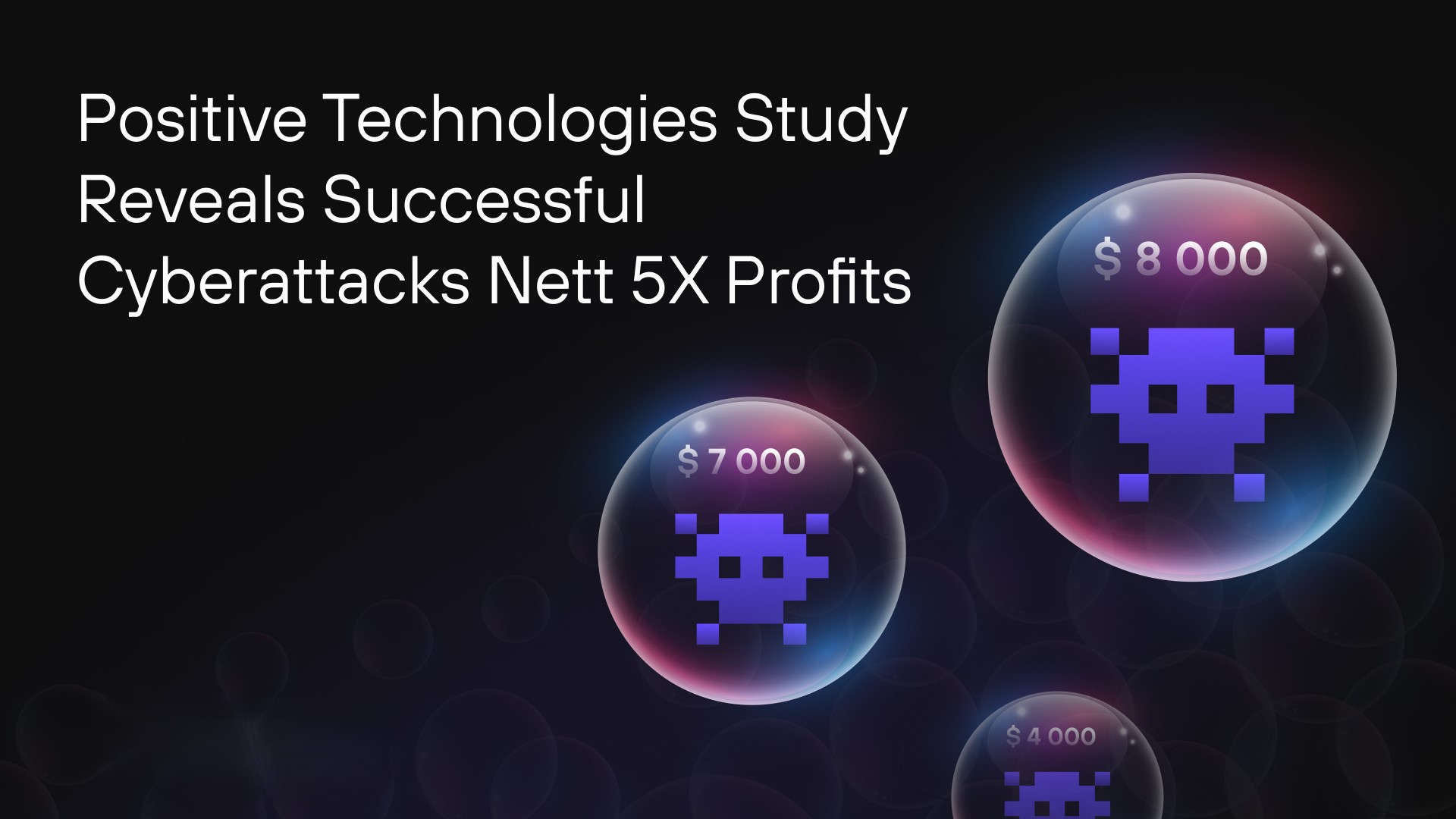
Positive Technologies has released a study on the dark web market, analysing prices for illegal cybersecurity services and products, as well as the costs incurred by cybercriminals to carry out attacks. The most expensive type of malware is ransomware, with a median cost of $7,500. Zero-day exploits are particularly valuable, often being sold for millions of dollars. However, the net profit from a successful cyberattack can be five times the cost of organizing it.
Experts estimate that performing a popular phishing attack involving ransomware costs novice cybercriminals at least $20,000. First, hackers rent dedicated servers, subscribe to VPN services, and acquire other tools to build a secure and anonymous IT infrastructure to manage the attack. Attackers also need to acquire the source code of malicious software or subscribe to ready-to-use malware, as well as tools for infiltrating the victim’s system and evading detection by security measures. Moreover, cybercriminals can consult with seasoned experts, purchase access to targeted infrastructures and company data, and escalate privileges within a compromised system. Products and tools are readily available for purchase on the dark web, catering to beginners. The darknet also offers leaked malware along with detailed instructions, making it easier for novice cybercriminals to carry out attacks.
Malware is one of the primary tools in a hacker’s arsenal, with 53% of malware-related ads focused on sales. In 19% of all posts, infostealers designed to steal data are offered. Crypters and code obfuscation tools, used to help attackers hide malware from security tools, are featured in 17% of cases. Additionally, loaders are mentioned in 16% of ads. The median cost of these types of malware stands at $400, $70, and $500, respectively. The most expensive malware is ransomware: its median cost is $7,500, with some offers reaching up to $320,000. Ransomware is primarily distributed through affiliate programs, known as Ransomware-as-a-Service (RaaS), where participants in an attack typically receive 70–90% of the ransom. To become a partner, a criminal must make a contribution of 0.05 Bitcoin (approximately $5,000) and have a solid reputation on the dark web.
Another popular attack tool is exploits: 69% of exploit-related ads focus on sales, with zero-day vulnerability posts accounting for 32% of them. In 31% of cases, the cost of exploits exceeds $20,000 and can reach several million dollars. Access to corporate networks is relatively inexpensive, with 72% of such ads focused on sales, and 62% of them priced at under a thousand dollars. Among cybercriminal services, hacks are the most popular option, accounting for 49% of reports. For example, the price for compromising a personal email account starts at $100, while the cost for a corporate account begins at $200.
Dmitry Streltsov, Threat Analyst at Positive Technologies, says, “On dark web marketplaces, prices are typically determined in one of two ways: either sellers set a fixed price, or auctions are held. Auctions are often used for exclusive items, such as zero-day exploits. The platforms facilitating these deals also generate revenue, often through their own escrow services, which hold the buyer’s funds temporarily until the product or service is confirmed as delivered. On many platforms, these escrow services are managed by either administrators or trusted users with strong reputations. In return, they earn at least 4% of the transaction amount, with the forums setting the rates.”
Considering the cost of tools and services on the dark web, along with the median ransom amount, cybercriminals can achieve a net profit of $100,000–$130,000 from a successful attack—five times the cost of their preparation. For a company, such an incident can result not only in ransom costs but also in massive financial losses due to disrupted business processes. For example, in 2024, due to a ransomware attack, servers of CDK Global were down for two weeks. The company paid cybercriminals $25 million, while the financial losses of dealers due to system downtime exceeded $600 million.

Written by Oded Vanunu, Chief Technologist & Head of Product Vulnerability Research at Check Point (more…)

Positive Technologies Reports 80% of Middle East Cyberattacks Compromise Confidential Data

Qualys Partners with Teksalah, the First Middle Eastern MSP in its mROC Alliance

CyberKnight Sets Up South Africa Entity

ManageEngine Enhances PAM with Native Intelligence

EcoOnline Expands into Middle East

OPSWAT Joins GISEC 2025 as Middle East Confronts AI-Driven Cyber Threats

GISEC Global 2025: SANS Institute to Showcase Elite Cybersecurity Training and Threat Expertise

Fortinet Expands FortiAI Across its Security Fabric Platform

GISEC 2025 Launches OT Security Conference Amid 49% Infrastructure Attack Surge

How AI is Reinventing Cybersecurity for the Automotive Industry

Positive Technologies @ GISEC Global 2025: Demonstrating Cutting-Edge Cyber Threats and AI Defense Strategies

Group-IB @ GISEC Global 2025: Tackling Evolving Cyber Threats with Localised Intelligence and AI

Video: Wallarm Unveils the Key to Cloud-Native API Security at GISEC Global 2025

Video: CyberKnight on Zero Trust, AI, and Saudi Arabia’s Digital Transformation at GISEC Global 2025

Video: SANS Institute Weighs in on Deepfakes, Model Poisoning and Risk Frameworks at GISEC Global 2025
-
 GISEC1 week ago
Positive Technologies @ GISEC Global 2025: Demonstrating Cutting-Edge Cyber Threats and AI Defense Strategies
-

 Cyber Security1 week ago
Axis Communications Sheds Light on Video Surveillance Industry Perspectives on AI
-
 GISEC1 week ago
Video: SANS Institute Weighs in on Deepfakes, Model Poisoning and Risk Frameworks at GISEC Global 2025
-
 GISEC1 week ago
ManageEngine @ GISEC Global 2025: AI, Quantum Computing, and Ransomware Form Part of Cybersecurity Outlook for 2025
-
 GISEC1 week ago
Video: SentinelOne Speaks Hyperautomation, Purple AI, and the Future of Threat Detection at GISEC Global 2025
-
 Africa Focus6 days ago
CyberKnight Sets Up South Africa Entity
-
 GISEC1 week ago
Group-IB @ GISEC Global 2025: Tackling Evolving Cyber Threats with Localised Intelligence and AI
-
 GISEC1 week ago
Video: CyberKnight on Zero Trust, AI, and Saudi Arabia’s Digital Transformation at GISEC Global 2025