
Expert Speak
MSSP Checklist: Tips for Achieving Success


Written by Jonathan Nguyen-Duy, Vice President, Global Field CISO at Fortinet
Complicated IT environments and expanding network edges create new cybersecurity risks. In response to the evolving threat landscape, more companies have turned to managed security service providers (MSSPs) who can provide access to hard to find security expertise and the latest technology. To position themselves competitively in a crowded market, MSSPs must offer the right combination of services, around-the-clock protection as well as, cost effective solutions that deliver better risk management and compliance. It’s a two-fold challenge that requires speed and scale in detection and response for more competitive value propositions.
Managed Security Provider (MSSP) Success Checklist
Creating a successful service offering means understanding customers’ security and business objectives. To help customers achieve these goals, an MSSP must establish a robust set of offerings that offer access to the latest technologies and security expertise at a price point that makes sense.
Actionable Alerts
Most customers begin their evaluation process by reviewing an MSSP’s solutions. Information overload and alert fatigue is a common problem facing security teams so the ability to address security monitoring is a key requirement. Without high-fidelity alerts that correlate events effectively, security teams find themselves spending too much time investigating false alerts.
To help address these problems, MSSPs must provide customers with aggregated alerts enriched with context that reduce false positives, while also helping to define, guide, and accelerate investigations. MSSPs who can enable prioritization based on severity levels with technology that streamlines task assignments and automate response can differentiate themselves from other providers.
Advanced Threat Detection
In addition to alerts, advanced threat detection is also tied to the MSSP’s ability to incorporate advanced threat intelligence into its offering. With threat actors continually improving their tactics, techniques and procedures customers want a provider with real-time access to robust threat intelligence that can quickly detect attacks at machine speed. While many customers may already subscribe to threat intelligence feeds, disaggregated information across a fragmented security architecture actually creates security gaps and increases key metrics like mean times to detect and respond.
MSSPs need to support actionable alerts with high-quality threat intelligence. When combining the two in a single pane of glass, an MSSP can help customers respond to zero-day attacks, other emerging threats, as well as variations of known attacks more rapidly, and thereby reduce the likelihood of a data breach.
SOC Services
MSSPs offer more than just access to the latest technologies. Customers also turn to their providers for services, including talking to experienced people who can guide them through the incident response process. The cybersecurity talent gap leaves many companies struggling to find the right staffing to protect their systems, network, and data. Often, customers turn to an MSSP to act as their security operations center (SOC) or support their current team.
With this in mind, MSSPs must deliver a range of services from their own SOC, specifically those that can be offered at particular service levels or tailored to individual customer needs. By delivering a fully managed or co-managed SOC service, MSSPs can fill the talent gap by providing the human resources customers need, not just the technology and tools.
Automated Response
Some customers may have SOC teams that need augmentation because they are bogged down by manual, inefficient, error-prone, and time-consuming steps. These customers need automation so that their teams can effectively filter repetitive tasks and focus on more critical issues.
MSSPs that offer automated response capabilities can address higher-level requirements to address a larger market with more advanced requirements. By offering Security Orchestration, Automation and Response (SOAR) with updated playbooks, MSSPs can offer highly differentiated services featuring enhanced detection and accelerated incident investigation and response.
Visibility and SIEM Access
Today, nearly every customer has a complex environment, regardless of company size. Most customers have multiple-point products that create gaps in visibility and control. To gain that visibility, many work with an MSSP who can cost-effectively provide them with a cohesive Security Information and Event Management (SIEM) solution.
One of the keys to SIEM effectiveness is the ability to ingest large volumes of data from a wide arrange of vendor products. The ability to provide centralized management and customization options using API integrations is one-way MSSPs can distinguish themselves within the market. In addition, MSSPs should consider services like granular reporting with event management that highlights important activity and alerts – providing a cost-effective alternative to traditional in-house SIEM deployments.
Flexible Deployment
Many organizations are implementing digital transformation and research consistently shows that security is the primary concern. Cloud adoption, distributed computing, remote working, complexity, and increasing threats are key challenges driving customers to seek MSSPs with flexible solutions.
Most customers want their MSSP to be their “one-stop shop” for managing cyber risk and compliance. To differentiate themselves, MSSPs need to offer customizable solutions with flexible technology in the form of appliances, virtual machines, or cloud-delivered services along with pay-as-you-go options that allow customers to onboard new solutions quickly and efficiently as their needs change. To do this, MSSPs need to offer on-demand services with extensive self-service catalogs – especially incident response and reporting.
The Business Benefits of Choosing & Working with an MSSP
Beyond providing the right services and technologies, MSSPs must also demonstrate their business value. Many customers recognize their security problems but cannot articulate where the MSSP fits into solving them. To demonstrate the vital role they can play in securing customer networks and enabling the business, MSSPs should consider offering the following:
Specialized Skills and Services
For most customers, gaining access to the skills and services that help them solve their unique security issues poses a significant challenge. While no two customer requirements are the same, all organizations are seeking cost-effective ways to access scarce security skills and services.
MSSPs should focus on platform scalability that allows efficient customer focus without the cost of dedicated staffing. MSSPs need flexible solutions that evolve with customer needs. In some cases, a customer may want a comprehensive technology and services package that gives them an entire team and all capabilities. In other cases, the customer may just be building out a SOC and looking to grow over time. Being able to meet customers where they are now, as they are now, and evolve with them is key to helping them understand the value.
24/7 Service
Threat actors can attack at any time of day, often outside of traditional work hours. Even companies with a SOC may not be able to have someone on-call every day, all day. MSSPs can provide that co-managed service for companies without a dedicated SOC or augment the current SOC to address these outside-of-business times.
Rapid Response
Our networks and systems are more interconnected than ever before, so the sooner a company can respond to a threat, the less damage that threat can cause. With automated response capabilities, customers can reduce response time to ensure a reduction in potential damage. Manual processes are no longer adequate as they can take anywhere from four to fifteen hours, but automated response technologies can reduce that to twenty minutes or less. Incident response is all about automation for speed and scale.
Lower Total Cost of Ownership
Building a SOC, deploying SIEM, tools and hiring the staff can be cost-prohibitive. Accelerating business requirements and cost concerns means companies are seeking alternatives to tradition build and operate approaches. The shared services model offered by MSSPs is an increasingly attractive model that provides accelerated time-to-service along with better risk management and compliance than traditional in-house solutions. MSSPs offer a predictable, demonstrated cost model that provides better value for risk management and business outcomes. Aligning operational metrics to customer business outcomes is a key differentiator.
Final Thoughts
Customization and scalability go hand-in-hand when building out solutions. Services are just as important as technologies; part of providing a solution is delivering value through the right technologies that solve the right problems, at right price. Providing access to technology, expertise and services is the foundational value of MSSPs. By keeping this top of mind, MSSPs should focus on a platform approach that allows highly customizable, scalable solutions with a TCO that unlocks value and growth.











Written by Alain Penel, VP of Middle East, CIS & Turkey at Fortinet (more…)

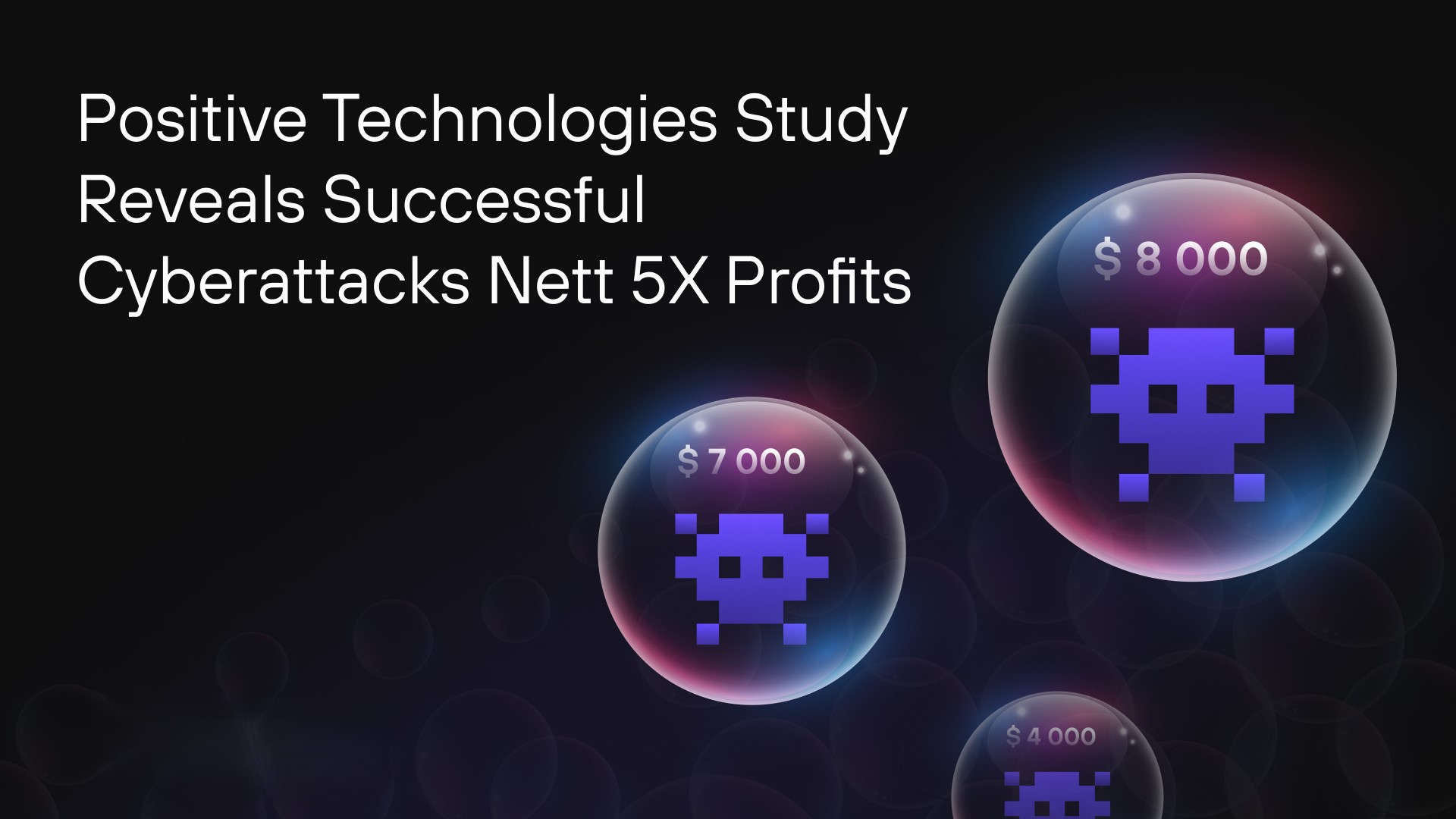
Positive Technologies has released a study on the dark web market, analysing prices for illegal cybersecurity services and products, as well as the costs incurred by cybercriminals to carry out attacks. The most expensive type of malware is ransomware, with a median cost of $7,500. Zero-day exploits are particularly valuable, often being sold for millions of dollars. However, the net profit from a successful cyberattack can be five times the cost of organizing it.
Experts estimate that performing a popular phishing attack involving ransomware costs novice cybercriminals at least $20,000. First, hackers rent dedicated servers, subscribe to VPN services, and acquire other tools to build a secure and anonymous IT infrastructure to manage the attack. Attackers also need to acquire the source code of malicious software or subscribe to ready-to-use malware, as well as tools for infiltrating the victim’s system and evading detection by security measures. Moreover, cybercriminals can consult with seasoned experts, purchase access to targeted infrastructures and company data, and escalate privileges within a compromised system. Products and tools are readily available for purchase on the dark web, catering to beginners. The darknet also offers leaked malware along with detailed instructions, making it easier for novice cybercriminals to carry out attacks.
Malware is one of the primary tools in a hacker’s arsenal, with 53% of malware-related ads focused on sales. In 19% of all posts, infostealers designed to steal data are offered. Crypters and code obfuscation tools, used to help attackers hide malware from security tools, are featured in 17% of cases. Additionally, loaders are mentioned in 16% of ads. The median cost of these types of malware stands at $400, $70, and $500, respectively. The most expensive malware is ransomware: its median cost is $7,500, with some offers reaching up to $320,000. Ransomware is primarily distributed through affiliate programs, known as Ransomware-as-a-Service (RaaS), where participants in an attack typically receive 70–90% of the ransom. To become a partner, a criminal must make a contribution of 0.05 Bitcoin (approximately $5,000) and have a solid reputation on the dark web.
Another popular attack tool is exploits: 69% of exploit-related ads focus on sales, with zero-day vulnerability posts accounting for 32% of them. In 31% of cases, the cost of exploits exceeds $20,000 and can reach several million dollars. Access to corporate networks is relatively inexpensive, with 72% of such ads focused on sales, and 62% of them priced at under a thousand dollars. Among cybercriminal services, hacks are the most popular option, accounting for 49% of reports. For example, the price for compromising a personal email account starts at $100, while the cost for a corporate account begins at $200.
Dmitry Streltsov, Threat Analyst at Positive Technologies, says, “On dark web marketplaces, prices are typically determined in one of two ways: either sellers set a fixed price, or auctions are held. Auctions are often used for exclusive items, such as zero-day exploits. The platforms facilitating these deals also generate revenue, often through their own escrow services, which hold the buyer’s funds temporarily until the product or service is confirmed as delivered. On many platforms, these escrow services are managed by either administrators or trusted users with strong reputations. In return, they earn at least 4% of the transaction amount, with the forums setting the rates.”
Considering the cost of tools and services on the dark web, along with the median ransom amount, cybercriminals can achieve a net profit of $100,000–$130,000 from a successful attack—five times the cost of their preparation. For a company, such an incident can result not only in ransom costs but also in massive financial losses due to disrupted business processes. For example, in 2024, due to a ransomware attack, servers of CDK Global were down for two weeks. The company paid cybercriminals $25 million, while the financial losses of dealers due to system downtime exceeded $600 million.


Written by Oded Vanunu, Chief Technologist & Head of Product Vulnerability Research at Check Point (more…)

Positive Technologies Reports 80% of Middle East Cyberattacks Compromise Confidential Data

Qualys Partners with Teksalah, the First Middle Eastern MSP in its mROC Alliance

CyberKnight Sets Up South Africa Entity

ManageEngine Enhances PAM with Native Intelligence

EcoOnline Expands into Middle East

OPSWAT Joins GISEC 2025 as Middle East Confronts AI-Driven Cyber Threats

GISEC Global 2025: SANS Institute to Showcase Elite Cybersecurity Training and Threat Expertise

Fortinet Expands FortiAI Across its Security Fabric Platform

How AI is Reinventing Cybersecurity for the Automotive Industry

GISEC 2025 Launches OT Security Conference Amid 49% Infrastructure Attack Surge

Positive Technologies @ GISEC Global 2025: Demonstrating Cutting-Edge Cyber Threats and AI Defense Strategies

Group-IB @ GISEC Global 2025: Tackling Evolving Cyber Threats with Localised Intelligence and AI

Video: Wallarm Unveils the Key to Cloud-Native API Security at GISEC Global 2025

Video: CyberKnight on Zero Trust, AI, and Saudi Arabia’s Digital Transformation at GISEC Global 2025

Video: SANS Institute Weighs in on Deepfakes, Model Poisoning and Risk Frameworks at GISEC Global 2025
-
 GISEC1 week ago
Positive Technologies @ GISEC Global 2025: Demonstrating Cutting-Edge Cyber Threats and AI Defense Strategies
-

 Cyber Security1 week ago
Axis Communications Sheds Light on Video Surveillance Industry Perspectives on AI
-
 GISEC1 week ago
ManageEngine @ GISEC Global 2025: AI, Quantum Computing, and Ransomware Form Part of Cybersecurity Outlook for 2025
-
 GISEC1 week ago
Video: SANS Institute Weighs in on Deepfakes, Model Poisoning and Risk Frameworks at GISEC Global 2025
-
 GISEC1 week ago
Video: SentinelOne Speaks Hyperautomation, Purple AI, and the Future of Threat Detection at GISEC Global 2025
-
 Africa Focus6 days ago
CyberKnight Sets Up South Africa Entity
-
 GISEC1 week ago
Group-IB @ GISEC Global 2025: Tackling Evolving Cyber Threats with Localised Intelligence and AI
-
 GISEC1 week ago
Video: CyberKnight on Zero Trust, AI, and Saudi Arabia’s Digital Transformation at GISEC Global 2025