
Expert Speak
The Need for a Zero Trust Edge Strategy


Written by John Maddison, EVP Products & Solutions at Fortinet
Today’s hybrid workers require access to distributed applications deployed in the datacenter, multi-cloud environments, and SaaS locations. Digital acceleration involves adopting and implementing new technologies and practices to improve business agility and employee productivity. But it is also redefining the network edge—especially in today’s Work-from-Anywhere world where users move between on-premises locations, interconnected branch locations, home offices, and temporary locations during travel—thereby expanding the attack surface and exposing the business to new, advanced threats.
Unfortunately, most traditional network architectures were built using disparate and statically deployed point products that provide implicit access to all applications. However, such an approach is no longer effective at providing secure access to critical resources at scale, especially as users, devices, and applications are in constant motion. And the inevitable rerouting of traffic to fixed security points for inspection severely impacts user experience, especially when those tools cannot adequately examine the encrypted application, data, and video streams. Far too often, the default response in many organizations has been to bypass security to not impact critical business operations. And the result has been disastrous, with ransomware, phishing, botnet, and other criminal activity now at an all-time high.
What’s needed is a secure Digital Acceleration strategy that ensures that new technologies can be adopted and new, highly dynamic edges can be established without compromising the protection of critical data or the security of users and devices. Zero-trust is based on the principle that every device or user is potentially compromised, and therefore every access request must be authorized and continuously verify. And even then, users and devices can only access those resources required to do their job and nothing more.
This same approach is now being applied to the remote edges of the network, a strategy known as the “Zero Trust Edge.” This new zero-trust approach to securing the expanding edges of today’s networks helps ensure that Security-Driven Networking – the critical convergence of security and networking – is everywhere. This enables security to seamlessly adapt to dynamic changes to the underlying network infrastructure, including connectivity, while providing explicit access to applications based on user identity and context.
Security-Driven Networking from Fortinet
Forrester recently described a solution they have dubbed the “All-In-One Zero Trust Edge” in the Now Tech Report published in December 2021. In that report, they described the future of next-generation networking infrastructure as bringing together networking and security in any combination of cloud, software, and hardware components, securely interweaving users, data, and resources using essential zero-trust principles.
Fortinet is recognized in this report. We believe that’s because we uniquely bring together all components needed to converge networking and security and can then deploy them on premises and in the cloud, including SD-WAN, NGFW and ZTNA. This ensures that we can deliver consistent convergence and zero implicit trust everywhere. We call this Security-Driven Networking.
Fortinet’s Security-Driven Networking approach starts with FortiOS-based innovations, including our on-premises SD-WAN and next-generation firewall secure access solutions, which also includes built-in ZTNA. It continues in the cloud with Fortinet’s cloud-based secure web gateway, CASB, and ZTNA solutions for remote users.
What is a Zero Trust Edge Solution?
Fortinet’s Security-Driven Networking innovations deliver the industry’s most complete Zero Trust Edge solution:
- SD-WAN: Providing better path and user-experience to applications and services usingSD-WAN is foundational for any Zero Trust Edge solution. Fortinet was the first vendor to blend advanced security and connectivity into a unified solution. Our Secure SD-WAN solution securely interconnects all offices to every datacenter, multi-cloud, and SaaS environment. And in addition to reliable connectivity and cloud on-ramp, it includes a full suite of advanced security, enables dynamic segmentation to prevent lateral threat movement for East-West protection, and maintains superior user experience through digital experience monitoring.
- Hybrid Convergence of Networking and Security: Zero Trust Edge must also support today’s highly dynamic networks. Legacy security solutions struggle to provide consistent policy distribution, orchestration, and enforcement when the underlying network is in constant motion. Integrating security and networking into a unified system is essential for deploying consistent security everywhere, both for on-premises and remote users. Fortinet is the only vendor to deliver networking and security convergence powered by the same operating system (FortiOS) to offer seamless policy distribution and orchestration. We also provide the industry’s highest security performance using our purpose-built security ASICs, enabling the inspection of encrypted traffic, including streaming video, without impacting user experience.
- Secure Remote Access: Cloud-delivered security that securely connects all remote users is essential to any Zero Trust Edge solution. Comprehensive web security from the cloud must provide multiple layers of defense with AI-driven web filtering, video filtering, DNS filtering, IP Reputation, Anti-botnet service including the ability to address data loss prevention and protect mobile users with in-line CASB integration.
- ZTNA Everywhere: Finally, Zero Trust Network Access (ZTNA) is essential for securing access to the critical applications and resources today’s hybrid workforce demands. However, protecting a hybrid workforce that may be in the office one day, working from home the next, and traveling another requires a ZTNA solution that is available everywhere users or devices are located. Unlike traditional VPN, ZTNA provides explicit access to users per application based on identity and context. Fortinet is the only vendor with a ZTNA solution designed to protect access from any edge, not just a few edges.
Fortinet’s Security-driven Networking Approach to Zero Trust Edge
Fortinet’s innovative approach to Zero Trust Edge converges enterprise-class security and networking everywhere across the network. This unique ability ensures secure access to critical applications and resources, whether users are on-premises or accessing resources through the cloud. Our Security-Driven Networking approach—including our unique combination of exclusive purpose-built ASICs, cloud-delivered security solutions, and integrated networking capabilities—enables superior user experience combined with coordinated threat protection for every network edge.
Zero Trust Edge resolves one of the most enduring challenges facing today’s IT teams: extending enterprise-grade security and granular access control to remote workers. Fortinet’s Security-Driven Networking approach provides a unique solution to overcoming user experience, siloed and disconnected networking/security technologies, and implicit trust challenges that create obstacles for today’s organizations serious about digital acceleration and implementing an effective—and secure—work from anywhere strategy.










Written by Alain Penel, VP of Middle East, CIS & Turkey at Fortinet (more…)

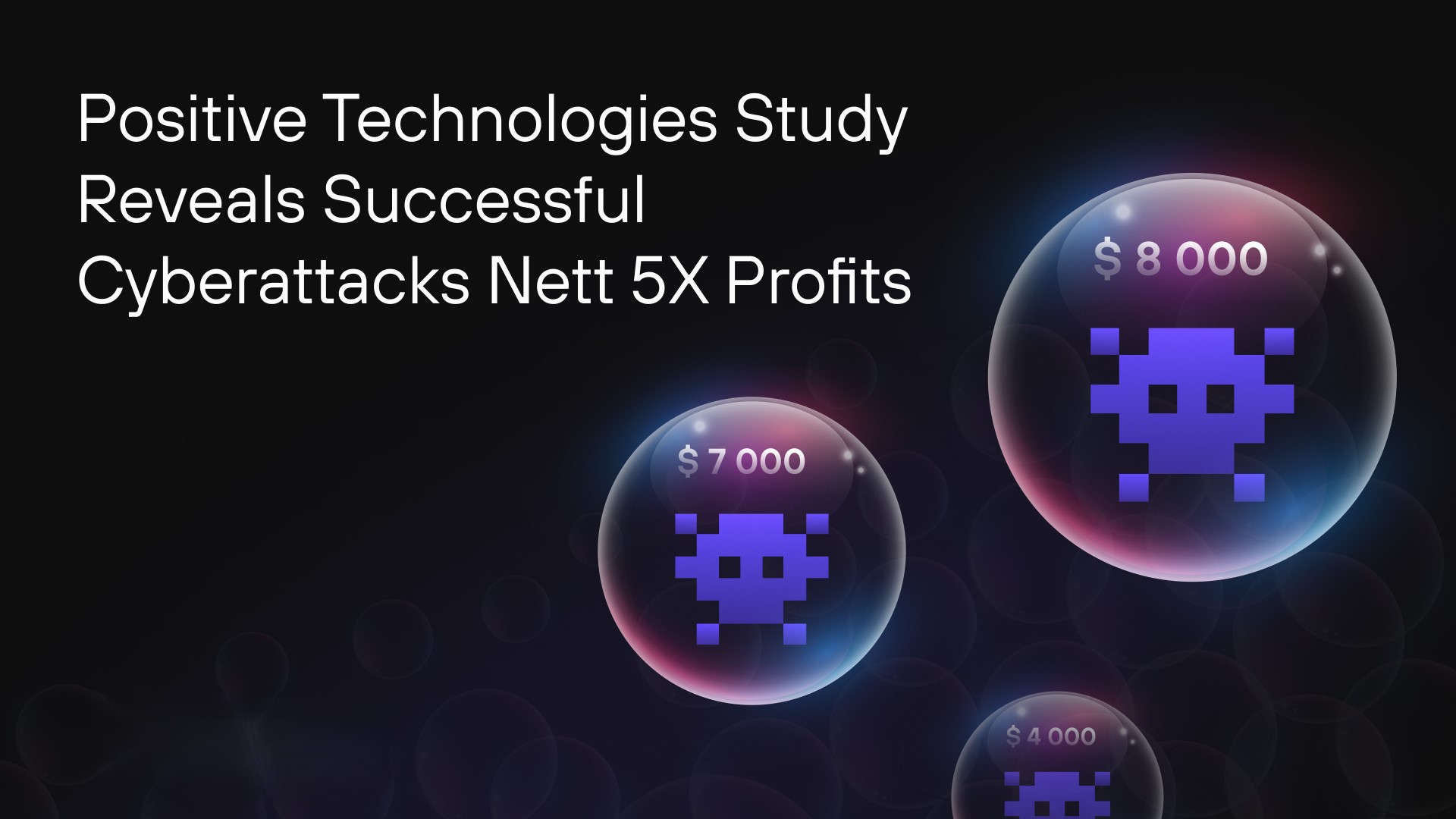
Positive Technologies has released a study on the dark web market, analysing prices for illegal cybersecurity services and products, as well as the costs incurred by cybercriminals to carry out attacks. The most expensive type of malware is ransomware, with a median cost of $7,500. Zero-day exploits are particularly valuable, often being sold for millions of dollars. However, the net profit from a successful cyberattack can be five times the cost of organizing it.
Experts estimate that performing a popular phishing attack involving ransomware costs novice cybercriminals at least $20,000. First, hackers rent dedicated servers, subscribe to VPN services, and acquire other tools to build a secure and anonymous IT infrastructure to manage the attack. Attackers also need to acquire the source code of malicious software or subscribe to ready-to-use malware, as well as tools for infiltrating the victim’s system and evading detection by security measures. Moreover, cybercriminals can consult with seasoned experts, purchase access to targeted infrastructures and company data, and escalate privileges within a compromised system. Products and tools are readily available for purchase on the dark web, catering to beginners. The darknet also offers leaked malware along with detailed instructions, making it easier for novice cybercriminals to carry out attacks.
Malware is one of the primary tools in a hacker’s arsenal, with 53% of malware-related ads focused on sales. In 19% of all posts, infostealers designed to steal data are offered. Crypters and code obfuscation tools, used to help attackers hide malware from security tools, are featured in 17% of cases. Additionally, loaders are mentioned in 16% of ads. The median cost of these types of malware stands at $400, $70, and $500, respectively. The most expensive malware is ransomware: its median cost is $7,500, with some offers reaching up to $320,000. Ransomware is primarily distributed through affiliate programs, known as Ransomware-as-a-Service (RaaS), where participants in an attack typically receive 70–90% of the ransom. To become a partner, a criminal must make a contribution of 0.05 Bitcoin (approximately $5,000) and have a solid reputation on the dark web.
Another popular attack tool is exploits: 69% of exploit-related ads focus on sales, with zero-day vulnerability posts accounting for 32% of them. In 31% of cases, the cost of exploits exceeds $20,000 and can reach several million dollars. Access to corporate networks is relatively inexpensive, with 72% of such ads focused on sales, and 62% of them priced at under a thousand dollars. Among cybercriminal services, hacks are the most popular option, accounting for 49% of reports. For example, the price for compromising a personal email account starts at $100, while the cost for a corporate account begins at $200.
Dmitry Streltsov, Threat Analyst at Positive Technologies, says, “On dark web marketplaces, prices are typically determined in one of two ways: either sellers set a fixed price, or auctions are held. Auctions are often used for exclusive items, such as zero-day exploits. The platforms facilitating these deals also generate revenue, often through their own escrow services, which hold the buyer’s funds temporarily until the product or service is confirmed as delivered. On many platforms, these escrow services are managed by either administrators or trusted users with strong reputations. In return, they earn at least 4% of the transaction amount, with the forums setting the rates.”
Considering the cost of tools and services on the dark web, along with the median ransom amount, cybercriminals can achieve a net profit of $100,000–$130,000 from a successful attack—five times the cost of their preparation. For a company, such an incident can result not only in ransom costs but also in massive financial losses due to disrupted business processes. For example, in 2024, due to a ransomware attack, servers of CDK Global were down for two weeks. The company paid cybercriminals $25 million, while the financial losses of dealers due to system downtime exceeded $600 million.


Written by Oded Vanunu, Chief Technologist & Head of Product Vulnerability Research at Check Point (more…)

Positive Technologies Reports 80% of Middle East Cyberattacks Compromise Confidential Data

Qualys Partners with Teksalah, the First Middle Eastern MSP in its mROC Alliance

CyberKnight Sets Up South Africa Entity

ManageEngine Enhances PAM with Native Intelligence

EcoOnline Expands into Middle East

OPSWAT Joins GISEC 2025 as Middle East Confronts AI-Driven Cyber Threats

GISEC Global 2025: SANS Institute to Showcase Elite Cybersecurity Training and Threat Expertise

Fortinet Expands FortiAI Across its Security Fabric Platform

GISEC 2025 Launches OT Security Conference Amid 49% Infrastructure Attack Surge

How AI is Reinventing Cybersecurity for the Automotive Industry

Positive Technologies @ GISEC Global 2025: Demonstrating Cutting-Edge Cyber Threats and AI Defense Strategies

Group-IB @ GISEC Global 2025: Tackling Evolving Cyber Threats with Localised Intelligence and AI

Video: Wallarm Unveils the Key to Cloud-Native API Security at GISEC Global 2025

Video: CyberKnight on Zero Trust, AI, and Saudi Arabia’s Digital Transformation at GISEC Global 2025

Video: SANS Institute Weighs in on Deepfakes, Model Poisoning and Risk Frameworks at GISEC Global 2025
-
 GISEC1 week ago
Positive Technologies @ GISEC Global 2025: Demonstrating Cutting-Edge Cyber Threats and AI Defense Strategies
-

 Cyber Security1 week ago
Axis Communications Sheds Light on Video Surveillance Industry Perspectives on AI
-
 GISEC1 week ago
Video: SANS Institute Weighs in on Deepfakes, Model Poisoning and Risk Frameworks at GISEC Global 2025
-
 GISEC1 week ago
ManageEngine @ GISEC Global 2025: AI, Quantum Computing, and Ransomware Form Part of Cybersecurity Outlook for 2025
-
 GISEC1 week ago
Video: SentinelOne Speaks Hyperautomation, Purple AI, and the Future of Threat Detection at GISEC Global 2025
-
 Africa Focus6 days ago
CyberKnight Sets Up South Africa Entity
-
 GISEC1 week ago
Group-IB @ GISEC Global 2025: Tackling Evolving Cyber Threats with Localised Intelligence and AI
-
 GISEC1 week ago
Video: CyberKnight on Zero Trust, AI, and Saudi Arabia’s Digital Transformation at GISEC Global 2025