
Expert Speak
The 5 Ways PAM Reduces Unix/Linux Attack Surfaces and Improves Compliance


Written by Colin Bretagne, Senior Product Manager at BeyondTrust
In the hands of an external attacker or even an unscrupulous insider, privileged Unix and Linux accounts represent a potentially very serious cyber security threat to your organization. Through these privileged accounts, an attacker can infiltrate your organization’s environment and expose sensitive data, conduct unauthorized transactions, plant malware, and destroy systems, while erasing traces of his/her presence each step of the way.
Today, it is essential to have a strategy in place to control and audit your Unix/Linux privileged access in order to overcome this inherent security and compliance risk. The principle of least privilege, for example, was developed to encourage organizations to defend against infiltration by restricting access rights for users, accounts, and computing processes to only those resources absolutely required to perform routine, authorized activities, and for the least time necessary. In many cases, this equates to standard user access.
What are the challenges associated with managing privileges in Unix & Linux environments?
Many basic OS, management, application, and software functions (e.g. configuration utilities) for Unix and Linux platforms require more than just standard privileged access. Traditionally, this required end users to possess elevated privileges in the form of root or administrative usernames and passwords. To overcome this inherent security and compliance risk, organizations must remove the need to distribute and maintain root and administrative credentials. For this, they need PAM.
The best practice for managing privileges in Unix/Linux environments starts with PAM
One of the best ways to enhance access control for your privileged accounts is to use a Privileged Access Management (PAM) solution to configure and manage your Unix/Linux system. PAM provides a detailed, policy-based delegation of privileges of the Unix/Linux root account. This will enable you to deploy least-privilege access and enhance individual accountability for Unix/Linux root account activity. Plus, its centralized management and reporting capabilities will ensure you meet even the most stringent compliance requirements.
Let’s look in greater detail at how PAM can address the security and compliance challenges that are exclusive to Unix/Linux environments.
1) Prevents root escalation by removing the need to log in as root
Many system and application users of Unix and Linux use the phrase, “I need root,” declaring they can only perform their daily job functions if they can log on as “root”. Root is often referred to as the “God” user because, as the most powerful user on the system, there is little the root user cannot do.
Allowing usage of the root account complicates the ability to audit an individual’s actions (promoting account sharing) and inhibits the use of a strong, changeable password for the root account due to the need for multiple identities to use the account at any given time. These characteristics dramatically increase risk. The organization faces a heightened danger from insider threats via malicious and accidental behaviors, as well as additional exposure from external threats due to weak and non-changing passwords. There is zero accountability when using root to perform administrative functions.
Privilege Access Management solutions for Unix & Linux environments allow an administrator to elevate privileges following the principle of least privilege (PoLP). This enables users to run any command at a higher privilege level, so long as it is allowed by a policy defined in the centralized policy server, keeping the user accountable and keeping the attacker out. Removing the need for users to log on as root enables much tighter security controls around the root user account.
2) Safeguards Unix/Linux privileged passwords
It goes without saying that everything must be password protected. However, the management of your privileged passwords is as important as the password itself. One of the major problems for Unix/Linux root accounts is the tendency for users to share accounts and passwords. Unfortunately, in the case of shared accounts, as well as for certain configuration changes, root access is still required. Access to root passwords needs to be strictly controlled, and only one individual should know a password at any point in time to ensure there is accountability for any actions taken using the account.
These accounts should also have their passwords rotated on a regular basis to prevent any brute-force attacks aimed at hacking passwords. Integrating a PAM-privileged password management system layers on further security and productivity benefits by proactively vaulting and managing privileged credentials.
3) Centralizes Unix/Linux systems management, policy, and reporting
It’s well-established that the command-line nature of Unix and Linux systems doesn’t lend itself to easily consumed searching capabilities. This drawback becomes especially apparent in very large enterprise systems with multiple log servers concurrently running. With that said, consolidating vast amounts of data, and finding what you are looking for, is key to identifying mistakes and mitigating risk. PAM solutions allow the consolidation of logs, making data accessible quickly and efficiently. IT stakeholders benefit from having real-time visibility into the state of privilege-related Unix and Linux risks at their fingertips.
4) Achieves compliance for the root account – indelible audit trail, unimpeachable logs
PAM solutions enable full session logging and session replays, providing a centralized, indelible audit trail and ultimate accountability for each individual system administrator. Logging all Unix/Linux user activity can quickly become untenable. With PAM solutions, activity is recorded in a tamperproof way to meet compliance needs, and event logs can be dynamically named, centrally located, and access controlled in the central management console. When an audit or forensic investigation needs to be performed, organizations no longer need to waste time and manpower performing investigations on an overwhelming amount of data.
5) Analyze behavior to detect suspicious user, account, and asset activity
From time to time, the most senior admins will have a legitimate need to leverage root capabilities. These sensitive use cases may include certain types of system-level changes, or just reflect the ad-hoc nature of the commands the user may need to issue. One challenge is that compliance teams need to monitor ALL activity and ensure accountability for actions, especially considering the privilege level being used during these sessions. Compliance teams need to cleanly identify:
- who was using the root account
- when they were using the root account
- what activities were performed/commands typed by the root account
It is also imperative to protect log files from any sort of tampering. Searching the log files is critical for enabling the compliance team to find what they are looking for quickly and efficiently. PAM solutions enable monitoring and auditing of sessions for unauthorized access, changes to files and directories, and compliance.
The bottom line is that your business depends on the accuracy and privacy of the information you are entrusted with. Therefore, the value of managing the “who, what, where, when, how, and why” regarding access to your information technology cannot be underestimated. Privileged access management has numerous benefits that can solidify your information security. You would be wise to take advantage of this indispensable tool.











Written by Alain Penel, VP of Middle East, CIS & Turkey at Fortinet (more…)

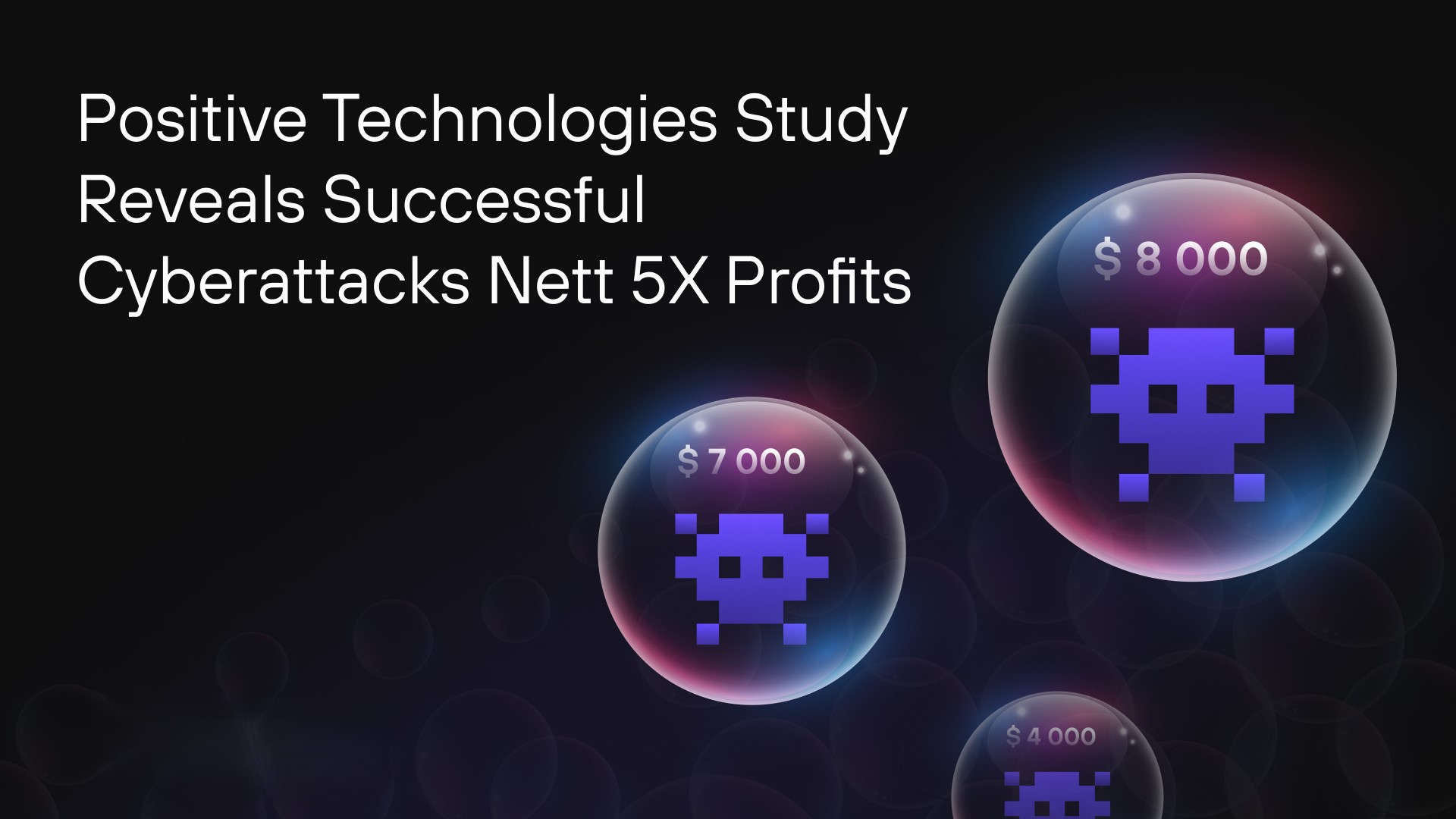
Positive Technologies has released a study on the dark web market, analysing prices for illegal cybersecurity services and products, as well as the costs incurred by cybercriminals to carry out attacks. The most expensive type of malware is ransomware, with a median cost of $7,500. Zero-day exploits are particularly valuable, often being sold for millions of dollars. However, the net profit from a successful cyberattack can be five times the cost of organizing it.
Experts estimate that performing a popular phishing attack involving ransomware costs novice cybercriminals at least $20,000. First, hackers rent dedicated servers, subscribe to VPN services, and acquire other tools to build a secure and anonymous IT infrastructure to manage the attack. Attackers also need to acquire the source code of malicious software or subscribe to ready-to-use malware, as well as tools for infiltrating the victim’s system and evading detection by security measures. Moreover, cybercriminals can consult with seasoned experts, purchase access to targeted infrastructures and company data, and escalate privileges within a compromised system. Products and tools are readily available for purchase on the dark web, catering to beginners. The darknet also offers leaked malware along with detailed instructions, making it easier for novice cybercriminals to carry out attacks.
Malware is one of the primary tools in a hacker’s arsenal, with 53% of malware-related ads focused on sales. In 19% of all posts, infostealers designed to steal data are offered. Crypters and code obfuscation tools, used to help attackers hide malware from security tools, are featured in 17% of cases. Additionally, loaders are mentioned in 16% of ads. The median cost of these types of malware stands at $400, $70, and $500, respectively. The most expensive malware is ransomware: its median cost is $7,500, with some offers reaching up to $320,000. Ransomware is primarily distributed through affiliate programs, known as Ransomware-as-a-Service (RaaS), where participants in an attack typically receive 70–90% of the ransom. To become a partner, a criminal must make a contribution of 0.05 Bitcoin (approximately $5,000) and have a solid reputation on the dark web.
Another popular attack tool is exploits: 69% of exploit-related ads focus on sales, with zero-day vulnerability posts accounting for 32% of them. In 31% of cases, the cost of exploits exceeds $20,000 and can reach several million dollars. Access to corporate networks is relatively inexpensive, with 72% of such ads focused on sales, and 62% of them priced at under a thousand dollars. Among cybercriminal services, hacks are the most popular option, accounting for 49% of reports. For example, the price for compromising a personal email account starts at $100, while the cost for a corporate account begins at $200.
Dmitry Streltsov, Threat Analyst at Positive Technologies, says, “On dark web marketplaces, prices are typically determined in one of two ways: either sellers set a fixed price, or auctions are held. Auctions are often used for exclusive items, such as zero-day exploits. The platforms facilitating these deals also generate revenue, often through their own escrow services, which hold the buyer’s funds temporarily until the product or service is confirmed as delivered. On many platforms, these escrow services are managed by either administrators or trusted users with strong reputations. In return, they earn at least 4% of the transaction amount, with the forums setting the rates.”
Considering the cost of tools and services on the dark web, along with the median ransom amount, cybercriminals can achieve a net profit of $100,000–$130,000 from a successful attack—five times the cost of their preparation. For a company, such an incident can result not only in ransom costs but also in massive financial losses due to disrupted business processes. For example, in 2024, due to a ransomware attack, servers of CDK Global were down for two weeks. The company paid cybercriminals $25 million, while the financial losses of dealers due to system downtime exceeded $600 million.

Written by Oded Vanunu, Chief Technologist & Head of Product Vulnerability Research at Check Point (more…)

Positive Technologies Reports 80% of Middle East Cyberattacks Compromise Confidential Data

Qualys Partners with Teksalah, the First Middle Eastern MSP in its mROC Alliance

CyberKnight Sets Up South Africa Entity

ManageEngine Enhances PAM with Native Intelligence

EcoOnline Expands into Middle East

OPSWAT Joins GISEC 2025 as Middle East Confronts AI-Driven Cyber Threats

GISEC Global 2025: SANS Institute to Showcase Elite Cybersecurity Training and Threat Expertise

Fortinet Expands FortiAI Across its Security Fabric Platform

GISEC 2025 Launches OT Security Conference Amid 49% Infrastructure Attack Surge

How AI is Reinventing Cybersecurity for the Automotive Industry

Positive Technologies @ GISEC Global 2025: Demonstrating Cutting-Edge Cyber Threats and AI Defense Strategies

Group-IB @ GISEC Global 2025: Tackling Evolving Cyber Threats with Localised Intelligence and AI

Video: Wallarm Unveils the Key to Cloud-Native API Security at GISEC Global 2025

Video: CyberKnight on Zero Trust, AI, and Saudi Arabia’s Digital Transformation at GISEC Global 2025

Video: SANS Institute Weighs in on Deepfakes, Model Poisoning and Risk Frameworks at GISEC Global 2025
-
 GISEC1 week ago
Positive Technologies @ GISEC Global 2025: Demonstrating Cutting-Edge Cyber Threats and AI Defense Strategies
-

 Cyber Security1 week ago
Axis Communications Sheds Light on Video Surveillance Industry Perspectives on AI
-
 GISEC1 week ago
Video: SANS Institute Weighs in on Deepfakes, Model Poisoning and Risk Frameworks at GISEC Global 2025
-
 GISEC1 week ago
ManageEngine @ GISEC Global 2025: AI, Quantum Computing, and Ransomware Form Part of Cybersecurity Outlook for 2025
-

 GISEC1 week ago
Video: SentinelOne Speaks Hyperautomation, Purple AI, and the Future of Threat Detection at GISEC Global 2025
-
 Africa Focus6 days ago
CyberKnight Sets Up South Africa Entity
-
 GISEC1 week ago
Group-IB @ GISEC Global 2025: Tackling Evolving Cyber Threats with Localised Intelligence and AI
-
 GISEC1 week ago
Video: CyberKnight on Zero Trust, AI, and Saudi Arabia’s Digital Transformation at GISEC Global 2025